Podcast
EP. 276
5 Money Lies That Are Silently Destroying Wealth (Ep. 276)
Jul 2, 2026 ·
28 min
0:00 / 27:49
EPISODE OVERVIEW
ABOUT THIS EPISODE
Mary Jo Irmen and Tarisa Shelton break down the top 5 money beliefs that silently hold people back from building real wealth — and share the wealth mindset shifts that will actually change your financial future.
Whether you're focused on personal finance, retirement planning, or developing a true wealth mindset, how you think about money determines everything. This isn't mainstream financial advice — it's the financial education most people never get, challenging everything you've been told about money management, cash flow, and wealth creation.
If you're struggling with money mindset, wondering why your income never feels like enough, or questioning whether debt is really "normal," this episode is for you.
🔑 Topics Covered
- Personal finance tips and wealth building
- Financial planning and how to use cash flow strategically
- Why your business or 401(k) alone isn't a retirement plan
- How to develop a success mindset around money — not just earn more of it
Ready to Get Started?
- 📘 Get the book
- 📧 Email Mary Jo: maryjo@withoutthebank.com
- ▶️ Subscribe on YouTube
CHAPTER TIMESTAMPS
- 00:00Wealth Mindset Shift
- 00:32Podcast Kickoff
- 01:11Number One - "More Income Will Solve My Money Problems"
- 08:52Number Two - "Debt is Just a Normal Part of Life"
- 10:26Number Three - "My Business is My Retirement Plan"
- 16:21Number Four - "Cash is a Waste If Not Invested"
- 20:15Number Five - "Money is The Goal, Instead of a Tool to Create Freedom and Security"
- 22:56Reading Beyond Mainstream
- 27:18Implementation Over Knowledge
- 28:02Caffeine Ban Outro
YOUTUBE EPISODE
TRANSCRIPTION
"You can take all the money in the world, divide it equally, and the wealthy will have all that money within three years or something. Because why? The wealthy understand how to use money and how to make money. They understand how to use money to make money. If we're holding on to cash, that's a scarcity mindset of I need to save and I can't spend any money. Or can we use that money to create cash flow to make more money so we don't have to just sit in this little bubble and say we can't go on vacation, we can't do anything."
Hello, hello, and welcome back to the podcast. Thank you very much for joining us today. Tarisa and I haven't been together forever. Schedules do not allow. But here we are today. I'm excited to be able to talk to you. I know. I'm excited to talk to you. I missed you. I know. All right. Let's talk about the top five beliefs about money that hold people back. This is going to be good. I'm not going to lie. Tarisa and I did not come up with these. AI did.
Thank you, AI, for a topic or the top five things. Obviously, I asked it and then it gave me these things and I thought it was pretty good. So we're going to talk about it. Number one, more income will solve my money problems. I have lots of feelings about this. But so you go first. I think that that is silly. That's a silly goose theory. Because it's kind of like, I don't know, it's probably not such a good analogy. But if you have like a drug addict, it's like, okay, what is making them a drug addict is their use of something, their overconsumption of something.
And I think it's the same as is true with money. If you don't know how to use it, or if you're an overspender, it doesn't matter how much money you make, because it's always going to be going out of your hand faster than it's coming in. So it's really the habit that makes a difference. So if you don't know how to hold on to $1, you're not going to know how to hold on to 10 or 100,000. You know, it's just kind of like an escalating scale.
And my son is a good example of this, because they just had their birthdays and they got all this birthday money. I mean, it was probably like a good $300 that he got and he really wanted to get the switch to thing. And he's like, I really want to get this. I was like, I'm not spending money on that. It's like, I think it's so dumb. So if you want to, great. And he got his birthday money. I was like, Kale, are you sure you don't want to wait to see how much you have total before you go and spend it?
He's like, no, it's fine. That's future Kale's problem. And so yeah, he had enough to buy it, but he had spent a good chunk of it before he got the rest. So more money did not solve his problem. That's so funny that you said that's a future Kale problem. Yeah. But I think that's how people think about finances. So he already knows that in the future, it's going to be a problem. I mean, that's actually being more aware than maybe most people are. Because I always say, if you can't manage a dollar, you can't manage a million.
It does not matter how much money you make. I've talked about this before on the podcast. Like you see it with people that cannot manage money. And in this industry, we have colleagues that will say, oh, you've got $50,000 of credit card debt. That's okay. We'll still do a life insurance policy for you. Because the words they've used to me is if I don't do one now, they're never going to get to start one. And I won't do one. If you have a large amount of credit card debt, I'm not going to do a policy until that credit card debt gets paid off.
Then we can start doing whole life policy and we can implement infinite... We're going to implement infinite banking concept. We're going to implement the concept now. We're going to start the policy later. But I need to see that you can continually pay off that debt. And the people that can't will not come back to be clients because they can't manage it. It's an emotional thing. I truly believe like if you can't manage a dollar and we're buying things, like deep down, Kayl, what's going on? What are we trying to prove to somebody?
What is it that's making us buy all of these things? Is it to fill a void? Is it because we need to compete with the Joneses and we need to have what everybody else has? And why is it that we think we need to do that? Money is very emotional. And I have always been a saver. Now, we each got a cow when we were little. And then whatever the offspring is, we got to keep or sell. Well, if our cows had bulls, they would go to the bull sale and then we would get the money for that bull.
And it would go into savings. And my mom and dad's name was on the savings account along with ours. And we had to, they okayed everything we wanted to buy with that money. And I don't think that that was a bad thing. Because they were just monitoring like, hey, you're not going to buy something stupid that you're not going to have later. And they were kind of forcing us to save. And smart. And I don't know if I was just a natural saver or if that was something that came from them or what.
But I don't think that that's bad to be teaching our kids to save because now we have adults that can't save. We talked about this over the weekend. We went out to eat. In between our Arby's and our McDonald's, there's like a little building being built. And it's like the smallest little thing. And I'm like, what is going in there? A coffee shop. It's just a little drive-through coffee hut. Thank you. And I said, okay, so we have people complaining in this country that they don't have any money.
But they have $9 for a coffee every day. Like the amount of coffee shops we have in this town is absolutely insane. It's insane. There are more coffee shops than bars. And everywhere, you cannot go to any corner of this town and not have an option of two coffee shops. That's an enormous amount of money. So on one side, we're saying we don't have any money. We're not getting paid enough. And on the other side, we're drinking $9 coffees, brand new vehicles, kids in sports. My husband made an observation too over the weekend.
We had a bunch of kids in town. And they had, they were playing, must have been a baseball tournament in town. And they all had like the whole nine yards of baseball uniform on, right? Caps, logo, like the whole thing. They look like they were adult players. And he said, you know, when we were kids, we had a t-shirt. Like, and it was sponsored by a company. And it was just a t-shirt. And I'm like, gosh, I never even thought of that. Like you were lucky to get a t-shirt.
You didn't have like, you had to be in high school to get the uniform. And it's just, are we managing our money? That makes sense. Because sometimes I think we're not. And then we're complaining that we don't have enough of it. It doesn't matter how much you have. You'll find something else to spend it on. It's Parkinson's law. Yeah, this is a good point. I think you have to have the discipline to keep money. And if you don't have that, then how much you make is irrelevant.
And some people will say, I've seen this online. I would have rather spent, because I did a podcast on sports. It's not that I dislike that your kids are in sports. I don't care what you do. I'm just saying, run the money for the sports through the policy first. Just use that money correctly. I don't care that your kids are in sports. But it's funny because some people are getting very defensive. And they're saying, well, if my kids, at least my kids are happy. Well, that is great that your kids are happy.
Fantastic. Just use the money to make them happy differently. But one guy commented and said, all these kids that weren't in sports are in therapy. So I'm glad that my kids were in sports so they didn't need therapy. Well, I was never in sports and I never was in therapy. So I guess that's not a direct correlation amongst the two. That's interesting. There's kids that don't want to be in the sport as well. So I mean, there's all aspects of that. But people firmly believe, if I spend money to go on vacation that I don't have, at least I'll be happy.
But I'll have to deal with the consequences of that later. How are we going on vacation stressed out knowing we can't pay that credit card? How is that vacation fun? To me, that's not fun. That's too much stress. So if you can't manage the dollar because you couldn't manage the dollar you had, how are you going to manage a million? It all correlates with one another. It does. I think this is a really good topic. Okay, number two, debt is just a normal part of life.
No, it's not. No, it's not. I had a guy mad at me about two weeks ago now because he said, well, you can't farm without debt. And I said, I got all kinds of people farming without debt. And he was upset because he thought his debt and constantly consolidating loans against the value of his land was okay. You don't have to have debt, right? Dave Ramsey proves that. We don't need to have debt to live. We don't need to have debt to finance a business. We can do that without debt.
So to think otherwise is just a pacifier to your feelings. To say, oh yeah, it's okay that we have $50,000 of credit card debt because everybody does. No, they don't. Our clients don't, right? Because they have the discipline. And the reason that there are clients is because they don't have the debt. So now they can start that infinite banking journey, right? And that's what I told him. I said, my clients don't have debt. That's why they're my clients. Because I couldn't start a policy for him.
There's too much debt. So we have to get that under wraps first. But debt can be normal. And yeah, we might have to buy a vehicle with debt. Out of control debt is not normal. Some debt is going to be normal. Almost everybody's going to have a mortgage. But out of control debt is not normal. My business is my retirement plan. Or my house is my retirement plan. Or my 401(k). We could add that, right? A belief that our 401(k) is our retirement plan. It's not a retirement plan.
It's a cross your fingers plan. And maybe your toes too. You gotta be crossing something to hope for that to work out. I did like an extensive podcast series on this. But just like with inflation, with taxes, with not being able to touch it in the event of like an emergency, you're so restricted in how you can use it. Whereas if you had the utility of those dollars as you were young and making an income and had opportunities to take advantage of, it puts you in a better situation than just kind of locking your money up and having someone else tell you when you can access it.
And a business that's cash flowing depends what kind of business can be that retirement plan. I just recently visited with one of my clients who is doing acquisition stuff and finding money to buy businesses. And it was a very interesting conversation because the people that are selling their business or selling their land are sick and they need to sell or they're elderly and sick. And they need to sell. And she's like, almost all of them have a health challenge. And it actually made me think, Tarisa, about I buy land, right?
I'm buying farm ground and I have rental properties because I'm like, oh, if I have to sell them because I need the money, I can sell them. But what I'm finding is that transaction is not fast because these people are asking more than what they should or it's worth so much that there's a very limited pool of people that can afford it. And so the transaction is happening at a very, very slow pace. So if I'm sick and I need that for medical bills or I'm sick and I'm going to be dying soon, that transaction needs to happen faster.
And I don't have the answer to this but my line of thinking at the moment is, okay, that's my retirement plan if all goes well and I have time to make that sale. What do I have to do in the meantime to have cash flow because land is not going to possibly give me enough cash flow unless I have enough of it. So we really have to think through like the equity in my business, the equity in my land, the equity in my rental properties. What good is that when I need it the most and I don't have the money to go to the bank and borrow against it?
And so my retirement plan needs to be cash flow. And a 401(k) is great because it's going to cash flow for a short period of time until we're out of money. A life insurance policy is great because we can provide you cash flow for a short amount of time until we run out of money. And so we really need to look at all of it as a whole. What is our retirement plan? It's not just one thing. It's not just a whole life insurance policy. Like I don't even look at that as a retirement plan because we need cash flow for retirement.
So what are all those pieces together? And if I'm going to have a cash flowing asset, obviously, I want to run that through the policy first. But the policy itself, when people are selling those as retirement plans, I'm not seeing it because the average person can't put enough money into them to create a retirement plan. That's why you and I are always talking about how do we create cash flow? Last week, I had a two-hour phone call with an existing client about what can we do?
What kind of business can we start for her so she can create some cash flow? And we came up with a laundry service business. It was a super fun conversation. It's like my favorite thing to do is brainstorm business ideas. You're really good at that. And she's already got a logo. She's like digging into it. It's super fun to see. But how can we create that cash flow and build the empire and the money go through the policy? But yeah, some of those things can be a piece of the retirement plan.
But what if I need that money quickly? Yeah, and I don't know if you've ever played the game cash flow, but there's like this little section on it that you land on. It's called divorce. And then you have to give up half your stuff. I mean, it's not funny because I know people really experience that. I remember I asked my dad one time. I was like, do you think you'll ever get married again? And he was like, what's 50% of a quarter? It's like, no, because he had been married twice, divorced twice.
I'm gonna lose my train of thought here. Okay, so I bring that up because I know a gentleman, he's in the process of selling his business and he just recently got divorced. And because his business is like solely reliant on him, it's not worth as much as he needs it to be to pay his ex-wife basically. So if that is your retirement plan, like is the business solely reliant on you? There's just so many factors that go into that in terms of covering your bases. Like it's great that he has that asset, but it's like something is only a value if someone is willing to pay you for it.
And did you set it up as your retirement plan? Or did you just build it and you were the worker in it and now there is nothing to sell at the end because you didn't actually build it that way? Or you built your business and you hit a bunch of income and now there's nothing to sell because it looks terrible on financials. So, I mean, that's kind of an open-ended concern, but something that we need to plan for, I think. Yes, I think to your point, it's not just one thing that's the ultimate solution.
It's a mixture of things. Number four is cash is a waste if not invested. Invested in what? I think I'd rather have the cash maybe than the 401(k). Just depends, right? Cash is a waste if you don't know how to utilize it. If you don't know how to use cash, then you're wasting it, right? If you just have cash sitting around and you're not putting it to work to create cash flow and you have all this money in a savings account, why? I think it makes people feel cozy.
You know, it's like, oh, I have this in case of an emergency. I think what you said to me one time was like, okay, well, you can always go make more money. And if you need to, you can always put it on a credit card and just pay it off. I was like, yeah, that's actually really true. Then I encouraged, you know, irresponsible use of credit cards. But it's like worst case scenario, you're going to be okay. You're not going to be homeless. So having cash, I think is good because you have money to take on opportunities.
Whereas if you don't have cash or everything's tied up and something exciting is a possibility for you, it's not so much if you're tied up in how you're using it. I think not knowing how to use cash makes money scary. So we end up being savers. Because once you know how to use money and make money, you can't not make money. Like think about all the wealthy people that have gone bankrupt and then they're wealthy again and gone bankrupt and wealthy again. The problem is that they don't know how to hold it or they're taking risks, right?
The problem is not that they don't know how to make money. So every time they go broke, they just make more money because they already know how to make money. Yeah, they have the skill. Right. As Nelson said in the book, in Becoming Your Own Banker, he said, you can take all the money in the world, divide it equally, and the wealthy will have all that money within three years or something. Because why? The wealthy understand how to use money and how to make money. They understand how to use money to make money.
And so if we're holding on to cash, that's a scarcity mindset of, I need to save and I can't spend any money, right? Or can we use that money to create cash flow to make more money so we don't have to just sit in this little bubble and say, we can't go on vacation, we can't do anything. I had a client last week that said that he doesn't think that they need to be buying ice cream because that's a luxury. So very frugal, right? I call them a miser.
So you're a miser, so you have a bunch of money and they're doing well. They're doing absolutely fantastic. They don't have any debt. They farm with absolutely 100% zero debt. No loans of any kind, no land notes, no operating notes, no equipment notes, no cattle, no notes, nothing. 100% cash because they've given up the ice cream, right? But now we've put the money to work and it's created some cash flow. So it's a little bit of that cash flow now that we have because we're doing well.
We're at a spot where we want to be, can we buy some ice cream? I would say yes. Like if we use the money to make enough money to buy the ice cream, we can have both. You know, it's us saying we can't buy a new car because this is all the money we have. But what if we took this amount of money to make this amount of money and this money could help buy the car, right? It's our mindset of how we think about money.
But cash can be a waste if we're not utilizing it correctly. Absolutely. Money in itself can be a problem if we're not using it correctly. Number five, money is the goal instead of a tool to create freedom and security. So we kind of just hammered that one home along with number four. Money is the goal instead of a tool to create freedom and security. So we want the money, we want the cash flow to be the goal, I guess. I think when I think of money, I think of cash flow.
You want the cash flow to be the goal to create that security and the freedom that you want. And really, what is your freedom? Like we need money to create cash flow to provide that. But I think everybody's freedom is different. Everybody's end goal is different. We look at somebody else's end goal of 5,000 apartments and go, no, thank you. I'd rather just have my savings account. Like that's where my head goes. If you want me to manage 5,000 apartments, I'll just go to a savings account.
I'll be okay, right? Like if our end goal is to be doing something we love, it's a lot easier to get to that goal. Yeah, absolutely. And I remember one time one of my mentors was like, write this down. It's like cash is not an asset. It is a tool to buy assets. And I was like, oh, that's really a good reminder to be like, hey, if you just like let something sit, it always goes bad. It doesn't matter what it is, food, money. But when you put things to work and there's activity in motion, it's always going to be better than something just being stagnant.
Yeah, that's really good. I like that analogy. Because it's true. It doesn't matter if it's a car. If you just let it sit and don't start it for 20 years, it may not start. The tires are going to be flat, maybe seized up, rats maybe got in it. You know, like there's a lot of things that could happen. And so yeah, what does sit outside of wine? That makes it better. Yeah, that has to be probably the only exception. And I don't like any wine. So to me, that's not even...
That's not on your list. That's not on Mary Jo's list. No, it's not an option over here. That's funny. But it is. Money is a tool. And what did AI say? AI said money is a goal instead of a tool. That's actually wrong. Money is the tool to get to our goals of freedom and security. It proves AI is not always right. But it also proves that if I'm going to AI to get advice, this is the advice it's going to give me. And then it's going to keep everybody thinking the same.
That's not good either. Yeah, you have to have some discernment or hopefully a lot of it. And you know, here's the thing. I've been reading this new book, listening to this new book, and it's so good. I'll share it in a different podcast because it deserves its own podcast. It's that good. But it's really a matter of reading. Why are we only reading what mainstream New York bestsellers tell us to read? Why aren't we reading everything? Because how are we creating education for ourselves and finding what fits for ourselves if we're just following mainstream media?
I mean, I thought that was pretty good because I do like to read stuff people tell me not to read. Or they say, oh, no, that's bad. Well, did you even do any due diligence on it? Or did you just assume it's bad because the mainstream people told you that it was bad? And so it's really been just such a good book. But it proves like most people will never read Becoming Your Own Banker. And most people won't take action on it because it's so out of the ordinary that they're going to say, no, no, no.
There's no way that that's true. There's no way that that is possible to do that, even though it's been done for 200 years. There's no way that that's possible. It's just very interesting when you get people that are billionaires and millionaires and multimillionaires, like they don't listen to the mainstream media. They're not reading bestsellers of whatever her name is that's telling everybody how to get their self-confidence back. Like, what is her name? Mel Robbins? Yes. There you go. Yes. So Mel Robbins says, oh, I've got this New York Times bestseller, right?
And so now everybody's on that train. Well, are we really using our thought process to think about how, like why we feel that way, why we're doing certain things? Or are we just doing it because now there's a book that tells us that? Or there's 15 books that tell us the exact same thing. And so we just keep reading the same 15 books that tell us the same thing. We're not looking at any different avenue. And it doesn't matter if it's personal growth that doesn't matter if it's financial growth.
Why aren't we looking at everything? Yeah, that's a good point. I saw a sticker on someone's car. I think it was like, make sure you read banned books. And I was like, I didn't even know books were banned. And then it got me curious. I'm like, okay, let me look to see what's on that list. So yeah, there's just so much information out there. And I love books because I feel like someone has condensed their expertise in that subject for you to digest in like a few hours.
And it's taken them their whole lifetime to accumulate that. So you have, I feel like we do, we have so much power at our fingertips. I think the problem is people are just overwhelmed with information, you know, but I think it's good to be intentional about the type of information you want to seek out for yourself. And the part that I was listening to this morning, he said, you know, it's a really good book if you can't listen to it and you need to read it more than once.
And I'm listening to this book, totally knowing that I have to buy the book, listen to it again while I'm reading it. So listen and read at the same time, highlight, make notes. But it will be a book that you listen to more than once. Like it's almost like a study guide, right? You don't normally have books like that. Nelson's book qualifies as that. He said when every paragraph in a book is written for an intention and there's not just words, you know it's a good book.
And Nelson's book is like that. Every single paragraph is there for a reason. There is no extra fluff. That's why the book is only a hundred pages, is because he didn't need to write it longer than that to get his points across. They're very precise and thought out. And that's not the case for a lot of books. It's just, oh, I'm going to repeat what somebody else said and I'm not going to make that impactful. I'm not a reader of a lot of books because a lot of books don't make it past the second or third chapter.
And I am bored. I have already heard it. I'm not learning anything. I'm out. And so I want good books. And I want to then read it and apply it. Our colleague Jonah said that one of his clients asked him, do you read for knowledge or do you read for implementation? And so you can read for knowledge all day long, but if you're not going to implement it, then why are you even reading it? Like move on to something else that you're going to implement. Yeah, you're just kind of stroking your own ego.
Yeah. Yeah, I don't care that you've read a hundred books this year. I don't care that you've read 52 books this year. Oh, I'm going to read 52 books, one book a week. Good for you. And you learned nothing. Like you implemented none of that. Got anything final to add? I don't think so. This is fun. I love doing podcasts with you. Hey, awesome. You seem very excited, Tarisa. We need to up your excitement level today. I haven't been drinking coffee, which has been my natural upper.
We should have talked about this at the very beginning. Tarisa didn't hate being here today. She's just not her normal chip herself because she needs caffeine. I need caffeine to be a normal, productive member of society. And due to some other health things, I have been banned for a short period of time. So when the time comes where I can have coffee again, it's going to be a lively party for everyone listening, my family. I'm going to be a whole new me. So in the meantime, everyone has to hang in there with you.
Yeah, suffer along with me. Hang in there. She's not depressed. She's just low on caffeine. Yeah, same thing, right? Well, a little bit. If we're being honest. Every time my husband makes this coffee in the morning, I'm just like, just get to smell it. Oh, that's funny. All right, guys. Well, you know the routine. Email Mary Jo at maryjo@withoutthebank.com, Tarisa at tarisa@withoutthebank.com. Grab your books. Let us know how we can help you. And we'll go from there. You have a fantastic rest of your day.
View MoreHello, hello, and welcome back to the podcast. Thank you very much for joining us today. Tarisa and I haven't been together forever. Schedules do not allow. But here we are today. I'm excited to be able to talk to you. I know. I'm excited to talk to you. I missed you. I know. All right. Let's talk about the top five beliefs about money that hold people back. This is going to be good. I'm not going to lie. Tarisa and I did not come up with these. AI did.
Thank you, AI, for a topic or the top five things. Obviously, I asked it and then it gave me these things and I thought it was pretty good. So we're going to talk about it. Number one, more income will solve my money problems. I have lots of feelings about this. But so you go first. I think that that is silly. That's a silly goose theory. Because it's kind of like, I don't know, it's probably not such a good analogy. But if you have like a drug addict, it's like, okay, what is making them a drug addict is their use of something, their overconsumption of something.
And I think it's the same as is true with money. If you don't know how to use it, or if you're an overspender, it doesn't matter how much money you make, because it's always going to be going out of your hand faster than it's coming in. So it's really the habit that makes a difference. So if you don't know how to hold on to $1, you're not going to know how to hold on to 10 or 100,000. You know, it's just kind of like an escalating scale.
And my son is a good example of this, because they just had their birthdays and they got all this birthday money. I mean, it was probably like a good $300 that he got and he really wanted to get the switch to thing. And he's like, I really want to get this. I was like, I'm not spending money on that. It's like, I think it's so dumb. So if you want to, great. And he got his birthday money. I was like, Kale, are you sure you don't want to wait to see how much you have total before you go and spend it?
He's like, no, it's fine. That's future Kale's problem. And so yeah, he had enough to buy it, but he had spent a good chunk of it before he got the rest. So more money did not solve his problem. That's so funny that you said that's a future Kale problem. Yeah. But I think that's how people think about finances. So he already knows that in the future, it's going to be a problem. I mean, that's actually being more aware than maybe most people are. Because I always say, if you can't manage a dollar, you can't manage a million.
It does not matter how much money you make. I've talked about this before on the podcast. Like you see it with people that cannot manage money. And in this industry, we have colleagues that will say, oh, you've got $50,000 of credit card debt. That's okay. We'll still do a life insurance policy for you. Because the words they've used to me is if I don't do one now, they're never going to get to start one. And I won't do one. If you have a large amount of credit card debt, I'm not going to do a policy until that credit card debt gets paid off.
Then we can start doing whole life policy and we can implement infinite... We're going to implement infinite banking concept. We're going to implement the concept now. We're going to start the policy later. But I need to see that you can continually pay off that debt. And the people that can't will not come back to be clients because they can't manage it. It's an emotional thing. I truly believe like if you can't manage a dollar and we're buying things, like deep down, Kayl, what's going on? What are we trying to prove to somebody?
What is it that's making us buy all of these things? Is it to fill a void? Is it because we need to compete with the Joneses and we need to have what everybody else has? And why is it that we think we need to do that? Money is very emotional. And I have always been a saver. Now, we each got a cow when we were little. And then whatever the offspring is, we got to keep or sell. Well, if our cows had bulls, they would go to the bull sale and then we would get the money for that bull.
And it would go into savings. And my mom and dad's name was on the savings account along with ours. And we had to, they okayed everything we wanted to buy with that money. And I don't think that that was a bad thing. Because they were just monitoring like, hey, you're not going to buy something stupid that you're not going to have later. And they were kind of forcing us to save. And smart. And I don't know if I was just a natural saver or if that was something that came from them or what.
But I don't think that that's bad to be teaching our kids to save because now we have adults that can't save. We talked about this over the weekend. We went out to eat. In between our Arby's and our McDonald's, there's like a little building being built. And it's like the smallest little thing. And I'm like, what is going in there? A coffee shop. It's just a little drive-through coffee hut. Thank you. And I said, okay, so we have people complaining in this country that they don't have any money.
But they have $9 for a coffee every day. Like the amount of coffee shops we have in this town is absolutely insane. It's insane. There are more coffee shops than bars. And everywhere, you cannot go to any corner of this town and not have an option of two coffee shops. That's an enormous amount of money. So on one side, we're saying we don't have any money. We're not getting paid enough. And on the other side, we're drinking $9 coffees, brand new vehicles, kids in sports. My husband made an observation too over the weekend.
We had a bunch of kids in town. And they had, they were playing, must have been a baseball tournament in town. And they all had like the whole nine yards of baseball uniform on, right? Caps, logo, like the whole thing. They look like they were adult players. And he said, you know, when we were kids, we had a t-shirt. Like, and it was sponsored by a company. And it was just a t-shirt. And I'm like, gosh, I never even thought of that. Like you were lucky to get a t-shirt.
You didn't have like, you had to be in high school to get the uniform. And it's just, are we managing our money? That makes sense. Because sometimes I think we're not. And then we're complaining that we don't have enough of it. It doesn't matter how much you have. You'll find something else to spend it on. It's Parkinson's law. Yeah, this is a good point. I think you have to have the discipline to keep money. And if you don't have that, then how much you make is irrelevant.
And some people will say, I've seen this online. I would have rather spent, because I did a podcast on sports. It's not that I dislike that your kids are in sports. I don't care what you do. I'm just saying, run the money for the sports through the policy first. Just use that money correctly. I don't care that your kids are in sports. But it's funny because some people are getting very defensive. And they're saying, well, if my kids, at least my kids are happy. Well, that is great that your kids are happy.
Fantastic. Just use the money to make them happy differently. But one guy commented and said, all these kids that weren't in sports are in therapy. So I'm glad that my kids were in sports so they didn't need therapy. Well, I was never in sports and I never was in therapy. So I guess that's not a direct correlation amongst the two. That's interesting. There's kids that don't want to be in the sport as well. So I mean, there's all aspects of that. But people firmly believe, if I spend money to go on vacation that I don't have, at least I'll be happy.
But I'll have to deal with the consequences of that later. How are we going on vacation stressed out knowing we can't pay that credit card? How is that vacation fun? To me, that's not fun. That's too much stress. So if you can't manage the dollar because you couldn't manage the dollar you had, how are you going to manage a million? It all correlates with one another. It does. I think this is a really good topic. Okay, number two, debt is just a normal part of life.
No, it's not. No, it's not. I had a guy mad at me about two weeks ago now because he said, well, you can't farm without debt. And I said, I got all kinds of people farming without debt. And he was upset because he thought his debt and constantly consolidating loans against the value of his land was okay. You don't have to have debt, right? Dave Ramsey proves that. We don't need to have debt to live. We don't need to have debt to finance a business. We can do that without debt.
So to think otherwise is just a pacifier to your feelings. To say, oh yeah, it's okay that we have $50,000 of credit card debt because everybody does. No, they don't. Our clients don't, right? Because they have the discipline. And the reason that there are clients is because they don't have the debt. So now they can start that infinite banking journey, right? And that's what I told him. I said, my clients don't have debt. That's why they're my clients. Because I couldn't start a policy for him.
There's too much debt. So we have to get that under wraps first. But debt can be normal. And yeah, we might have to buy a vehicle with debt. Out of control debt is not normal. Some debt is going to be normal. Almost everybody's going to have a mortgage. But out of control debt is not normal. My business is my retirement plan. Or my house is my retirement plan. Or my 401(k). We could add that, right? A belief that our 401(k) is our retirement plan. It's not a retirement plan.
It's a cross your fingers plan. And maybe your toes too. You gotta be crossing something to hope for that to work out. I did like an extensive podcast series on this. But just like with inflation, with taxes, with not being able to touch it in the event of like an emergency, you're so restricted in how you can use it. Whereas if you had the utility of those dollars as you were young and making an income and had opportunities to take advantage of, it puts you in a better situation than just kind of locking your money up and having someone else tell you when you can access it.
And a business that's cash flowing depends what kind of business can be that retirement plan. I just recently visited with one of my clients who is doing acquisition stuff and finding money to buy businesses. And it was a very interesting conversation because the people that are selling their business or selling their land are sick and they need to sell or they're elderly and sick. And they need to sell. And she's like, almost all of them have a health challenge. And it actually made me think, Tarisa, about I buy land, right?
I'm buying farm ground and I have rental properties because I'm like, oh, if I have to sell them because I need the money, I can sell them. But what I'm finding is that transaction is not fast because these people are asking more than what they should or it's worth so much that there's a very limited pool of people that can afford it. And so the transaction is happening at a very, very slow pace. So if I'm sick and I need that for medical bills or I'm sick and I'm going to be dying soon, that transaction needs to happen faster.
And I don't have the answer to this but my line of thinking at the moment is, okay, that's my retirement plan if all goes well and I have time to make that sale. What do I have to do in the meantime to have cash flow because land is not going to possibly give me enough cash flow unless I have enough of it. So we really have to think through like the equity in my business, the equity in my land, the equity in my rental properties. What good is that when I need it the most and I don't have the money to go to the bank and borrow against it?
And so my retirement plan needs to be cash flow. And a 401(k) is great because it's going to cash flow for a short period of time until we're out of money. A life insurance policy is great because we can provide you cash flow for a short amount of time until we run out of money. And so we really need to look at all of it as a whole. What is our retirement plan? It's not just one thing. It's not just a whole life insurance policy. Like I don't even look at that as a retirement plan because we need cash flow for retirement.
So what are all those pieces together? And if I'm going to have a cash flowing asset, obviously, I want to run that through the policy first. But the policy itself, when people are selling those as retirement plans, I'm not seeing it because the average person can't put enough money into them to create a retirement plan. That's why you and I are always talking about how do we create cash flow? Last week, I had a two-hour phone call with an existing client about what can we do?
What kind of business can we start for her so she can create some cash flow? And we came up with a laundry service business. It was a super fun conversation. It's like my favorite thing to do is brainstorm business ideas. You're really good at that. And she's already got a logo. She's like digging into it. It's super fun to see. But how can we create that cash flow and build the empire and the money go through the policy? But yeah, some of those things can be a piece of the retirement plan.
But what if I need that money quickly? Yeah, and I don't know if you've ever played the game cash flow, but there's like this little section on it that you land on. It's called divorce. And then you have to give up half your stuff. I mean, it's not funny because I know people really experience that. I remember I asked my dad one time. I was like, do you think you'll ever get married again? And he was like, what's 50% of a quarter? It's like, no, because he had been married twice, divorced twice.
I'm gonna lose my train of thought here. Okay, so I bring that up because I know a gentleman, he's in the process of selling his business and he just recently got divorced. And because his business is like solely reliant on him, it's not worth as much as he needs it to be to pay his ex-wife basically. So if that is your retirement plan, like is the business solely reliant on you? There's just so many factors that go into that in terms of covering your bases. Like it's great that he has that asset, but it's like something is only a value if someone is willing to pay you for it.
And did you set it up as your retirement plan? Or did you just build it and you were the worker in it and now there is nothing to sell at the end because you didn't actually build it that way? Or you built your business and you hit a bunch of income and now there's nothing to sell because it looks terrible on financials. So, I mean, that's kind of an open-ended concern, but something that we need to plan for, I think. Yes, I think to your point, it's not just one thing that's the ultimate solution.
It's a mixture of things. Number four is cash is a waste if not invested. Invested in what? I think I'd rather have the cash maybe than the 401(k). Just depends, right? Cash is a waste if you don't know how to utilize it. If you don't know how to use cash, then you're wasting it, right? If you just have cash sitting around and you're not putting it to work to create cash flow and you have all this money in a savings account, why? I think it makes people feel cozy.
You know, it's like, oh, I have this in case of an emergency. I think what you said to me one time was like, okay, well, you can always go make more money. And if you need to, you can always put it on a credit card and just pay it off. I was like, yeah, that's actually really true. Then I encouraged, you know, irresponsible use of credit cards. But it's like worst case scenario, you're going to be okay. You're not going to be homeless. So having cash, I think is good because you have money to take on opportunities.
Whereas if you don't have cash or everything's tied up and something exciting is a possibility for you, it's not so much if you're tied up in how you're using it. I think not knowing how to use cash makes money scary. So we end up being savers. Because once you know how to use money and make money, you can't not make money. Like think about all the wealthy people that have gone bankrupt and then they're wealthy again and gone bankrupt and wealthy again. The problem is that they don't know how to hold it or they're taking risks, right?
The problem is not that they don't know how to make money. So every time they go broke, they just make more money because they already know how to make money. Yeah, they have the skill. Right. As Nelson said in the book, in Becoming Your Own Banker, he said, you can take all the money in the world, divide it equally, and the wealthy will have all that money within three years or something. Because why? The wealthy understand how to use money and how to make money. They understand how to use money to make money.
And so if we're holding on to cash, that's a scarcity mindset of, I need to save and I can't spend any money, right? Or can we use that money to create cash flow to make more money so we don't have to just sit in this little bubble and say, we can't go on vacation, we can't do anything. I had a client last week that said that he doesn't think that they need to be buying ice cream because that's a luxury. So very frugal, right? I call them a miser.
So you're a miser, so you have a bunch of money and they're doing well. They're doing absolutely fantastic. They don't have any debt. They farm with absolutely 100% zero debt. No loans of any kind, no land notes, no operating notes, no equipment notes, no cattle, no notes, nothing. 100% cash because they've given up the ice cream, right? But now we've put the money to work and it's created some cash flow. So it's a little bit of that cash flow now that we have because we're doing well.
We're at a spot where we want to be, can we buy some ice cream? I would say yes. Like if we use the money to make enough money to buy the ice cream, we can have both. You know, it's us saying we can't buy a new car because this is all the money we have. But what if we took this amount of money to make this amount of money and this money could help buy the car, right? It's our mindset of how we think about money.
But cash can be a waste if we're not utilizing it correctly. Absolutely. Money in itself can be a problem if we're not using it correctly. Number five, money is the goal instead of a tool to create freedom and security. So we kind of just hammered that one home along with number four. Money is the goal instead of a tool to create freedom and security. So we want the money, we want the cash flow to be the goal, I guess. I think when I think of money, I think of cash flow.
You want the cash flow to be the goal to create that security and the freedom that you want. And really, what is your freedom? Like we need money to create cash flow to provide that. But I think everybody's freedom is different. Everybody's end goal is different. We look at somebody else's end goal of 5,000 apartments and go, no, thank you. I'd rather just have my savings account. Like that's where my head goes. If you want me to manage 5,000 apartments, I'll just go to a savings account.
I'll be okay, right? Like if our end goal is to be doing something we love, it's a lot easier to get to that goal. Yeah, absolutely. And I remember one time one of my mentors was like, write this down. It's like cash is not an asset. It is a tool to buy assets. And I was like, oh, that's really a good reminder to be like, hey, if you just like let something sit, it always goes bad. It doesn't matter what it is, food, money. But when you put things to work and there's activity in motion, it's always going to be better than something just being stagnant.
Yeah, that's really good. I like that analogy. Because it's true. It doesn't matter if it's a car. If you just let it sit and don't start it for 20 years, it may not start. The tires are going to be flat, maybe seized up, rats maybe got in it. You know, like there's a lot of things that could happen. And so yeah, what does sit outside of wine? That makes it better. Yeah, that has to be probably the only exception. And I don't like any wine. So to me, that's not even...
That's not on your list. That's not on Mary Jo's list. No, it's not an option over here. That's funny. But it is. Money is a tool. And what did AI say? AI said money is a goal instead of a tool. That's actually wrong. Money is the tool to get to our goals of freedom and security. It proves AI is not always right. But it also proves that if I'm going to AI to get advice, this is the advice it's going to give me. And then it's going to keep everybody thinking the same.
That's not good either. Yeah, you have to have some discernment or hopefully a lot of it. And you know, here's the thing. I've been reading this new book, listening to this new book, and it's so good. I'll share it in a different podcast because it deserves its own podcast. It's that good. But it's really a matter of reading. Why are we only reading what mainstream New York bestsellers tell us to read? Why aren't we reading everything? Because how are we creating education for ourselves and finding what fits for ourselves if we're just following mainstream media?
I mean, I thought that was pretty good because I do like to read stuff people tell me not to read. Or they say, oh, no, that's bad. Well, did you even do any due diligence on it? Or did you just assume it's bad because the mainstream people told you that it was bad? And so it's really been just such a good book. But it proves like most people will never read Becoming Your Own Banker. And most people won't take action on it because it's so out of the ordinary that they're going to say, no, no, no.
There's no way that that's true. There's no way that that is possible to do that, even though it's been done for 200 years. There's no way that that's possible. It's just very interesting when you get people that are billionaires and millionaires and multimillionaires, like they don't listen to the mainstream media. They're not reading bestsellers of whatever her name is that's telling everybody how to get their self-confidence back. Like, what is her name? Mel Robbins? Yes. There you go. Yes. So Mel Robbins says, oh, I've got this New York Times bestseller, right?
And so now everybody's on that train. Well, are we really using our thought process to think about how, like why we feel that way, why we're doing certain things? Or are we just doing it because now there's a book that tells us that? Or there's 15 books that tell us the exact same thing. And so we just keep reading the same 15 books that tell us the same thing. We're not looking at any different avenue. And it doesn't matter if it's personal growth that doesn't matter if it's financial growth.
Why aren't we looking at everything? Yeah, that's a good point. I saw a sticker on someone's car. I think it was like, make sure you read banned books. And I was like, I didn't even know books were banned. And then it got me curious. I'm like, okay, let me look to see what's on that list. So yeah, there's just so much information out there. And I love books because I feel like someone has condensed their expertise in that subject for you to digest in like a few hours.
And it's taken them their whole lifetime to accumulate that. So you have, I feel like we do, we have so much power at our fingertips. I think the problem is people are just overwhelmed with information, you know, but I think it's good to be intentional about the type of information you want to seek out for yourself. And the part that I was listening to this morning, he said, you know, it's a really good book if you can't listen to it and you need to read it more than once.
And I'm listening to this book, totally knowing that I have to buy the book, listen to it again while I'm reading it. So listen and read at the same time, highlight, make notes. But it will be a book that you listen to more than once. Like it's almost like a study guide, right? You don't normally have books like that. Nelson's book qualifies as that. He said when every paragraph in a book is written for an intention and there's not just words, you know it's a good book.
And Nelson's book is like that. Every single paragraph is there for a reason. There is no extra fluff. That's why the book is only a hundred pages, is because he didn't need to write it longer than that to get his points across. They're very precise and thought out. And that's not the case for a lot of books. It's just, oh, I'm going to repeat what somebody else said and I'm not going to make that impactful. I'm not a reader of a lot of books because a lot of books don't make it past the second or third chapter.
And I am bored. I have already heard it. I'm not learning anything. I'm out. And so I want good books. And I want to then read it and apply it. Our colleague Jonah said that one of his clients asked him, do you read for knowledge or do you read for implementation? And so you can read for knowledge all day long, but if you're not going to implement it, then why are you even reading it? Like move on to something else that you're going to implement. Yeah, you're just kind of stroking your own ego.
Yeah. Yeah, I don't care that you've read a hundred books this year. I don't care that you've read 52 books this year. Oh, I'm going to read 52 books, one book a week. Good for you. And you learned nothing. Like you implemented none of that. Got anything final to add? I don't think so. This is fun. I love doing podcasts with you. Hey, awesome. You seem very excited, Tarisa. We need to up your excitement level today. I haven't been drinking coffee, which has been my natural upper.
We should have talked about this at the very beginning. Tarisa didn't hate being here today. She's just not her normal chip herself because she needs caffeine. I need caffeine to be a normal, productive member of society. And due to some other health things, I have been banned for a short period of time. So when the time comes where I can have coffee again, it's going to be a lively party for everyone listening, my family. I'm going to be a whole new me. So in the meantime, everyone has to hang in there with you.
Yeah, suffer along with me. Hang in there. She's not depressed. She's just low on caffeine. Yeah, same thing, right? Well, a little bit. If we're being honest. Every time my husband makes this coffee in the morning, I'm just like, just get to smell it. Oh, that's funny. All right, guys. Well, you know the routine. Email Mary Jo at maryjo@withoutthebank.com, Tarisa at tarisa@withoutthebank.com. Grab your books. Let us know how we can help you. And we'll go from there. You have a fantastic rest of your day.



ready to start?
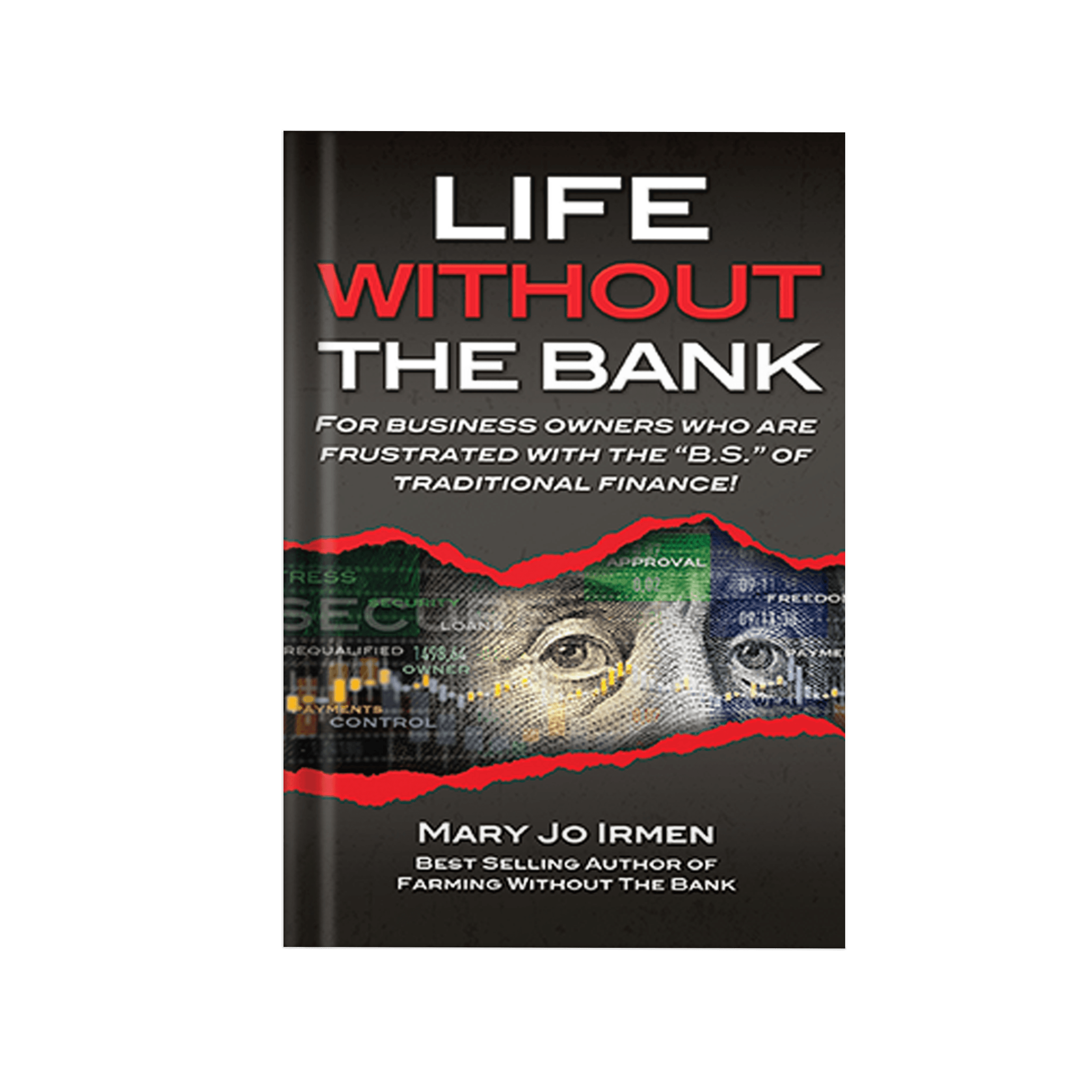
Your financial independence starts with one book.
Only one of three Americans can retire. Part of the fault is the conditioned belief that you must give up the use of your money when you’re young so you can have it later, assuming the stock market doesn’t collapse.