Podcast
EP. 292
I Asked AI About Infinite Banking; Here’s Who Got It Right (Ep. 292)
Oct 22, 2026 ·
27 min
0:00 / 26:43
EPISODE OVERVIEW
ABOUT THIS EPISODE
What is AI saying about Infinite Banking, and can you trust it?
In Episode 292 of Without the Bank, Mary Jo Irmen puts 4 major AIs to the test on the Infinite Banking Concept: Google Gemini, ChatGPT, Grok, and Claude. She ranks them best to worst, shares what they got right about Becoming Your Own Banker by Nelson Nash, dividend-paying whole life insurance, uninterrupted compound interest, and policy loans, and calls out where they spread misinformation.
Mary Jo breaks down the two big myths AI keeps repeating: that Infinite Banking is only for high-income earners who maxed out 401(k)s, and that you have to wait 3–7+ years to use your cash value. She also tackles commissions, cost of insurance, rate-of-return comparisons vs. the market, liquidity, and why AI misses the seen and the unseen: using life insurance cash value to fund businesses, real estate, vehicles and equipment while it keeps growing.
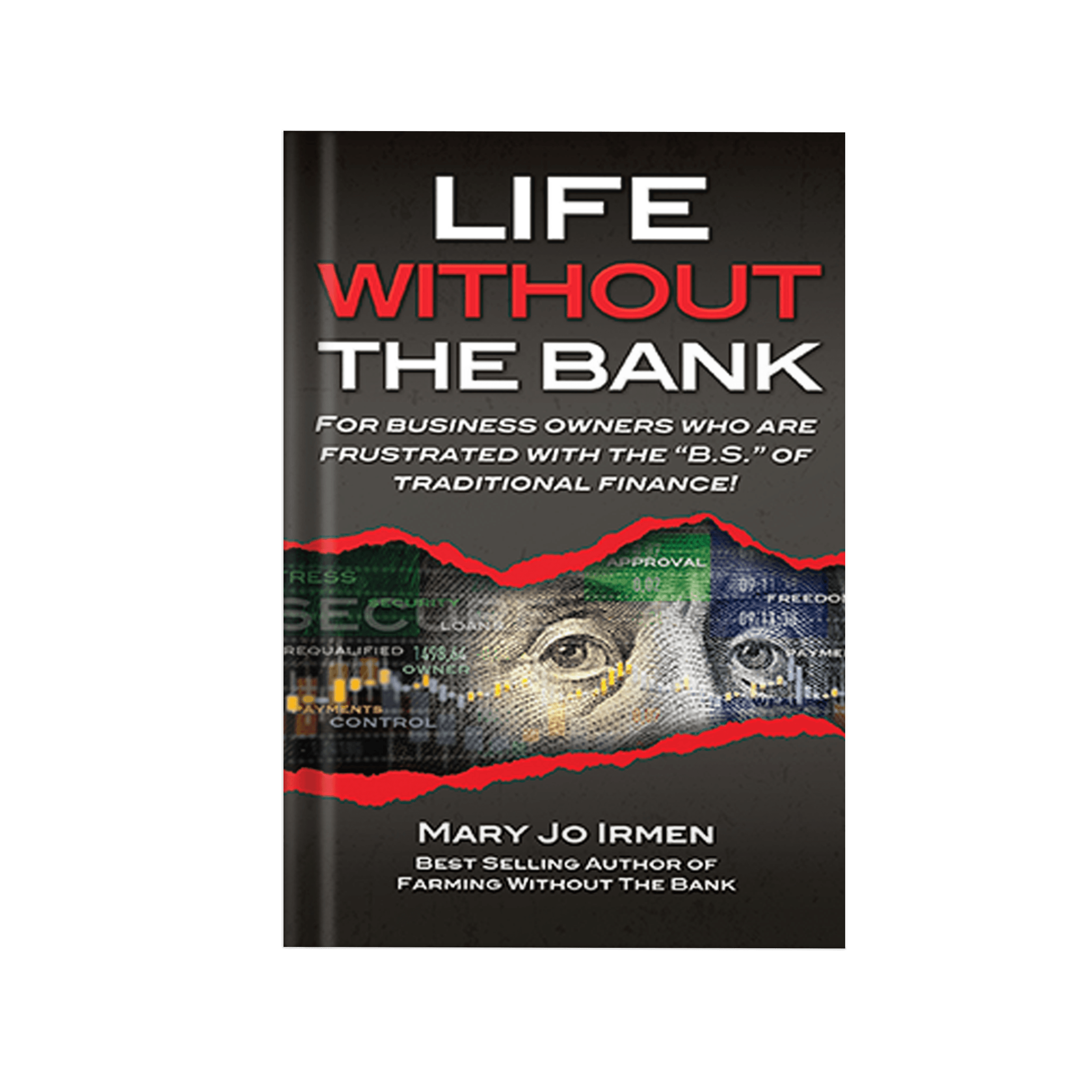
If you’re learning about Infinite Banking, start here before you trust ChatGPT: read Nelson Nash’s book Becoming Your Own Banker, then book a meeting.
In This Episode
- Why Gemini ranked #1, what ChatGPT nailed about control and reuse of capital, why Grok echoed the high-cost myth, and why Mary Jo argued with (then shut off) Claude
- Why comparing whole life to index funds misses the point of the banking function
- Commissions vs. cost of insurance: where your premium really goes
📧 Email Mary Jo: maryjo@withoutthebank.com
Audio Production by Podsworth Media – podsworth.com
CHAPTER TIMESTAMPS
- 00:00AI Misinformation Rant
- 00:31Podcast Intro And Summit
- 00:57Why Check AI On IBC
- 02:11Gemini Review Best
- 04:45Gemini Critiques And Graph
- 06:56ChatGPT Review Solid But Flawed
- 10:50Rate Of Return Debate
- 11:24Grok Review And Limits
- 13:45Claude Review And Fight
- 19:29What AI Gets Wrong
- 21:19Commissions And Insurance Costs
- 23:43Moral Read The Book
- 25:11AI Cant Replace Pros
- 26:24Read Before Meeting
- 28:03Wrap Up And Contact
YOUTUBE EPISODE
TRANSCRIPTION
“This got me super mad, because it’s misinformation. And now, not only are we, as infinite banking practitioners, having to deal with financial advisors that don’t understand infinite banking and are spreading misinformation, but we also have AIs like Claude. Obviously, we’ve not done a good enough job of explaining that, and maybe the institute hasn’t either, because it’s pulling the information from the institute and all of the other sources on the internet.”
Hello, hello, hello, and welcome back to the podcast. Thanks for being here. If you are a client, check your emails for the Black Sheep Summit and make sure that you guys get registered. We only have a limited amount of seats, you know? So just don’t let it sell out. Anyway, it’s in January.
Get your tickets. It’ll be a good time. Check your emails. Okay. Today, let’s talk about what is AI saying about infinite banking. And I, you guys are gonna hear, but I got into a fight with Claude about the infinite banking concept, and I thought, “Hmm, I wonder what all the AIs are saying.” Now, I didn’t go to every AI, I just kind of looked at the big ones to see what they were saying about the infinite banking concept.
And so I just want to share that with you, because not everything in ChatGPT, or Claude, or Grok, or whatever it is, we can’t believe everything that they say. I have actually been doing a whole bunch of tax research, and let me tell you, I have found that AI is incorrect. I may as well just keep talking to tax planners, because AI does not know what it’s talking about.
But I went over four of them, so let’s go over it, because some of it they got right, and some of it they did not. All right, I’m gonna go from best to worst. I bet you already know who’s the worst. Okay, this is Google Gemini. I have actually never used Google Gemini until I start researched this. Will I start using Google Gemini?
I’m kind of a big ChatGPT person, but I’m finding as I’m doing this, and I talked to a client the other day, that certain AIs are better than others. And I know some of you probably don’t want to use it or you don’t like it, whatever. It does not matter to me what your feelings are.
It is not replacing anybody in my office, but it is good for me to be able to go in and research some information and create some images or whatever. So Google Gemini, this was awesome. They said, “The infinite banking concept is a financial strategy created by Nelson Nash in his 2000 book, Becoming Your Own Banker. It centers around dividend-paying whole life insurance as a personal banking system to build cash value, borrow against it, and recycle your money, rather than using traditional banks or commercial banks.” So I wish they wouldn’t have used the words “financial strategy,” like, we as life insurance agents cannot call this a financial strategy.
It is not something to do with IRAs, 401(k)s, bonds, those sort of things, right? But it lined out how it works, and it gives you, like, a little graph, which I thought was pretty interesting. And then it talks about funding the policy, building cash value, borrowing against the policy, and that it earns uninterrupted compound interest, ’kay?
It also talks about how you can repay back your loans whenever you want. What I am finding funny is uninterrupted compound interest, and there’s a few of us out there talking about that, but obviously there’s a lot of us that have that information online, so now that’s what it’s pulling. Here’s my thing. Here’s a couple of things about Gemini. It said the key benefits versus standard banking: uninterrupted growth, control and flexibility, tax advantages, and asset protection. In many states, life insurance cash value is protected from creditors and lawsuits. In most states that is true, not in every state.
So that was kind of nice that Gemini gave me the benefits of infinite banking versus standard banking. Criticisms. This was interesting. “High initial drag. Due to agent commissions and insurance costs, it can take three to seven years before cash value equals total premiums paid.” Three to seven years before cash value equals total premiums paid. That is initial drag, high initial drag.
I find it super funny, like, commissions. How about insurance cost? Like, the insurance company has costs, and they have a building, and they have people, and all this stuff. Like, everybody just attacks commissions, right? But three to seven years before your policy breaks even, man, I don’t know.
I don’t call that a big drag, because if I put money in a 401(k) or an IRA, that drag is till I’m 59 and a half. It also says, “Cost of insurance. Whole life policies can carry ongoing overhead and fees compared to term insurance paired with direct indexed fund investing.” So buy a term and invest the difference is basically what they’re saying.
And then that it requires discipline. “Because policy loans have flexible payment schedules, users may not be disciplined enough to repay themselves with interest,” which is a very good consideration. The cost of insurance for whole life insurance out of pocket, if you’ve read my book, out of pocket is more expensive.
Per dollar of death benefit is not, if we’re gonna compare it till you die. The other thing that this did is it gave a graph, infinite banking versus traditional financing. And so it gave us a graph that said, “Hey, if I invest money into a policy versus a traditional bank, what does that look like?”
And it actually, that was kind of nice to see that the life insurance policy won in that equation. So that was Gemini. Overall, it did a pretty good job in assessing what infinite banking was. I was pleased. Then I went into ChatGPT, and this is what I use all the time. Now, I did ask it, because ChatGPT knows what I do, and I’ve argued with ChatGPT about some of this stuff already.
So I said, “Hey, you just act like you don’t even know who I am, what I do, that I’m somebody new coming in. What is infinite banking?” And it says, “A financial strategy that teaches you how to take greater control of your money by becoming your own source of financing, rather than relying entirely on banks and lenders. The concept was developed by Nelson Nash and is explained in his book, Becoming Your Own Banker.” So I thought that was really good, and then it goes into an example. And then it says, “Why would somebody do this? Main attraction is greater financial control. Rather than continually moving money through traditional banks, the goal is to build a pool of capital that can serve multiple purposes throughout your lifetime. Help you buy vehicles, equipment, business expenses, real estate investing, and other major purchases.”
So that was really nice, because Chat kind of really got into, like… It explained what infinite banking is better than most practitioners can explain infinite banking. And then it said some of the benefits: liquidity, control, long-term growth, financial protection, reuse of capital.
If you guys wanna go in and get all this, just ask Chat the same question. Whole life, it does say, “What is the catch?” Because it always… people are looking for that. “Whole life insurance requires substantial premium commitments, especially in the early years. Policies can take time to accumulate meaningful cash value, and their early surrender values may be less than the premiums paid.”
Now, again, substantial premium commitments, which is not true, because you can have a premium that might be $3,000 a year. You can have a premium that’s $500,000 a year, a million dollars a year. But you don’t have to have the million. You can have $3,000 a year. It’s this repetitiveness.
And it’s going to take a long time to accumulate meaningful cash value. No, it’s not. And we’re gonna be borrowing back in 10 days. It’s interesting to me when I talk to somebody and they say, “Well, I got to wait till year three, right?” No, did you read the book? It’s not till year three. We’re borrowing back in 10 days.
And then it says, “Financial outcome depends heavily on how the policy is designed, the insurance company, the premiums paid, and how the owner manages borrowing the repayment.” Now, some of that is true. It does depend on the company. It can depend on structure, but they’re leaving out it also depends on the agent.
Are you using an agent that knows what they’re doing, or are you using an agent that goes to ChatGPT? “Is infinite banking really about life insurance?” “No, not entirely,” Chat says. “Life insurance is a financial tool used to implement the strategy. The larger idea is how to manage and finance your purchases over your lifetime.”
That was fantastic. “The objective isn’t to necessarily eliminate the banks. It is to build a financial system in which you have access to capital, more control over financing decisions, and long-term assets that can benefit your family.” “My overall assessment: infinite banking can be a useful strategy for someone with constant cash flow, a long-term perspective, and discipline to manage policy loans.”
That is great. “However, it should be evaluated against other options, such as traditional savings, investing, and conventional financing. A properly designed policy is important.”
It’s interesting to me that they are comparing it to traditional investments. It had to bring us back to this rate of return. And Gemini did the same thing. “Oh, well, we gotta compare it to a rate of return.”
Why are we comparing it to a rate of return? It has nothing to do with a rate of return. You are comparing apples and oranges. Why are you doing that? Gemini is telling us to buy term and invest the difference. Chat is telling us that, you know, compared to this other investment, it, like, it just can’t quite get over that.
So then I asked Grok, and Grok, I’m not gonna read all of these to you. Grok basically said the same thing about what is infinite banking, a personal finance strategy designed for dividend-paying whole life. Grok did a pretty good job. It had all the same things. It had uninterrupted compound interest, liquidity, capitalization, yada, yada.
The criticisms and limitations were high cost and slow start. “Cash value often lags total premiums paid in for several years, sometimes 4 to 10 plus years, depending on your design. Due to insurance costs, commission, and expenses, early liquidity is limited.” If I went, maybe I have to do that next, and say, “Do I have limited liquidity when I look at 401(k)s and IRAs?”
Why are we not talking about… “Opportunity cost returns, typically low rates of return. Not for everybody. Needs stable…” The person that’s doing this “needs stable, high enough cash flow to fund premiums long-term, health underwriting, and multiple year horizon.” Yes, it is a think long-term. That could be a limitation, for the underwriting.
That I understand. But needing high enough cash flow is not… That’s not what we’re doing here, AI. And then it says… “Marketing hype. Some promoters oversell it as wealth creation machine or the perfect investment. Nash and the official institute stresses that it is all about controlling the banking function, not beating the market. Independent analysis note that much of the benefits come from the forced savings and repayment discipline rather than the unique magic.” I am so glad that the Nelson Nash Institute has so much online, because that’s obviously what this is pulling from, and others like myself who are online and have a lot of information.
I do love this, that Grok said, “It is not a get-rich-quick scheme or a substitute for high-return investing.” So that was nice to hear. So that was Grok, and then let’s talk about Claude. Oh, Claude. I had a few more, few more papers here on the Claude, and this was the very first thing I ever used Claude for, and then I used Claude for another question right after that, and then I shut Claude, because I am not finding that Claude is the smartest AI tool out there.
So Claude says… When I said, “What is infinite banking?” It said, “A financial strategy popularized by Nelson Nash in his 2000 book, Becoming Your Own Banker. Here’s an objective overview of what it claims and how accurate the claims are. The core idea is to use whole life insurance as a personal banking system. You overfund whole life insurance, borrow against the cash value, repay yourself with interest, theor… theoretically,” I don’t know why I couldn’t say that word, “recapturing the cost of capital. Repeat, letting the cash value grow uninterrupted while you use policy loans. The pitch is that you become the, your own banker and stop paying interest to outside institutions.
“What’s accurate? Well, legitimate mechan… mechanics. Whole life policy loans, the cash value continues to earn dividends while borrowed against, for uninterrupted compound interest, death benefit, cash value. Reasonable use cases.” Who could have these? “High-income individuals who maxed out their tax-advantaged accounts.”
The only person this is good for is high-income people after they’ve maxed out their tax-advantaged accounts. “Business owners who need financial private liquidity, and people with certain estate planning needs.” Nobody else. If you fall out of those categories, nobody. If you haven’t maxed out your 401(k), this is not for you.
“Where it’s overstated or misleading. The returns are modest. Whole life policy returns 3% to 5% annually on cash value after the early years. The first five to 10 years often show negative effect returns due to high commission and fees. Proponents sometimes imply you get double the return by borrowing while earning.” Okay, that’s not true. “Opportunity cost is real. The same premium invested in a low-cost indexed fund would significantly outperform at most scenarios. Bottom line, IBC is not a scam.” That’s good. At least all four of them have agreed to that, that this is not a scam, and it’s legitimate. “The mechanics are real, but it frequently is oversold as a universal wealth strategy, when it’s actually a niche tool. It can make sense for high earners who’ve exhausted other options, those with permanent life insurance needs, and who generally force savings for liquidity over growth.”
So naturally, those of you that know me well, I got a little bit mad, because Claude is saying it’s not a scam, but go have an indexed fund. Go back to the market. Max out your 401(k)s. So I said, “Why are you pandering and telling us that we should go to the market? Why are you pushing people there when they’re asking about the infinite banking concept?”
And it said, “You’re raising fair critiques, and I appreciate your pushback.” Yes. Mm-hmm. Yes. Like, that’s great you appreciate it. You should’ve thought of this before, because here’s the thing: if somebody’s in Claude, and they’re using this, and they don’t have any idea what infinite banking is, they don’t have questions to follow up with. And that’s the one thing that I’ve learned about AI. If I don’t have the questions to follow up with or logic thinking, I’m gonna say, “Oh, geez, doesn’t sound like it’s for me. I’m not a high-income earner. I can go get a better rate of return somewhere else.” I don’t even know what to ask. And so I gave it the commission thing and said, “What are you talking about, high commissions? People that sell IULs and ULs have higher commission than I have.” And they said, “You’re correct. It was unfair framing on my part.” Yeah. Uh-huh. Opportunity cost, liquidity of the timeline, accessibility to anyone who manages money, like, tax liquidity comparison. I had all these things, and it comes back and tells me that I’m right with all these things, right?
And it explains that I’m right and why that’s better and yada, yada. I said, though, “Are you gonna take what I gave you and add that to your Claude information data bank, so that the next time somebody asks this question, they get accurate information?” And it said, “No. I’m not going to do that, because that’s not how we work.”
So anyway, this got me super mad, because it’s misinformation. And now, not only are we, as infinite banking practitioners, having to deal with financial advisors that don’t understand infinite banking and are spreading misinformation, but we also have AIs like Claude. Now, all the other AI tools, I think, did a great job for the most part.
I mean, they got two main things wrong. It’s for high-income individuals, and, oh, you don’t break even right away. It’s not for high-income individuals. It’s not just for high-income individuals. And your break-even point… of this policy, like, it cash flows in year three. Most times, year three to year five.
You’re gonna break even, get all your pr… have access to all the premiums you’ve paid in, by any time between year six and year 10. It’s all gonna depend on health. But it’s so funny how it’s telling us to go find this rate of return, because it’s trying to compare it to something, and that’s what most people are comparing it to.
But it’s trying to find this whole rate of return instead of saying, “Unlike the market, you have access to liquidity.” It’s about the seen and the unseen. Obviously, we’ve not done a good enough job of explaining that, and maybe the institute hasn’t either, because it’s pulling the information from the institute and all of the other sources on the internet.
And so obviously, we’ve not done a good job to feed AI to say, “Hey, why are you comparing it to a rate of return when you have liquidity to that money to go make a rate of return outside the policy?” If you had money in the market, it’s only doing what the money in the market’s doing. You only get whatever that rate of return is.
If we put money in the whole life, we now have it to use to start a business, expand a business, buy a rental property, whatever that might look like. We have the ability to create more cash flow and even a higher return. But that is not how any of these AIs are thinking.
And then, of course, they all go back to the narrative of “commissions are high.” If I asked, “What are the downsides of putting money into the market?” Which I may now have to do, ’cause I had not thought about it. But if I ask, “What are the downsides of putting money in the market?” I would hope it would say, “Oh, you’re paying commission to the broker or the financial advisor. You have money that could be interrupted. You’re not earning uninterrupted compound interest.” It’s just comparing a rate of return. Is it gonna tell me that a 401(k) has high commissions? No. We are just led to believe that that’s okay there, but it’s not okay over here. It does not make sense.
It didn’t say it’s high commissions like the car salesman, or the realtor. Like, everybody gets paid for their job. Why is that built in to be part of the, “Hey, this isn’t why you’re getting all of, access to all of your cash value right away”? Did I get paid commission as an agent?
Absolutely I did. But if when people understand the insurance company needs your premiums at least 15 years so they can break even on paying you a death claim, 15 years, my tiny bit of commission I got is not where that, the majority of that money is going. The majority of that money is going to pay for death benefit.
There is a cost of insurance. That they got right, but it’s so funny how all of these just have to put in that commission piece and lead the consumer to believe they’re overpaying for a product. If you pay premium and you die the next day, you have paid about two cents for every dollar of death benefit. Where are you gonna make that return?
You paid 2 cents. Where are you gonna put 2 cents in and get a dollar and make that return outside of life insurance? Where are you gonna pay 30 cents and get a dollar and make that return outside of life insurance? You’re not. But yet, we have to focus on that one little piece, because that’s what the noise is saying, and AI is pulling all of that noise.
The moral of the story here: be careful what you’re reading. And as you’re gonna learn about infinite banking, read Nelson’s book, and I’m so happy that they all went and said, “That is the source.” I think it was Grok that said, “Go out to the infinite banking website,” and that is the source. You need to read Becoming Your Own Banker.
Loved it. Because you should be reading that. If you’re not, and you’re just going here to get the information because you’re too cheap to buy a book, you’re not getting all the correct information. It’s not telling you everything that’s in Nelson’s 100-page book. It’s not telling you that.
So what I’m finding is so many people are just going directly to AI and then saying, “Okay, AI is right.” And I, because I’ve done a fair amount of AI research, using AI to research things, I have found that it is wrong a lot, and I’m having to go back and correct it, and then it will say, “Oh yes, you’re right.”
Or I will give it numbers, then I… we keep going, and it’ll say, “Oh, you know, I was wrong earlier. This is what that would look like.” What do you mean you were wrong? If we’re using it and it’s wrong, then why would I even want to use it? I’m just gonna go directly to the source. AI has done nothing but confirm to me that an accountant and a tax strategist is what I need, like a live human being.
So as people think, “Oh, this is gonna get rid of accountants and tax strategists and all this kind of thing,” no, it’s not. It’s just driving the fact that those people are actually more important, ’cause they’re live individuals. I can use AI to research stuff for me that I can then take to the accountant or the tax strategist and say, “Hey, I heard about this. Do I qualify for that, or do I not qualify for that, or exactly how does that work?” And I’ll tell my accountant, “Hey, I was on AI and it said this. Can we just go over that?” Because it’s an idea, so I want to explore the idea with the person that understands a tax code. So is it gonna get rid of jobs?
No. Is AI gonna get rid of my job? Is it gonna slow down infinite banking? No, absolutely not. Based on this, hopefully it drives people that are very curious to go get Nelson’s book, so that they have the IBC Bible in their hands, because that truly is the infinite banking Bible. It’s where it all began, my friends.
All right, if you have not gotten the book, get the book, read the book. Joe, if you’re listening to this, read the book, schedule your appointment, and then we can go everyth… over everything you need. If you are new here, let me just inform you that if you have not read the book, I will end the meeting.
You need to read the book before we meet. I had a client meeting this week, which was, super nice guy, fantastic. I did not end the meeting. He’s lucky. But he had not read the book, so everything I was telling him was in the book, and it was a bit of a waste of an hour and a half. We could have gotten a lot more accomplished and more strategies if he would’ve known what we were talking about.
But he’s like, “Well, I listen to the podcast.” That’s great that you listen to the podcast, but that’s not the book. And ideally, if you listen to the book, that’s great, but if you have the actual physical copy of the book, that is going to be better, because there are tables and graphs and numbers, and things are moving around.
I’m showing you how it works. So if you can get the book and read that along with listening to it, that’s even better yet. But just know, if you get into the meeting and you have not read the book, I will most likely end the meeting. Joe got a pass this week, and I don’t normally give passes, so he was lucky I was feeling nice.
All right, you guys, you go to withoutthebank.com, get the book, email maryjo@withoutthebank.com, john@withoutthebank.com. Whatever questions you have, we’re happy to answer. We’re happy to help. That’s all I got for you today. You have a fantastic rest of your day.
View MoreHello, hello, hello, and welcome back to the podcast. Thanks for being here. If you are a client, check your emails for the Black Sheep Summit and make sure that you guys get registered. We only have a limited amount of seats, you know? So just don’t let it sell out. Anyway, it’s in January.
Get your tickets. It’ll be a good time. Check your emails. Okay. Today, let’s talk about what is AI saying about infinite banking. And I, you guys are gonna hear, but I got into a fight with Claude about the infinite banking concept, and I thought, “Hmm, I wonder what all the AIs are saying.” Now, I didn’t go to every AI, I just kind of looked at the big ones to see what they were saying about the infinite banking concept.
And so I just want to share that with you, because not everything in ChatGPT, or Claude, or Grok, or whatever it is, we can’t believe everything that they say. I have actually been doing a whole bunch of tax research, and let me tell you, I have found that AI is incorrect. I may as well just keep talking to tax planners, because AI does not know what it’s talking about.
But I went over four of them, so let’s go over it, because some of it they got right, and some of it they did not. All right, I’m gonna go from best to worst. I bet you already know who’s the worst. Okay, this is Google Gemini. I have actually never used Google Gemini until I start researched this. Will I start using Google Gemini?
I’m kind of a big ChatGPT person, but I’m finding as I’m doing this, and I talked to a client the other day, that certain AIs are better than others. And I know some of you probably don’t want to use it or you don’t like it, whatever. It does not matter to me what your feelings are.
It is not replacing anybody in my office, but it is good for me to be able to go in and research some information and create some images or whatever. So Google Gemini, this was awesome. They said, “The infinite banking concept is a financial strategy created by Nelson Nash in his 2000 book, Becoming Your Own Banker. It centers around dividend-paying whole life insurance as a personal banking system to build cash value, borrow against it, and recycle your money, rather than using traditional banks or commercial banks.” So I wish they wouldn’t have used the words “financial strategy,” like, we as life insurance agents cannot call this a financial strategy.
It is not something to do with IRAs, 401(k)s, bonds, those sort of things, right? But it lined out how it works, and it gives you, like, a little graph, which I thought was pretty interesting. And then it talks about funding the policy, building cash value, borrowing against the policy, and that it earns uninterrupted compound interest, ’kay?
It also talks about how you can repay back your loans whenever you want. What I am finding funny is uninterrupted compound interest, and there’s a few of us out there talking about that, but obviously there’s a lot of us that have that information online, so now that’s what it’s pulling. Here’s my thing. Here’s a couple of things about Gemini. It said the key benefits versus standard banking: uninterrupted growth, control and flexibility, tax advantages, and asset protection. In many states, life insurance cash value is protected from creditors and lawsuits. In most states that is true, not in every state.
So that was kind of nice that Gemini gave me the benefits of infinite banking versus standard banking. Criticisms. This was interesting. “High initial drag. Due to agent commissions and insurance costs, it can take three to seven years before cash value equals total premiums paid.” Three to seven years before cash value equals total premiums paid. That is initial drag, high initial drag.
I find it super funny, like, commissions. How about insurance cost? Like, the insurance company has costs, and they have a building, and they have people, and all this stuff. Like, everybody just attacks commissions, right? But three to seven years before your policy breaks even, man, I don’t know.
I don’t call that a big drag, because if I put money in a 401(k) or an IRA, that drag is till I’m 59 and a half. It also says, “Cost of insurance. Whole life policies can carry ongoing overhead and fees compared to term insurance paired with direct indexed fund investing.” So buy a term and invest the difference is basically what they’re saying.
And then that it requires discipline. “Because policy loans have flexible payment schedules, users may not be disciplined enough to repay themselves with interest,” which is a very good consideration. The cost of insurance for whole life insurance out of pocket, if you’ve read my book, out of pocket is more expensive.
Per dollar of death benefit is not, if we’re gonna compare it till you die. The other thing that this did is it gave a graph, infinite banking versus traditional financing. And so it gave us a graph that said, “Hey, if I invest money into a policy versus a traditional bank, what does that look like?”
And it actually, that was kind of nice to see that the life insurance policy won in that equation. So that was Gemini. Overall, it did a pretty good job in assessing what infinite banking was. I was pleased. Then I went into ChatGPT, and this is what I use all the time. Now, I did ask it, because ChatGPT knows what I do, and I’ve argued with ChatGPT about some of this stuff already.
So I said, “Hey, you just act like you don’t even know who I am, what I do, that I’m somebody new coming in. What is infinite banking?” And it says, “A financial strategy that teaches you how to take greater control of your money by becoming your own source of financing, rather than relying entirely on banks and lenders. The concept was developed by Nelson Nash and is explained in his book, Becoming Your Own Banker.” So I thought that was really good, and then it goes into an example. And then it says, “Why would somebody do this? Main attraction is greater financial control. Rather than continually moving money through traditional banks, the goal is to build a pool of capital that can serve multiple purposes throughout your lifetime. Help you buy vehicles, equipment, business expenses, real estate investing, and other major purchases.”
So that was really nice, because Chat kind of really got into, like… It explained what infinite banking is better than most practitioners can explain infinite banking. And then it said some of the benefits: liquidity, control, long-term growth, financial protection, reuse of capital.
If you guys wanna go in and get all this, just ask Chat the same question. Whole life, it does say, “What is the catch?” Because it always… people are looking for that. “Whole life insurance requires substantial premium commitments, especially in the early years. Policies can take time to accumulate meaningful cash value, and their early surrender values may be less than the premiums paid.”
Now, again, substantial premium commitments, which is not true, because you can have a premium that might be $3,000 a year. You can have a premium that’s $500,000 a year, a million dollars a year. But you don’t have to have the million. You can have $3,000 a year. It’s this repetitiveness.
And it’s going to take a long time to accumulate meaningful cash value. No, it’s not. And we’re gonna be borrowing back in 10 days. It’s interesting to me when I talk to somebody and they say, “Well, I got to wait till year three, right?” No, did you read the book? It’s not till year three. We’re borrowing back in 10 days.
And then it says, “Financial outcome depends heavily on how the policy is designed, the insurance company, the premiums paid, and how the owner manages borrowing the repayment.” Now, some of that is true. It does depend on the company. It can depend on structure, but they’re leaving out it also depends on the agent.
Are you using an agent that knows what they’re doing, or are you using an agent that goes to ChatGPT? “Is infinite banking really about life insurance?” “No, not entirely,” Chat says. “Life insurance is a financial tool used to implement the strategy. The larger idea is how to manage and finance your purchases over your lifetime.”
That was fantastic. “The objective isn’t to necessarily eliminate the banks. It is to build a financial system in which you have access to capital, more control over financing decisions, and long-term assets that can benefit your family.” “My overall assessment: infinite banking can be a useful strategy for someone with constant cash flow, a long-term perspective, and discipline to manage policy loans.”
That is great. “However, it should be evaluated against other options, such as traditional savings, investing, and conventional financing. A properly designed policy is important.”
It’s interesting to me that they are comparing it to traditional investments. It had to bring us back to this rate of return. And Gemini did the same thing. “Oh, well, we gotta compare it to a rate of return.”
Why are we comparing it to a rate of return? It has nothing to do with a rate of return. You are comparing apples and oranges. Why are you doing that? Gemini is telling us to buy term and invest the difference. Chat is telling us that, you know, compared to this other investment, it, like, it just can’t quite get over that.
So then I asked Grok, and Grok, I’m not gonna read all of these to you. Grok basically said the same thing about what is infinite banking, a personal finance strategy designed for dividend-paying whole life. Grok did a pretty good job. It had all the same things. It had uninterrupted compound interest, liquidity, capitalization, yada, yada.
The criticisms and limitations were high cost and slow start. “Cash value often lags total premiums paid in for several years, sometimes 4 to 10 plus years, depending on your design. Due to insurance costs, commission, and expenses, early liquidity is limited.” If I went, maybe I have to do that next, and say, “Do I have limited liquidity when I look at 401(k)s and IRAs?”
Why are we not talking about… “Opportunity cost returns, typically low rates of return. Not for everybody. Needs stable…” The person that’s doing this “needs stable, high enough cash flow to fund premiums long-term, health underwriting, and multiple year horizon.” Yes, it is a think long-term. That could be a limitation, for the underwriting.
That I understand. But needing high enough cash flow is not… That’s not what we’re doing here, AI. And then it says… “Marketing hype. Some promoters oversell it as wealth creation machine or the perfect investment. Nash and the official institute stresses that it is all about controlling the banking function, not beating the market. Independent analysis note that much of the benefits come from the forced savings and repayment discipline rather than the unique magic.” I am so glad that the Nelson Nash Institute has so much online, because that’s obviously what this is pulling from, and others like myself who are online and have a lot of information.
I do love this, that Grok said, “It is not a get-rich-quick scheme or a substitute for high-return investing.” So that was nice to hear. So that was Grok, and then let’s talk about Claude. Oh, Claude. I had a few more, few more papers here on the Claude, and this was the very first thing I ever used Claude for, and then I used Claude for another question right after that, and then I shut Claude, because I am not finding that Claude is the smartest AI tool out there.
So Claude says… When I said, “What is infinite banking?” It said, “A financial strategy popularized by Nelson Nash in his 2000 book, Becoming Your Own Banker. Here’s an objective overview of what it claims and how accurate the claims are. The core idea is to use whole life insurance as a personal banking system. You overfund whole life insurance, borrow against the cash value, repay yourself with interest, theor… theoretically,” I don’t know why I couldn’t say that word, “recapturing the cost of capital. Repeat, letting the cash value grow uninterrupted while you use policy loans. The pitch is that you become the, your own banker and stop paying interest to outside institutions.
“What’s accurate? Well, legitimate mechan… mechanics. Whole life policy loans, the cash value continues to earn dividends while borrowed against, for uninterrupted compound interest, death benefit, cash value. Reasonable use cases.” Who could have these? “High-income individuals who maxed out their tax-advantaged accounts.”
The only person this is good for is high-income people after they’ve maxed out their tax-advantaged accounts. “Business owners who need financial private liquidity, and people with certain estate planning needs.” Nobody else. If you fall out of those categories, nobody. If you haven’t maxed out your 401(k), this is not for you.
“Where it’s overstated or misleading. The returns are modest. Whole life policy returns 3% to 5% annually on cash value after the early years. The first five to 10 years often show negative effect returns due to high commission and fees. Proponents sometimes imply you get double the return by borrowing while earning.” Okay, that’s not true. “Opportunity cost is real. The same premium invested in a low-cost indexed fund would significantly outperform at most scenarios. Bottom line, IBC is not a scam.” That’s good. At least all four of them have agreed to that, that this is not a scam, and it’s legitimate. “The mechanics are real, but it frequently is oversold as a universal wealth strategy, when it’s actually a niche tool. It can make sense for high earners who’ve exhausted other options, those with permanent life insurance needs, and who generally force savings for liquidity over growth.”
So naturally, those of you that know me well, I got a little bit mad, because Claude is saying it’s not a scam, but go have an indexed fund. Go back to the market. Max out your 401(k)s. So I said, “Why are you pandering and telling us that we should go to the market? Why are you pushing people there when they’re asking about the infinite banking concept?”
And it said, “You’re raising fair critiques, and I appreciate your pushback.” Yes. Mm-hmm. Yes. Like, that’s great you appreciate it. You should’ve thought of this before, because here’s the thing: if somebody’s in Claude, and they’re using this, and they don’t have any idea what infinite banking is, they don’t have questions to follow up with. And that’s the one thing that I’ve learned about AI. If I don’t have the questions to follow up with or logic thinking, I’m gonna say, “Oh, geez, doesn’t sound like it’s for me. I’m not a high-income earner. I can go get a better rate of return somewhere else.” I don’t even know what to ask. And so I gave it the commission thing and said, “What are you talking about, high commissions? People that sell IULs and ULs have higher commission than I have.” And they said, “You’re correct. It was unfair framing on my part.” Yeah. Uh-huh. Opportunity cost, liquidity of the timeline, accessibility to anyone who manages money, like, tax liquidity comparison. I had all these things, and it comes back and tells me that I’m right with all these things, right?
And it explains that I’m right and why that’s better and yada, yada. I said, though, “Are you gonna take what I gave you and add that to your Claude information data bank, so that the next time somebody asks this question, they get accurate information?” And it said, “No. I’m not going to do that, because that’s not how we work.”
So anyway, this got me super mad, because it’s misinformation. And now, not only are we, as infinite banking practitioners, having to deal with financial advisors that don’t understand infinite banking and are spreading misinformation, but we also have AIs like Claude. Now, all the other AI tools, I think, did a great job for the most part.
I mean, they got two main things wrong. It’s for high-income individuals, and, oh, you don’t break even right away. It’s not for high-income individuals. It’s not just for high-income individuals. And your break-even point… of this policy, like, it cash flows in year three. Most times, year three to year five.
You’re gonna break even, get all your pr… have access to all the premiums you’ve paid in, by any time between year six and year 10. It’s all gonna depend on health. But it’s so funny how it’s telling us to go find this rate of return, because it’s trying to compare it to something, and that’s what most people are comparing it to.
But it’s trying to find this whole rate of return instead of saying, “Unlike the market, you have access to liquidity.” It’s about the seen and the unseen. Obviously, we’ve not done a good enough job of explaining that, and maybe the institute hasn’t either, because it’s pulling the information from the institute and all of the other sources on the internet.
And so obviously, we’ve not done a good job to feed AI to say, “Hey, why are you comparing it to a rate of return when you have liquidity to that money to go make a rate of return outside the policy?” If you had money in the market, it’s only doing what the money in the market’s doing. You only get whatever that rate of return is.
If we put money in the whole life, we now have it to use to start a business, expand a business, buy a rental property, whatever that might look like. We have the ability to create more cash flow and even a higher return. But that is not how any of these AIs are thinking.
And then, of course, they all go back to the narrative of “commissions are high.” If I asked, “What are the downsides of putting money into the market?” Which I may now have to do, ’cause I had not thought about it. But if I ask, “What are the downsides of putting money in the market?” I would hope it would say, “Oh, you’re paying commission to the broker or the financial advisor. You have money that could be interrupted. You’re not earning uninterrupted compound interest.” It’s just comparing a rate of return. Is it gonna tell me that a 401(k) has high commissions? No. We are just led to believe that that’s okay there, but it’s not okay over here. It does not make sense.
It didn’t say it’s high commissions like the car salesman, or the realtor. Like, everybody gets paid for their job. Why is that built in to be part of the, “Hey, this isn’t why you’re getting all of, access to all of your cash value right away”? Did I get paid commission as an agent?
Absolutely I did. But if when people understand the insurance company needs your premiums at least 15 years so they can break even on paying you a death claim, 15 years, my tiny bit of commission I got is not where that, the majority of that money is going. The majority of that money is going to pay for death benefit.
There is a cost of insurance. That they got right, but it’s so funny how all of these just have to put in that commission piece and lead the consumer to believe they’re overpaying for a product. If you pay premium and you die the next day, you have paid about two cents for every dollar of death benefit. Where are you gonna make that return?
You paid 2 cents. Where are you gonna put 2 cents in and get a dollar and make that return outside of life insurance? Where are you gonna pay 30 cents and get a dollar and make that return outside of life insurance? You’re not. But yet, we have to focus on that one little piece, because that’s what the noise is saying, and AI is pulling all of that noise.
The moral of the story here: be careful what you’re reading. And as you’re gonna learn about infinite banking, read Nelson’s book, and I’m so happy that they all went and said, “That is the source.” I think it was Grok that said, “Go out to the infinite banking website,” and that is the source. You need to read Becoming Your Own Banker.
Loved it. Because you should be reading that. If you’re not, and you’re just going here to get the information because you’re too cheap to buy a book, you’re not getting all the correct information. It’s not telling you everything that’s in Nelson’s 100-page book. It’s not telling you that.
So what I’m finding is so many people are just going directly to AI and then saying, “Okay, AI is right.” And I, because I’ve done a fair amount of AI research, using AI to research things, I have found that it is wrong a lot, and I’m having to go back and correct it, and then it will say, “Oh yes, you’re right.”
Or I will give it numbers, then I… we keep going, and it’ll say, “Oh, you know, I was wrong earlier. This is what that would look like.” What do you mean you were wrong? If we’re using it and it’s wrong, then why would I even want to use it? I’m just gonna go directly to the source. AI has done nothing but confirm to me that an accountant and a tax strategist is what I need, like a live human being.
So as people think, “Oh, this is gonna get rid of accountants and tax strategists and all this kind of thing,” no, it’s not. It’s just driving the fact that those people are actually more important, ’cause they’re live individuals. I can use AI to research stuff for me that I can then take to the accountant or the tax strategist and say, “Hey, I heard about this. Do I qualify for that, or do I not qualify for that, or exactly how does that work?” And I’ll tell my accountant, “Hey, I was on AI and it said this. Can we just go over that?” Because it’s an idea, so I want to explore the idea with the person that understands a tax code. So is it gonna get rid of jobs?
No. Is AI gonna get rid of my job? Is it gonna slow down infinite banking? No, absolutely not. Based on this, hopefully it drives people that are very curious to go get Nelson’s book, so that they have the IBC Bible in their hands, because that truly is the infinite banking Bible. It’s where it all began, my friends.
All right, if you have not gotten the book, get the book, read the book. Joe, if you’re listening to this, read the book, schedule your appointment, and then we can go everyth… over everything you need. If you are new here, let me just inform you that if you have not read the book, I will end the meeting.
You need to read the book before we meet. I had a client meeting this week, which was, super nice guy, fantastic. I did not end the meeting. He’s lucky. But he had not read the book, so everything I was telling him was in the book, and it was a bit of a waste of an hour and a half. We could have gotten a lot more accomplished and more strategies if he would’ve known what we were talking about.
But he’s like, “Well, I listen to the podcast.” That’s great that you listen to the podcast, but that’s not the book. And ideally, if you listen to the book, that’s great, but if you have the actual physical copy of the book, that is going to be better, because there are tables and graphs and numbers, and things are moving around.
I’m showing you how it works. So if you can get the book and read that along with listening to it, that’s even better yet. But just know, if you get into the meeting and you have not read the book, I will most likely end the meeting. Joe got a pass this week, and I don’t normally give passes, so he was lucky I was feeling nice.
All right, you guys, you go to withoutthebank.com, get the book, email maryjo@withoutthebank.com, john@withoutthebank.com. Whatever questions you have, we’re happy to answer. We’re happy to help. That’s all I got for you today. You have a fantastic rest of your day.



ready to start?
Your financial independence starts with one book.
Only one of three Americans can retire. Part of the fault is the conditioned belief that you must give up the use of your money when you’re young so you can have it later, assuming the stock market doesn’t collapse.