Podcast
EP. 240
Are You Saving Money the Wrong Way? (Ep. 240)
Oct 23, 2025 ·
25 min
0:00 / 24:51
EPISODE OVERVIEW
ABOUT THIS EPISODE
Feel "broke" even though you've got money in savings and retirement? You might be trapped by compartmentalized thinking, paying 25–30% on credit cards while your "retirement money" sits idle.
In this episode, we show you how to see your finances as one pool of money, become your own banker, and pay yourself back, without making money more complicated.
👉 Follow Mary Jo Here: https://www.youtube.com/channel/UCXYvzroUouEMsTGKFw5nJHQ
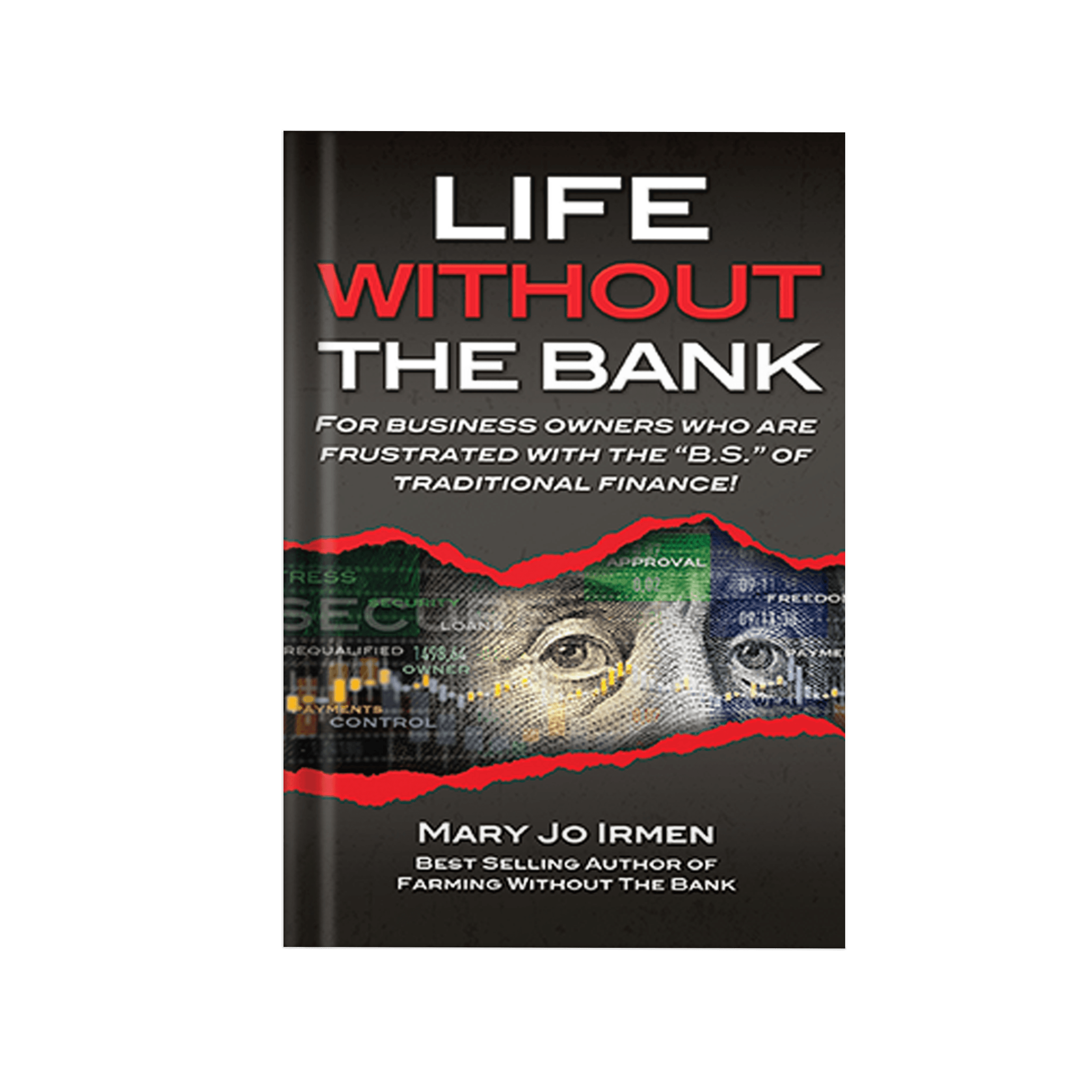
👉 Get the book: https://www.withoutthebank.com/book/
We break down Nelson Nash's Becoming Your Own Banker and the "97/3" insight: wealth is a skill, not a windfall. You'll see how banking is a process you already participate in, and how to start controlling more of it. From braces and car payments to IRAs and credit cards, we show how small shifts (and an honest repayment plan to yourself) can transform cash flow.
Key Takeaways:
◦ Money is one pool, no matter how many accounts you split it into.
◦ Don't earn 5% in an IRA while paying 25–30% on credit cards—that math loses.
◦ Becoming your own banker = borrow from your pool and pay yourself back (with interest).
◦ Wealth is a skill: discipline, tracking, and continuous learning beat lucky breaks.
◦ Control cash flow first; assets and compound growth follow.
CHAPTER TIMESTAMPS
- 00:00Why you feel "broke": the compartmentalization trap
- 01:27Becoming Your Own Banker (Intro to the first chapter)
- 01:58The 97/3 rule: wealth as a skill, not a windfall
- 03:18Can't manage $1? You can't manage $1M (cash flow vs income)
- 04:13Spending leaks: Starbucks, dining out, and "must be nice"
- 06:16Lottery winners & why sudden money rarely lasts
- 08:14"You don't have to change anything"… actually, you do (habits)
- 09:36Continuous learning vs arrival syndrome
- 11:11Banking is the most important business; money must flow
- 12:31There's only one pool of money
- 14:09Using IRAs vs bank loans: the real cost of capital
- 15:45We've been trained to think money is "complicated"
- 16:06Retirement balances vs 30% cards: pay yourself back instead
- 18:27Braces example: cash discount, banker hat, repayment plan
- 19:12It's not complicated—use an amortization schedule
- 20:23Control the banking function in your life
- 21:12Overwhelm? Start with baby steps + an advisor
- 22:29Choose your hard: money stress vs money discipline
- 23:35Why money problems strain everything (even marriages)
- 24:28Keep learning the language of money
- 25:14What's next & how to get the books
YOUTUBE EPISODE
TRANSCRIPTION
“We as a society have been taught to compartmentalize money. We have one savings account for a vehicle. We have one savings account for vacation, home improvement. We have one savings account for the bank. We have a retirement account. It’s crazy how many times I meet with a client and I see all this money and they’re struggling to pay their bills day to day, but they’re moving it all into a retirement account and a savings account. And they’re like, but I’m broke. No, you’re not. Your cash flow is messed up because it’s one pool of money. You’re putting all this money into a retirement account and then you go put money on the credit card. You charge the credit card at 25 to 30% interest. What? If all we did was change one thing and said, I’m going to use my retirement account money to put braces on the kids, but then I am paying myself back for those braces. Guess what? We have the money for retirement. All we have to do is pay ourself back plus interest.”
Hello, hello, and welcome back to the podcast. Thank you very much for being here. Okay, we are going to dive into Becoming Your Own Banker. This is actually the first chapter. Thanks for joining us on the other two. This is technically the first chapter.
So this is my absolute favorite paragraph of this book. When he talks about if some authoritative power distributed all the money in the world, equally amongst all the people, 97% of all the money would end up under the control of 3% of the people. And the reason that that’s what got me, even though I did not understand the numbers in this book at all. But this piece I understood because my dad and uncle talked about this. That if they just took all the money in the world and divided it equally, the rich would still be rich and the poor would still be poor. And I don’t think that people truly get that. What Nelson is saying here is that wealthy people know what to do with their money. That is why they’re wealthy.
It’s like a language, right? It’s like they’re fluent in how it works, how to keep it, how to make more of it. They surround themselves with people that do the same thing.
It’s a skill. And unless you have the skill, you’re not going to have the knowledge to keep it. It’s like what I tell my son all the time because he’s going to be an entrepreneur. I don’t know if he’s going to be good at keeping his money, but he’s going to be an entrepreneur. And he’s always like, when I make a million dollars, you know, I’m going to do this and this and this. I’m like, Kayla, you have to learn how to keep a dollar. Otherwise, it doesn’t matter how much money you make. And that’s what Nelson is saying. And it’s not even about ownership. He’s talking about control. If you can’t manage a dollar, you can’t manage a million.
And 97% of the people do not know how to manage money. I mean, let’s just look at what’s happening in the economy as we record this. People are struggling. 97% of the population most likely is struggling. But 3% of the population is not. And when I go on to TikTok and I see the masses go, how can you afford a $100,000 vehicle? How can you afford a vehicle payment that’s $1,500 a month? They’re not truly asking, what am I doing wrong? Right? They’re just like, they just can’t fathom a $1,500 a month vehicle payment. They can’t fathom paying $100,000 for a vehicle. But they’re not truly looking to get advice on what are these people doing? Do they own a business? Do they, what kind of job do they have? They automatically assume that they’re spoiled little brats with a ton of money. They don’t, how many, you know, they’re like, I’m working three jobs and I can’t afford that. So how are these people affording it when I can’t and I’m working three jobs?
How are you managing your money? Because are you buying beer? Like I had my first assistant that I had, she got paid very well, but she never had any money. But when they would go out to eat, they would have like two or three beers. Holy moly. That is super expensive. I’m not a big drinker. So to have a couple of beers is like, like kind of a big deal. I’m not, that’s just not going to happen. Every single time we go out to eat. She would have people at her house on Sundays for football. Toilet paper, beer, like they would have a keg in their shop. You’re just, you’re providing alcohol so all these people can come over. And then you’re complaining that you don’t get paid enough. What? Your house was newer than my house. Right? I put off all of these things so I could build my business. And then as soon as I had something nice, she was saying, well, that’s not fair. I should get more. I should make more money. Because I don’t have, I don’t have a new vehicle, but your house is newer than mine. Like her perception of how to buy things was so different than what mine was. And that’s a prime example of if you can’t manage a dollar, you can’t manage a million.
Right.
Because I was paying you a lot of money per hour and it still did not matter. And it was all my fault because you weren’t getting paid enough. No, it’s not my fault. You have to have the discipline. You have to have the discipline to, to keep money and to put it to work for you. And that’s why I love what he’s saying because he’s saying, it doesn’t matter if, if everything was distributed equally at the end. And I would argue it’s probably less than 10 years.
Oh yeah.
It doesn’t matter because.
Well, look at people that win the lottery are broke within what, three? And not even like broke, like bankrupt. Like worse off than they were before because they don’t have the skill set that they need in order to multiply it or to keep it or to make wise financial decisions with it. Do you watch that show?
Which show?
I forget the guy. It’s like a HGTV show that they win the lottery and then he finds them a house.
Oh gosh.
It’s like, the funny thing is, is some people will win the lottery and then they go and buy some big ginormous fancy house that is completely unnecessary.
Right.
And the next person will win the lottery and they, they act like they’re still broke. And they will buy like just an upgrade or something they can, you know, be comfortable in, but they don’t need this big, huge, ginormous house. And what’s funny is the host of the show, he’s more excited when they want to spend more money.
Right.
And I’m like, okay. But typically it’s two people. Typically it’s not a young person that wins the lottery. It’s an older, you know, they’re empty nesters. And like, why would you encourage them to be spending all this money? And maybe he’s just more excited because he gets to look at nicer homes probably, which is exciting.
Yeah.
But like, I’m just like, don’t be encouraging them to spend money so that they end up broke because I know the statistics. It’s a skill set and, and you need to, you need to be in charge of telling your dollars where to go instead of having your money tell you what should be happening. And so often I see that it’s just like, most people don’t know where their money is going, how much they’re spending on eating out. And you have to be paying attention to those things because you need to be in charge of it. You need to have a budget.
There’s a lot of people in the infinite banking world who also talk about, oh, you don’t have to change anything you’re doing to start a policy. And I used to be one of those, guilty as charged. But that’s not how you get ahead. And so as we don’t need to be so extreme that we’re picking shit up off the side of the road and reselling it, you know, like we don’t have to be quite that extreme. I think you don’t have to give up all your pizza and beer. But I don’t think changing your habits a little bit is bad. And we’ll get into that when we talk about Parkinson’s law.
But the reason 97% of the population is where they are is because they are not asking and not researching how to make more money, how to use their money more efficiently. And preparing. It is not that the 3% are bad people. It’s that they are more knowledgeable than the 97% who choose to not take their extra time away from Netflix and read something about finances. And when they’re scrolling, they’re not seeing the same stuff you and I are seeing. When I’m scrolling, I am seeing a massive amount of business stuff, education. I’m not watching dance videos. Like I’m scrolling at night. But it is like the amount of things I learn is crazy. If I’m not learning something in three seconds, I’m on to the next video. It’s a mentality of constantly learning versus the arrival syndrome of I’ve got it all. I’m comfortable. I have kids to run around. I don’t have time to look at those things. Well, do you have time to be broke? Because that’s what’s happened.
Everyone has time for what’s important to them.
Right.
So if it’s not important to you, that’s fine. But I mean, it’s kind of like if you are taking a test and you study for it for three days in a row and get an A on it versus someone that didn’t take that time and then they fail the test and it’s like, well, we both had the same opportunity.
Yeah. I saw a meme the other day that said, must be nice. And the reply was, we both have the same 24 hours in a day. I just choose to use mine more wisely. Is it? It’s not wrong. We both have the same 24 hours in a day. I can’t be like, oh, well, I’m heavy and I need to lose weight because I don’t have time to exercise. Yeah, I do. I got plenty of time to exercise. I just don’t use that same 24 hours as wisely as somebody else.
Right.
Okay. Next paragraph here. And this is Nelson, I think, answering his own question because before that, he’s like, why do you think this happens? Perhaps some of the answer lies in the fact that most folks know next to nothing about the process of banking and its importance to their lives and their well-being. Banking is the most important business in the world. Without it, all businesses come to a screeching halt. Which we’ve already talked about in the intro and the points to consider.
Yep. Money must flow. It has a starting and end destination. And the banks have essentially monopolized that entire process. And because we are so used to it, we just allow it to happen. And think about how much interest they make off of our family and our family’s family. Like it’s a generational thing that the bank is like…
It’s how much interest they make and how much cash flow they make.
Right.
Off of our money being in there.
Yeah.
Yeah. Because most people have mortgages, vehicle loans, college education.
Yeah.
The next… I like the next paragraph a lot. There is only one pool of money in the world. The fact that this pool is managed by a number of institutions, banks, insurance companies, corporations, and individuals in various countries with various currency denominations is incidental. And then in the next paragraph, I have one thing highlighted. It’s all a part of a system. And we have to understand that. That is one pool of money in the world. One pool. It’s all flowing through the central banks. Our money goes into the bank. The bank, it all flows through. It all goes from one bank to one person to one bank to one person. It’s all coming from one printing press, essentially.
What we do not also understand is our pool of money is one pool of money. It does not matter if I have that in five savings accounts. If I have that in a savings account, a brokerage account, an IRA account, and a life insurance policy, it’s one pool of money. So when I’m helping clients, the biggest question becomes, well, Mary Jo, should I use my brokerage account money or should I borrow from my life insurance policy? Like, does it matter? It’s one pool of money. It ultimately is not going to matter. If you take it from your brokerage account, you lose the ability to compound over there. If you borrow from your policy, you have uninterrupted compound interest. Right? We make money so complicated. Which is why the 97% say, eh, not doing it. Right? Because they have been led to believe that it is a very, very complicated scenario.
And when we think about it, like, I always think it’s funny when people say, well, I don’t want to touch my 401(k) money or my IRA money. I have a bunch of money sitting in an IRA. And I don’t want to use that for my business. I’m like, okay, that’s okay. Don’t use it for your business. But if you, but you’re going to go to the bank and borrow at a higher rate than what you’re making in your IRA or your brokerage account. So they’re going to maybe charge you 7% to 8% to borrow the same amount of money that you’re maybe making 5% on. Well, I don’t want to, I don’t want to use that money. Okay. So what happens if the business fails and the bank needs their money? You’re going to go to your brokerage account to use that money to pay off the bank. It’s one pool of money. It’s one pool of money. And if you don’t want to borrow your money and lend it to your business, then why should the bank lend you money? Because if you don’t even trust yourself enough to pay yourself back, why should the bank trust you to pay yourself back?
Questionable. Well, I don’t think that it is an accident that a lot of people think money is complicated. We have been basically brainwashed to think that we are incapable of doing better for ourselves than another person down the street can do for us. Like, yes, they’re making money, but it’s like they don’t care about my life as much as I care about my life and how it feels and how it looks and what I’m doing day to day.
We as a society have been taught to compartmentalize money. We have one savings account for a vehicle. We have one savings account for vacation. We have one savings account for home improvement. We have one savings account for the bank. We have one, we have a retirement account. We have all this money. It’s crazy how many times I meet with a client and I see all this money. Like, they have a ton of money and they’re struggling to pay their bills day to day, but they’re moving it all into a retirement account and a savings account. And they’re like, I’m, but I’m broke. I’m like, no, you’re not. Your cash flow is messed up. Right? Because it’s one pool of money. So you’re putting all this money into a retirement account and then you go put money on the credit card. You charge the credit card at 25 to 30% interest. What? Just so you can feel good that you have money in a retirement account. How much are you losing to the credit card company? It’s one pool of money. If all we did was change one thing and said, I’m going to use my retirement account money to put braces on the kids. But then I am paying myself back for those braces. Guess what? We have the money for retirement. All we have to do is pay ourself back. Plus interest.
Right. And you’ve created your own retirement account. That’s not subjective to market fluctuation. Like, we’re so used to it. I like to think about it as like, what’s the easiest way to control masses? You divide and conquer them. Right? What’s the easiest way to control other people’s money? You divide and conquer it. And that’s what happens. And that’s what’s so normalized is we can’t see past what we’ve been trained and conditioned to think. It’s like if you don’t have braces money in the braces money envelope, what envelope do you go to? Well, the one that has cash in it. You know, but we’re so used to just being like, this goes over here, this goes over here, this goes over here. We can’t have braces because that’s for tires.
Right.
It’s like, no. If you need something, you’re going to find, right, you’re going to find the money. And one pool of money, I think, helps people zoom out and look at their big picture finances. And if what they’re doing is making sense.
They can’t have one pool. If they do not, if they’re not honest bankers to pay themselves back.
Right.
You can’t have one pool then. But if all you have to do is pay yourself back, because if we’re going to buy the braces, if we’re going to pay for the braces in full, or we can make payments to the orthodontist, right, if the orthodontist is not going to give us a cash discount, then we may want to just make payments to the orthodontist. If we get a cash discount, then we’re going to borrow from, or we’re going to take from our savings account and we’re going to pay ourselves back what we would have paid the orthodontist in payments. So we have to, we have to, if we’re going to have one pool, we have to put the banker hat on. We have to put the lender hat on. And we have to put the bank hat on. So there’s a difference between a banker and a bank. So we’re going to own the bank. We’re going to have to put all those hats on to figure it out. And it’s really, it’s, it’s a little bit complicated at first, but it gets easier as you go because it’s just repetitiveness. And so it’s not like you’re having to learn this super complicated system. It’s just, hey, let’s do a couple of loans. Let’s pay them back. Yeah, you’re good to go. I have amortization calculator on my website. Go in there, you type in what you need. It spits out an amortization schedule and you move money over just like you would if you had a car payment. You can set it up with the insurance company for automatic payments. But it’s not, it’s not complicated.
No, it’s like you’re, you’re adding on an additional role. Right? You’re the consumer and you’re the business owner and you’re the real estate investor. Whatever that is, those are all roles. And you are now the banker. You’re just adding on a role. So that means you have to play the part.
Right.
Yeah.
Okay. So the banking business is somewhat like that. Money flows from the pools through our hands to meet our needs. But somewhere in the process, it all ends up back into the banking system. It is all a matter of how much of the banking function do you control as it relates to your needs. I’m just like, just wish I could have a conversation with Nelson. Banking is a process. We all participate in it. Should I play his role? Not complicated, Tarisa.
It’s not. It’s, you know, I just feel like people are just like walking every day and they never look up. They never look up to see what’s happening and what’s impacting their life on such a big level. And it is because they’re busy with other things.
Right. But this is so, if we want to learn something, we have to slowly add it. This is, and having an advisor to help you understand that is so much easier than trying to figure it all out when you read the book and go, okay, well, I guess I don’t, I don’t completely understand it. So I’m not going to do it. And I’m going to put it away right now because I don’t have time for it. If you have an advisor that can help you, you have to make time to talk to that advisor. But why are you, but not to get started and never to take the time to understand it is terrible. Right. I don’t want to have to count calories. I don’t want to have to exercise, but I have to. Because if I don’t, nothing’s going to change. So eventually you got to do those things.
And money is, money is important. I saw a quote years ago and it stuck and not a lot of stuff sticks, but this stuck. And they said, who thinks about money more than wealthy people? People that don’t have money. I’ve been in both situations where I don’t have the money and I have the money. I prefer the situation where I have the money because there are a lot more stressors in life when you don’t have the money. You see those people that are on social media and they don’t have money. Their marriage is falling apart. They’re getting vehicles repoed. They’re angry with their children. Like it, if you think that not having money is hard or that having money is easy, try not having money. That is so hard.
That’s weird. That it’s harder. It’s easier to work harder to have more money.
Yeah. There’s this, there might be a sacrifice there. Like I work really hard. There was not a lot of time building my business with my kids. But now I can spend whatever time I want with them. There’s a sacrifice on both sides of that. But I can have what, I can go to the store and buy what I want without having to look at the price, carry a calculator along. So we can say, hey, I don’t, this is tough, but I’m going to spend some time learning it and redirect that time into something else.
Well, it’s like the whole choose your hard conversation. Right. And I can’t remember what podcast I was listening to, but basically I was saying most marriages can survive like infidelity, but what most marriages can’t survive is financial problems. Because it’s so pervasive. It impacts every aspect of your life.
Right.
How you feel about yourself, how you feel about your marriage, how you feel about your kids, how you interact with all these things that are important to you. And think about how much time we spend during the day to acquire money. So then to, to not prioritize it as something that is important to manage or to keep track of or to have control over. It has far greater impacts than I think most people realize. And I get the pain of not wanting to pay attention to something if you feel so overwhelmed by it. But everything is manageable with baby steps.
Yep. It’s just taking that first step. And there is a lot of financial lingo to kind of understand. But there’s a lot of financial lingo I don’t understand. And I’m slowly having to add that into the things that I learned as well. Because it’s things that I don’t deal with on a day to day basis, like inventory of goods that businesses have. Well, what does that look like? How is that accounted for? Like all those things I need to educate myself on. So I’m better for help for a client. But it truly like we have it’s happened so slow over the years that it just kind of naturally comes as you start adding to it. But you have to do, you have to do that. You have to be intentional about it.
Okay. That was Becoming Your Own Banker. Next is how the infinite banking concept got started. So come back next week and or whenever. Come back again. I don’t know how these are going to be released. We’re batching this, right? So come back again. As we finish the book, read ahead so that, you know, maybe you want to participate silently or email us, whatever. Okay. Let me know how we can help. You know the routine. Email myself. Email Tarisa. Grab your Life Without the Bank book. Grab your Nelson book. And we’ll see you in the next podcast.
View MoreHello, hello, and welcome back to the podcast. Thank you very much for being here. Okay, we are going to dive into Becoming Your Own Banker. This is actually the first chapter. Thanks for joining us on the other two. This is technically the first chapter.
So this is my absolute favorite paragraph of this book. When he talks about if some authoritative power distributed all the money in the world, equally amongst all the people, 97% of all the money would end up under the control of 3% of the people. And the reason that that’s what got me, even though I did not understand the numbers in this book at all. But this piece I understood because my dad and uncle talked about this. That if they just took all the money in the world and divided it equally, the rich would still be rich and the poor would still be poor. And I don’t think that people truly get that. What Nelson is saying here is that wealthy people know what to do with their money. That is why they’re wealthy.
It’s like a language, right? It’s like they’re fluent in how it works, how to keep it, how to make more of it. They surround themselves with people that do the same thing.
It’s a skill. And unless you have the skill, you’re not going to have the knowledge to keep it. It’s like what I tell my son all the time because he’s going to be an entrepreneur. I don’t know if he’s going to be good at keeping his money, but he’s going to be an entrepreneur. And he’s always like, when I make a million dollars, you know, I’m going to do this and this and this. I’m like, Kayla, you have to learn how to keep a dollar. Otherwise, it doesn’t matter how much money you make. And that’s what Nelson is saying. And it’s not even about ownership. He’s talking about control. If you can’t manage a dollar, you can’t manage a million.
And 97% of the people do not know how to manage money. I mean, let’s just look at what’s happening in the economy as we record this. People are struggling. 97% of the population most likely is struggling. But 3% of the population is not. And when I go on to TikTok and I see the masses go, how can you afford a $100,000 vehicle? How can you afford a vehicle payment that’s $1,500 a month? They’re not truly asking, what am I doing wrong? Right? They’re just like, they just can’t fathom a $1,500 a month vehicle payment. They can’t fathom paying $100,000 for a vehicle. But they’re not truly looking to get advice on what are these people doing? Do they own a business? Do they, what kind of job do they have? They automatically assume that they’re spoiled little brats with a ton of money. They don’t, how many, you know, they’re like, I’m working three jobs and I can’t afford that. So how are these people affording it when I can’t and I’m working three jobs?
How are you managing your money? Because are you buying beer? Like I had my first assistant that I had, she got paid very well, but she never had any money. But when they would go out to eat, they would have like two or three beers. Holy moly. That is super expensive. I’m not a big drinker. So to have a couple of beers is like, like kind of a big deal. I’m not, that’s just not going to happen. Every single time we go out to eat. She would have people at her house on Sundays for football. Toilet paper, beer, like they would have a keg in their shop. You’re just, you’re providing alcohol so all these people can come over. And then you’re complaining that you don’t get paid enough. What? Your house was newer than my house. Right? I put off all of these things so I could build my business. And then as soon as I had something nice, she was saying, well, that’s not fair. I should get more. I should make more money. Because I don’t have, I don’t have a new vehicle, but your house is newer than mine. Like her perception of how to buy things was so different than what mine was. And that’s a prime example of if you can’t manage a dollar, you can’t manage a million.
Right.
Because I was paying you a lot of money per hour and it still did not matter. And it was all my fault because you weren’t getting paid enough. No, it’s not my fault. You have to have the discipline. You have to have the discipline to, to keep money and to put it to work for you. And that’s why I love what he’s saying because he’s saying, it doesn’t matter if, if everything was distributed equally at the end. And I would argue it’s probably less than 10 years.
Oh yeah.
It doesn’t matter because.
Well, look at people that win the lottery are broke within what, three? And not even like broke, like bankrupt. Like worse off than they were before because they don’t have the skill set that they need in order to multiply it or to keep it or to make wise financial decisions with it. Do you watch that show?
Which show?
I forget the guy. It’s like a HGTV show that they win the lottery and then he finds them a house.
Oh gosh.
It’s like, the funny thing is, is some people will win the lottery and then they go and buy some big ginormous fancy house that is completely unnecessary.
Right.
And the next person will win the lottery and they, they act like they’re still broke. And they will buy like just an upgrade or something they can, you know, be comfortable in, but they don’t need this big, huge, ginormous house. And what’s funny is the host of the show, he’s more excited when they want to spend more money.
Right.
And I’m like, okay. But typically it’s two people. Typically it’s not a young person that wins the lottery. It’s an older, you know, they’re empty nesters. And like, why would you encourage them to be spending all this money? And maybe he’s just more excited because he gets to look at nicer homes probably, which is exciting.
Yeah.
But like, I’m just like, don’t be encouraging them to spend money so that they end up broke because I know the statistics. It’s a skill set and, and you need to, you need to be in charge of telling your dollars where to go instead of having your money tell you what should be happening. And so often I see that it’s just like, most people don’t know where their money is going, how much they’re spending on eating out. And you have to be paying attention to those things because you need to be in charge of it. You need to have a budget.
There’s a lot of people in the infinite banking world who also talk about, oh, you don’t have to change anything you’re doing to start a policy. And I used to be one of those, guilty as charged. But that’s not how you get ahead. And so as we don’t need to be so extreme that we’re picking shit up off the side of the road and reselling it, you know, like we don’t have to be quite that extreme. I think you don’t have to give up all your pizza and beer. But I don’t think changing your habits a little bit is bad. And we’ll get into that when we talk about Parkinson’s law.
But the reason 97% of the population is where they are is because they are not asking and not researching how to make more money, how to use their money more efficiently. And preparing. It is not that the 3% are bad people. It’s that they are more knowledgeable than the 97% who choose to not take their extra time away from Netflix and read something about finances. And when they’re scrolling, they’re not seeing the same stuff you and I are seeing. When I’m scrolling, I am seeing a massive amount of business stuff, education. I’m not watching dance videos. Like I’m scrolling at night. But it is like the amount of things I learn is crazy. If I’m not learning something in three seconds, I’m on to the next video. It’s a mentality of constantly learning versus the arrival syndrome of I’ve got it all. I’m comfortable. I have kids to run around. I don’t have time to look at those things. Well, do you have time to be broke? Because that’s what’s happened.
Everyone has time for what’s important to them.
Right.
So if it’s not important to you, that’s fine. But I mean, it’s kind of like if you are taking a test and you study for it for three days in a row and get an A on it versus someone that didn’t take that time and then they fail the test and it’s like, well, we both had the same opportunity.
Yeah. I saw a meme the other day that said, must be nice. And the reply was, we both have the same 24 hours in a day. I just choose to use mine more wisely. Is it? It’s not wrong. We both have the same 24 hours in a day. I can’t be like, oh, well, I’m heavy and I need to lose weight because I don’t have time to exercise. Yeah, I do. I got plenty of time to exercise. I just don’t use that same 24 hours as wisely as somebody else.
Right.
Okay. Next paragraph here. And this is Nelson, I think, answering his own question because before that, he’s like, why do you think this happens? Perhaps some of the answer lies in the fact that most folks know next to nothing about the process of banking and its importance to their lives and their well-being. Banking is the most important business in the world. Without it, all businesses come to a screeching halt. Which we’ve already talked about in the intro and the points to consider.
Yep. Money must flow. It has a starting and end destination. And the banks have essentially monopolized that entire process. And because we are so used to it, we just allow it to happen. And think about how much interest they make off of our family and our family’s family. Like it’s a generational thing that the bank is like…
It’s how much interest they make and how much cash flow they make.
Right.
Off of our money being in there.
Yeah.
Yeah. Because most people have mortgages, vehicle loans, college education.
Yeah.
The next… I like the next paragraph a lot. There is only one pool of money in the world. The fact that this pool is managed by a number of institutions, banks, insurance companies, corporations, and individuals in various countries with various currency denominations is incidental. And then in the next paragraph, I have one thing highlighted. It’s all a part of a system. And we have to understand that. That is one pool of money in the world. One pool. It’s all flowing through the central banks. Our money goes into the bank. The bank, it all flows through. It all goes from one bank to one person to one bank to one person. It’s all coming from one printing press, essentially.
What we do not also understand is our pool of money is one pool of money. It does not matter if I have that in five savings accounts. If I have that in a savings account, a brokerage account, an IRA account, and a life insurance policy, it’s one pool of money. So when I’m helping clients, the biggest question becomes, well, Mary Jo, should I use my brokerage account money or should I borrow from my life insurance policy? Like, does it matter? It’s one pool of money. It ultimately is not going to matter. If you take it from your brokerage account, you lose the ability to compound over there. If you borrow from your policy, you have uninterrupted compound interest. Right? We make money so complicated. Which is why the 97% say, eh, not doing it. Right? Because they have been led to believe that it is a very, very complicated scenario.
And when we think about it, like, I always think it’s funny when people say, well, I don’t want to touch my 401(k) money or my IRA money. I have a bunch of money sitting in an IRA. And I don’t want to use that for my business. I’m like, okay, that’s okay. Don’t use it for your business. But if you, but you’re going to go to the bank and borrow at a higher rate than what you’re making in your IRA or your brokerage account. So they’re going to maybe charge you 7% to 8% to borrow the same amount of money that you’re maybe making 5% on. Well, I don’t want to, I don’t want to use that money. Okay. So what happens if the business fails and the bank needs their money? You’re going to go to your brokerage account to use that money to pay off the bank. It’s one pool of money. It’s one pool of money. And if you don’t want to borrow your money and lend it to your business, then why should the bank lend you money? Because if you don’t even trust yourself enough to pay yourself back, why should the bank trust you to pay yourself back?
Questionable. Well, I don’t think that it is an accident that a lot of people think money is complicated. We have been basically brainwashed to think that we are incapable of doing better for ourselves than another person down the street can do for us. Like, yes, they’re making money, but it’s like they don’t care about my life as much as I care about my life and how it feels and how it looks and what I’m doing day to day.
We as a society have been taught to compartmentalize money. We have one savings account for a vehicle. We have one savings account for vacation. We have one savings account for home improvement. We have one savings account for the bank. We have one, we have a retirement account. We have all this money. It’s crazy how many times I meet with a client and I see all this money. Like, they have a ton of money and they’re struggling to pay their bills day to day, but they’re moving it all into a retirement account and a savings account. And they’re like, I’m, but I’m broke. I’m like, no, you’re not. Your cash flow is messed up. Right? Because it’s one pool of money. So you’re putting all this money into a retirement account and then you go put money on the credit card. You charge the credit card at 25 to 30% interest. What? Just so you can feel good that you have money in a retirement account. How much are you losing to the credit card company? It’s one pool of money. If all we did was change one thing and said, I’m going to use my retirement account money to put braces on the kids. But then I am paying myself back for those braces. Guess what? We have the money for retirement. All we have to do is pay ourself back. Plus interest.
Right. And you’ve created your own retirement account. That’s not subjective to market fluctuation. Like, we’re so used to it. I like to think about it as like, what’s the easiest way to control masses? You divide and conquer them. Right? What’s the easiest way to control other people’s money? You divide and conquer it. And that’s what happens. And that’s what’s so normalized is we can’t see past what we’ve been trained and conditioned to think. It’s like if you don’t have braces money in the braces money envelope, what envelope do you go to? Well, the one that has cash in it. You know, but we’re so used to just being like, this goes over here, this goes over here, this goes over here. We can’t have braces because that’s for tires.
Right.
It’s like, no. If you need something, you’re going to find, right, you’re going to find the money. And one pool of money, I think, helps people zoom out and look at their big picture finances. And if what they’re doing is making sense.
They can’t have one pool. If they do not, if they’re not honest bankers to pay themselves back.
Right.
You can’t have one pool then. But if all you have to do is pay yourself back, because if we’re going to buy the braces, if we’re going to pay for the braces in full, or we can make payments to the orthodontist, right, if the orthodontist is not going to give us a cash discount, then we may want to just make payments to the orthodontist. If we get a cash discount, then we’re going to borrow from, or we’re going to take from our savings account and we’re going to pay ourselves back what we would have paid the orthodontist in payments. So we have to, we have to, if we’re going to have one pool, we have to put the banker hat on. We have to put the lender hat on. And we have to put the bank hat on. So there’s a difference between a banker and a bank. So we’re going to own the bank. We’re going to have to put all those hats on to figure it out. And it’s really, it’s, it’s a little bit complicated at first, but it gets easier as you go because it’s just repetitiveness. And so it’s not like you’re having to learn this super complicated system. It’s just, hey, let’s do a couple of loans. Let’s pay them back. Yeah, you’re good to go. I have amortization calculator on my website. Go in there, you type in what you need. It spits out an amortization schedule and you move money over just like you would if you had a car payment. You can set it up with the insurance company for automatic payments. But it’s not, it’s not complicated.
No, it’s like you’re, you’re adding on an additional role. Right? You’re the consumer and you’re the business owner and you’re the real estate investor. Whatever that is, those are all roles. And you are now the banker. You’re just adding on a role. So that means you have to play the part.
Right.
Yeah.
Okay. So the banking business is somewhat like that. Money flows from the pools through our hands to meet our needs. But somewhere in the process, it all ends up back into the banking system. It is all a matter of how much of the banking function do you control as it relates to your needs. I’m just like, just wish I could have a conversation with Nelson. Banking is a process. We all participate in it. Should I play his role? Not complicated, Tarisa.
It’s not. It’s, you know, I just feel like people are just like walking every day and they never look up. They never look up to see what’s happening and what’s impacting their life on such a big level. And it is because they’re busy with other things.
Right. But this is so, if we want to learn something, we have to slowly add it. This is, and having an advisor to help you understand that is so much easier than trying to figure it all out when you read the book and go, okay, well, I guess I don’t, I don’t completely understand it. So I’m not going to do it. And I’m going to put it away right now because I don’t have time for it. If you have an advisor that can help you, you have to make time to talk to that advisor. But why are you, but not to get started and never to take the time to understand it is terrible. Right. I don’t want to have to count calories. I don’t want to have to exercise, but I have to. Because if I don’t, nothing’s going to change. So eventually you got to do those things.
And money is, money is important. I saw a quote years ago and it stuck and not a lot of stuff sticks, but this stuck. And they said, who thinks about money more than wealthy people? People that don’t have money. I’ve been in both situations where I don’t have the money and I have the money. I prefer the situation where I have the money because there are a lot more stressors in life when you don’t have the money. You see those people that are on social media and they don’t have money. Their marriage is falling apart. They’re getting vehicles repoed. They’re angry with their children. Like it, if you think that not having money is hard or that having money is easy, try not having money. That is so hard.
That’s weird. That it’s harder. It’s easier to work harder to have more money.
Yeah. There’s this, there might be a sacrifice there. Like I work really hard. There was not a lot of time building my business with my kids. But now I can spend whatever time I want with them. There’s a sacrifice on both sides of that. But I can have what, I can go to the store and buy what I want without having to look at the price, carry a calculator along. So we can say, hey, I don’t, this is tough, but I’m going to spend some time learning it and redirect that time into something else.
Well, it’s like the whole choose your hard conversation. Right. And I can’t remember what podcast I was listening to, but basically I was saying most marriages can survive like infidelity, but what most marriages can’t survive is financial problems. Because it’s so pervasive. It impacts every aspect of your life.
Right.
How you feel about yourself, how you feel about your marriage, how you feel about your kids, how you interact with all these things that are important to you. And think about how much time we spend during the day to acquire money. So then to, to not prioritize it as something that is important to manage or to keep track of or to have control over. It has far greater impacts than I think most people realize. And I get the pain of not wanting to pay attention to something if you feel so overwhelmed by it. But everything is manageable with baby steps.
Yep. It’s just taking that first step. And there is a lot of financial lingo to kind of understand. But there’s a lot of financial lingo I don’t understand. And I’m slowly having to add that into the things that I learned as well. Because it’s things that I don’t deal with on a day to day basis, like inventory of goods that businesses have. Well, what does that look like? How is that accounted for? Like all those things I need to educate myself on. So I’m better for help for a client. But it truly like we have it’s happened so slow over the years that it just kind of naturally comes as you start adding to it. But you have to do, you have to do that. You have to be intentional about it.
Okay. That was Becoming Your Own Banker. Next is how the infinite banking concept got started. So come back next week and or whenever. Come back again. I don’t know how these are going to be released. We’re batching this, right? So come back again. As we finish the book, read ahead so that, you know, maybe you want to participate silently or email us, whatever. Okay. Let me know how we can help. You know the routine. Email myself. Email Tarisa. Grab your Life Without the Bank book. Grab your Nelson book. And we’ll see you in the next podcast.



ready to start?
Your financial independence starts with one book.
Only one of three Americans can retire. Part of the fault is the conditioned belief that you must give up the use of your money when you’re young so you can have it later, assuming the stock market doesn’t collapse.