Podcast
EP. 258
Banks Push Interest Rates Because They Fear This Alternative (Ep. 258)
Feb 26, 2026 ·
12 min
0:00 / 12:21
EPISODE OVERVIEW
ABOUT THIS EPISODE
Are "cheap" bank loans really cheap? And are you asking the wrong question about the rate of return?
In this episode, we break down pages 68–70 of Becoming Your Own Banker and uncover the hidden cost of acquisition, why chasing higher returns misses the point, and how Infinite Banking can create true generational wealth.
If you've ever wondered:
- "Can I get a higher rate of return somewhere else?"
- "Why not just use a bank at 2%?"
- "Should I buy life insurance for my grandkids?"
This episode answers all of it — and flips conventional thinking upside down.
Key Takeaways
- ✔ The real cost of a loan isn't just the interest rate — it's the cost of acquisition
- ✔ Infinite Banking is about how you finance, not what investment earns the most
- ✔ You can use policy loans as an "AND asset" strategy
- ✔ Generational wealth requires education and intentional structure
- ✔ Death benefit can create a self-sustaining family banking system
When properly structured, this system doesn't end with you — it continues for generations.
If you're ready to stop chasing rates of return and start controlling the banking function in your life… 👉 Schedule an appointment with us. 👉 Subscribe for more Infinite Banking breakdowns. 👉 Share this with someone serious about generational wealth.
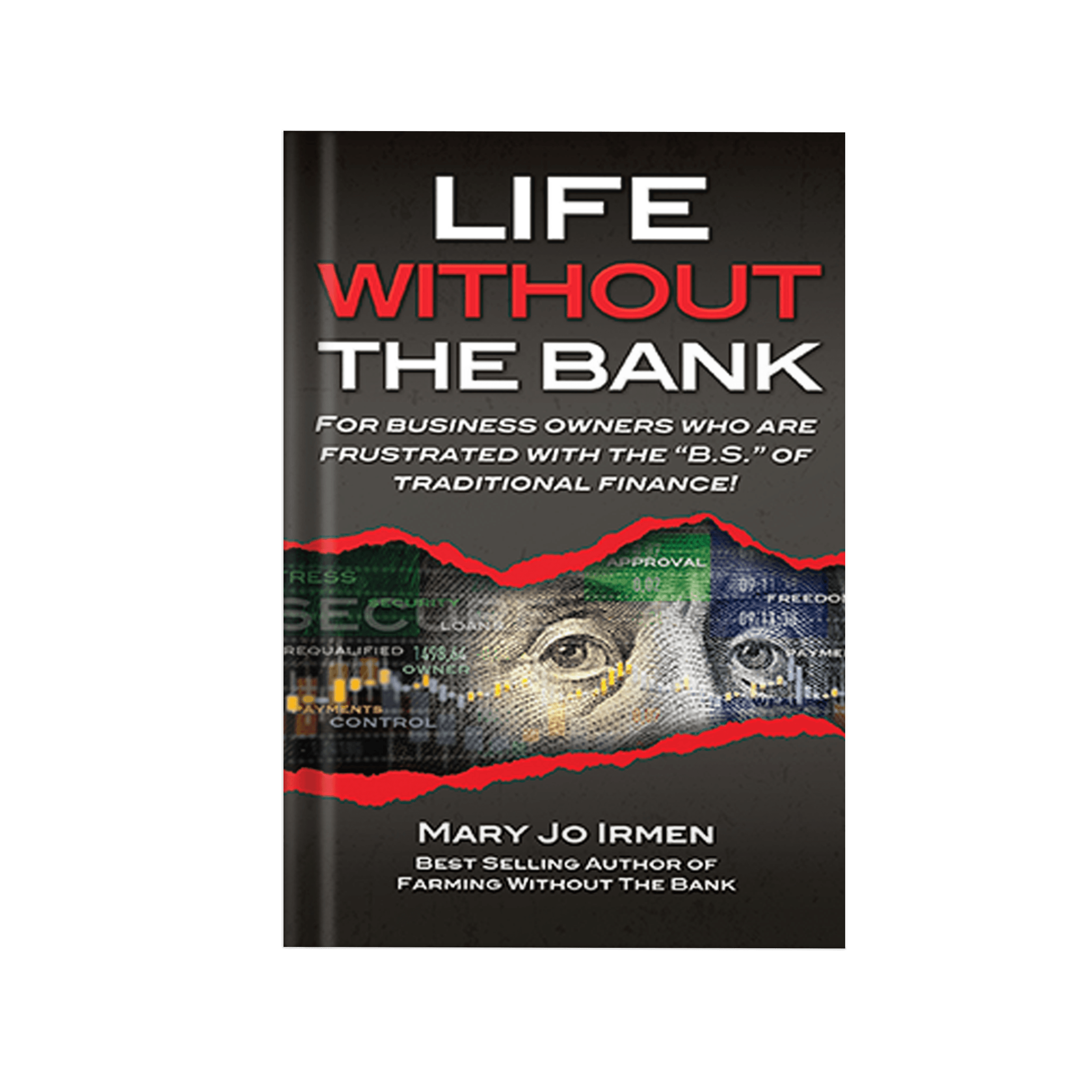
- 📘 Get the book
- 📧 Email Mary Jo: maryjo@withoutthebank.com
- 📧 Email Tarisa: tarisa@withoutthebank.com
- 🌐 withoutthebank.com
- ▶️ Subscribe on YouTube
CHAPTER TIMESTAMPS
- 00:00Buying Life Insurance on Grandkids
- 01:04The True Cost of Acquisition
- 05:06"Can I Get a Higher Rate of Return?"
- 07:42Using Policy Loans as an AND Asset
- 08:08Building Generational Wealth
- 10:57Creating a Self-Sustaining Family Bank
YOUTUBE EPISODE
TRANSCRIPTION
"Buying life insurance on your grandkids — that's great in theory, but mom and dad have to understand the Infinite Banking concept, because if I die, they have to keep paying the premium. If you have one grandkid, you're super excited. But what happens when you have 15? They all need to have policies. So it's really hard, and you don't want to be overzealous on how much you're putting in the first one's policy, because every one of them is going to need a policy. Unless you create a family bank where all the aunts and uncles — if the whole family understands Infinite Banking, then the whole family can be giving them money into their policies as a gift rather than toys. I'm not a big, huge proponent of toys."
Hello, hello, and welcome back to the podcast. Thank you very much for being here. We are going to go over pages 68, 69 and 70 in Becoming Your Own Banker — the cost of acquisition, and can I get a higher rate of return? I'm sure you guys know I'm going to be happy about the higher rate of return conversation.
The cost of acquisition is really simple. I mean, it's three-quarters of a page, but it could kind of be broken down to one thing. I'm going to just sort of briefly go over it, because you guys should read it. I know we've broken down other chapters, like paragraph by paragraph. But again, some of this is so repetitive that I don't feel that we need to do that.
But what Nelson is saying here is, free money isn't free. And so this chapter was really important when interest rates were 2% and 3% and 4%, and when interest rates were cheaper from the bank than they were from the insurance company.
And he talks about — it's really the second column on this page — he says, at least at the last minute, the bankers always find that we need one more pint of blood.
It's like PTSD getting low.
And you get this loan — like when we bought our land, that's when this chapter really hit me. When we bought our land and interest rates were… we have a two and a half on the house and four on our pasture. And the bank is like — especially for the house, the pasture land was not a big deal, what's your financials, no big deal, kind of treated more like a business loan. The house, buying a house is miserable. I need bank statements. You're self-employed.
Oh my gosh, we bought in December. And they're like, how come you have so much money in January? Well, because I had a big case close in January, right? I made more money in January. Not every month is consistent. And they're like, well, we need 11 months' worth of bank statements then. And then they're like, we didn't get July. I'm like, you got July. Let me do your job for you and send it again, because I got nothing going on over here. So you just do your thing.
I was so annoyed with the questions, because they could not understand inconsistent income. And you are a business owner, and so you are going to be treated as if you are a criminal trying to lie. It would have been easier for me to get a job at McDonald's for three months and then go apply for a loan and have some consistent income, and then quit after the fact.
And so people would say, well, it's 2% interest though. Yeah, it was 2%. But there's a cost to the acquisition. How much time did I have to take away from my business in order to provide them the documentation? And that's basically what Nelson is saying here — what is your cost to go online, fill out a form, and have money transferred without you having to do anything?
Well, because time is money. So it's like, if it's taking away from your income-producing activities, then it's actually costing you more than you think it is.
Yeah, money is not free. Those people, that's their job. So they're like, hey, the more paperwork I can create, the better, because I have work to do. That's not my job. If I'm going to take a loan in the policy, and it's 1% higher or 2% higher than what I'm getting at the bank, I will happily do that without having to go through the bank and give the extra pint of blood and my last-born child, because that's what they want.
Yeah.
And so he says in this last paragraph here: if you're in command of the banking function, you do not have to go through all this expensive erosion. The Infinite Banking concept does exactly that. You can make timely decisions. There's no cost of acquisition. You are in competition with others who must go through the erosion that has been outlined. Guess who wins?
Yeah, it's really that simple.
Okay. Can I get a higher rate of return? Nelson starts here: when first exposed to the rationale of the Infinite Banking concept, a person will almost always think, and often voice the thought, but can I get a higher rate of return by investing in X? Unfortunately, that person has not understood the message. We are not addressing the yield of an investment. We are discussing how to finance anything that you buy. It is always better to finance it through your banking system than out of your pocket.
And he goes over some numbers here, and that's great and fine and fantastic. This could be this one paragraph, because it is inevitable. People that are chasing a rate of return are like, well, what if I put it in a CD? What if I put it in an IRA? Here's the new one: what if I put it in an indexed fund? What if you put it in a policy and borrowed and put it in the index fund? It's an AND asset.
But I like how he says, unfortunately, that person has not understood the message — meaning we're on page 69. Did you miss 68 pages of the message? Because going over this in two days, we've gotten them. We understand the message. It's loud and clear.
Very repetitive.
It is. It is. And Nelson says, go over it again, go over it again. But if you're not, then you're going to be stuck on a rate of return. Because you are not understanding the financing. You're not understanding the cost of acquisition. You are alleviating all of those things because you're chasing a rate of return.
Well, what's so kind of funny to me about this is, people are not nearly as concerned about a rate of return in their savings accounts. Like, a banking environment — they're happy to capitalize that, that they don't have ownership of.
Yep. And I'm not going to go over his numbers, because he's talking about the characters in the play again, and a trust. And then he says, loans to any of these sources will increase cash value. Meaning, if you're going to take a loan so that you can put it into a CD, you can put it into an investment, it's going to increase cash value, right? Because if you get a return on that investment, what should you do with that return? Put it in your policy as premium. To do what? Start more policies. Create more money, more money, compounding, more money, creating dividends.
And again, he clarifies in this, with all these illustrations and what he's doing with the money, this interest he pays the policy is not really interest — it's a loan, it's additional premium, that equals the amount of interest he's paying to the finance company. And so you're going to have multiple policies.
Okay. All right. Well, gosh, that was fast. I'm looking at my clock over here. That was fast. Let's whip up Distribution of Age Classes.
Okay, let's add it in. Let's do it.
Okay. In this one, he says, a good man leaves an inheritance to his children's children. I like that. My grandpa just did that.
I don't know that anybody in this industry talks about generational wealth as much as I do. Just because I'm working with people that have generational businesses, right? Generational wealth is such a big deal, and we do not talk about that.
My biggest takeaways from this chapter are Nelson saying, once we have the whole system completely established, it is a fabulous income producer, but it is going to take 40 years to get it done. It is going to require thorough knowledge of the concept. It all can work like the following example. But we're going to have to show generations. We're going to have to teach generations.
And in this chapter, Nelson talks a lot about, okay, if we start a policy at 25, or we start a policy at 50, how is that distribution throughout the years? He also in this chapter talks a lot about buying life insurance on your grandkids. And that's great, in theory, because ideally — typically mom and dad don't have money to be buying life insurance on the kids. So there he's saying skip a generation.
But mom and dad have to understand Infinite Banking. Because if I buy life insurance on the grandkids, mom and dad have to have insurance, or we can't buy insurance on the grandkids. They also have to understand the Infinite Banking concept, because if I die, they have to keep paying the premium.
And then if you have one grandkid, you're super excited. But what happens when you have 15? Okay, they all need to have policies. So it's really hard, and you don't want to be overzealous on how much you're putting in the first one's policy, because every one of them is going to need a policy. Unless you create a family bank where all the aunts and uncles — if the whole family understands Infinite Banking, then the whole family can be giving them money into their policies as a gift rather than toys.
I'm not a big, huge proponent of toys. We aren't the funnest grandparents, okay? I am not like, yeah, I'll get toys — but they already have enough. Like, they need bigger houses because of all these toys.
And he says, you've created perpetual motion in your family's financial world. If we keep death benefit, buy more death benefit, death benefit, buy more death benefit, and we keep moving that. There are a number of significant advantages to this plan. It covers multiple generations. Underwriting problems are minimized. Tax-free buildup of cash value. Outlay is very small compared to what the yield is. Generation paying the premiums can most easily afford them. When death benefit occurs, the system becomes self-sustaining — meaning use death benefit to pay premiums.
Yep. Well, it's kind of like how the banking system operates already. It's like, they already view your family as an endless supply of income for them, generation after generation. So Nelson's flipping it on its head and saying, look at what you can do generationally by just making sure that you each have your own Infinite Banking policies, and that you treat the system properly. And then upon each passing, there's a large wealth transfer that's happening. And it becomes cheaper and cheaper for each person to essentially have a leg up in whatever they're doing in the world.
And he says it precludes any need for Social Security. Passive income is assured. Estate planning is greatly simplified. Wealth mentality is transferred to succeeding generations. Promotes the understanding of what stewardship is all about. Money won't buy happiness, but poor stewardship of money will steal happiness.
We have to understand that we have to teach our children this concept. And that is not easy to do when you have adult children, because they already have this conception of what they want to believe. They already have the arrival syndrome. There's some stuff that has to be worked on there. And so it is hard to do that.
But if we can do it — if we can put it in a trust, if we can set all of that up correctly — then it does continue on past our lifetime. But we have to take those steps. Otherwise, what did we create? Nothing, really. It ends with us. It started with us and it ends with us. It's not going to pass down to the succeeding generations. That is not generational wealth.
Okay, that closes up those three chapters. If you need us — comments, questions, concerns — you know where to find us. If you want to schedule your appointment, do so. We would be happy to help. Let us know. You guys have a fantastic rest of your day.
View MoreHello, hello, and welcome back to the podcast. Thank you very much for being here. We are going to go over pages 68, 69 and 70 in Becoming Your Own Banker — the cost of acquisition, and can I get a higher rate of return? I'm sure you guys know I'm going to be happy about the higher rate of return conversation.
The cost of acquisition is really simple. I mean, it's three-quarters of a page, but it could kind of be broken down to one thing. I'm going to just sort of briefly go over it, because you guys should read it. I know we've broken down other chapters, like paragraph by paragraph. But again, some of this is so repetitive that I don't feel that we need to do that.
But what Nelson is saying here is, free money isn't free. And so this chapter was really important when interest rates were 2% and 3% and 4%, and when interest rates were cheaper from the bank than they were from the insurance company.
And he talks about — it's really the second column on this page — he says, at least at the last minute, the bankers always find that we need one more pint of blood.
It's like PTSD getting low.
And you get this loan — like when we bought our land, that's when this chapter really hit me. When we bought our land and interest rates were… we have a two and a half on the house and four on our pasture. And the bank is like — especially for the house, the pasture land was not a big deal, what's your financials, no big deal, kind of treated more like a business loan. The house, buying a house is miserable. I need bank statements. You're self-employed.
Oh my gosh, we bought in December. And they're like, how come you have so much money in January? Well, because I had a big case close in January, right? I made more money in January. Not every month is consistent. And they're like, well, we need 11 months' worth of bank statements then. And then they're like, we didn't get July. I'm like, you got July. Let me do your job for you and send it again, because I got nothing going on over here. So you just do your thing.
I was so annoyed with the questions, because they could not understand inconsistent income. And you are a business owner, and so you are going to be treated as if you are a criminal trying to lie. It would have been easier for me to get a job at McDonald's for three months and then go apply for a loan and have some consistent income, and then quit after the fact.
And so people would say, well, it's 2% interest though. Yeah, it was 2%. But there's a cost to the acquisition. How much time did I have to take away from my business in order to provide them the documentation? And that's basically what Nelson is saying here — what is your cost to go online, fill out a form, and have money transferred without you having to do anything?
Well, because time is money. So it's like, if it's taking away from your income-producing activities, then it's actually costing you more than you think it is.
Yeah, money is not free. Those people, that's their job. So they're like, hey, the more paperwork I can create, the better, because I have work to do. That's not my job. If I'm going to take a loan in the policy, and it's 1% higher or 2% higher than what I'm getting at the bank, I will happily do that without having to go through the bank and give the extra pint of blood and my last-born child, because that's what they want.
Yeah.
And so he says in this last paragraph here: if you're in command of the banking function, you do not have to go through all this expensive erosion. The Infinite Banking concept does exactly that. You can make timely decisions. There's no cost of acquisition. You are in competition with others who must go through the erosion that has been outlined. Guess who wins?
Yeah, it's really that simple.
Okay. Can I get a higher rate of return? Nelson starts here: when first exposed to the rationale of the Infinite Banking concept, a person will almost always think, and often voice the thought, but can I get a higher rate of return by investing in X? Unfortunately, that person has not understood the message. We are not addressing the yield of an investment. We are discussing how to finance anything that you buy. It is always better to finance it through your banking system than out of your pocket.
And he goes over some numbers here, and that's great and fine and fantastic. This could be this one paragraph, because it is inevitable. People that are chasing a rate of return are like, well, what if I put it in a CD? What if I put it in an IRA? Here's the new one: what if I put it in an indexed fund? What if you put it in a policy and borrowed and put it in the index fund? It's an AND asset.
But I like how he says, unfortunately, that person has not understood the message — meaning we're on page 69. Did you miss 68 pages of the message? Because going over this in two days, we've gotten them. We understand the message. It's loud and clear.
Very repetitive.
It is. It is. And Nelson says, go over it again, go over it again. But if you're not, then you're going to be stuck on a rate of return. Because you are not understanding the financing. You're not understanding the cost of acquisition. You are alleviating all of those things because you're chasing a rate of return.
Well, what's so kind of funny to me about this is, people are not nearly as concerned about a rate of return in their savings accounts. Like, a banking environment — they're happy to capitalize that, that they don't have ownership of.
Yep. And I'm not going to go over his numbers, because he's talking about the characters in the play again, and a trust. And then he says, loans to any of these sources will increase cash value. Meaning, if you're going to take a loan so that you can put it into a CD, you can put it into an investment, it's going to increase cash value, right? Because if you get a return on that investment, what should you do with that return? Put it in your policy as premium. To do what? Start more policies. Create more money, more money, compounding, more money, creating dividends.
And again, he clarifies in this, with all these illustrations and what he's doing with the money, this interest he pays the policy is not really interest — it's a loan, it's additional premium, that equals the amount of interest he's paying to the finance company. And so you're going to have multiple policies.
Okay. All right. Well, gosh, that was fast. I'm looking at my clock over here. That was fast. Let's whip up Distribution of Age Classes.
Okay, let's add it in. Let's do it.
Okay. In this one, he says, a good man leaves an inheritance to his children's children. I like that. My grandpa just did that.
I don't know that anybody in this industry talks about generational wealth as much as I do. Just because I'm working with people that have generational businesses, right? Generational wealth is such a big deal, and we do not talk about that.
My biggest takeaways from this chapter are Nelson saying, once we have the whole system completely established, it is a fabulous income producer, but it is going to take 40 years to get it done. It is going to require thorough knowledge of the concept. It all can work like the following example. But we're going to have to show generations. We're going to have to teach generations.
And in this chapter, Nelson talks a lot about, okay, if we start a policy at 25, or we start a policy at 50, how is that distribution throughout the years? He also in this chapter talks a lot about buying life insurance on your grandkids. And that's great, in theory, because ideally — typically mom and dad don't have money to be buying life insurance on the kids. So there he's saying skip a generation.
But mom and dad have to understand Infinite Banking. Because if I buy life insurance on the grandkids, mom and dad have to have insurance, or we can't buy insurance on the grandkids. They also have to understand the Infinite Banking concept, because if I die, they have to keep paying the premium.
And then if you have one grandkid, you're super excited. But what happens when you have 15? Okay, they all need to have policies. So it's really hard, and you don't want to be overzealous on how much you're putting in the first one's policy, because every one of them is going to need a policy. Unless you create a family bank where all the aunts and uncles — if the whole family understands Infinite Banking, then the whole family can be giving them money into their policies as a gift rather than toys.
I'm not a big, huge proponent of toys. We aren't the funnest grandparents, okay? I am not like, yeah, I'll get toys — but they already have enough. Like, they need bigger houses because of all these toys.
And he says, you've created perpetual motion in your family's financial world. If we keep death benefit, buy more death benefit, death benefit, buy more death benefit, and we keep moving that. There are a number of significant advantages to this plan. It covers multiple generations. Underwriting problems are minimized. Tax-free buildup of cash value. Outlay is very small compared to what the yield is. Generation paying the premiums can most easily afford them. When death benefit occurs, the system becomes self-sustaining — meaning use death benefit to pay premiums.
Yep. Well, it's kind of like how the banking system operates already. It's like, they already view your family as an endless supply of income for them, generation after generation. So Nelson's flipping it on its head and saying, look at what you can do generationally by just making sure that you each have your own Infinite Banking policies, and that you treat the system properly. And then upon each passing, there's a large wealth transfer that's happening. And it becomes cheaper and cheaper for each person to essentially have a leg up in whatever they're doing in the world.
And he says it precludes any need for Social Security. Passive income is assured. Estate planning is greatly simplified. Wealth mentality is transferred to succeeding generations. Promotes the understanding of what stewardship is all about. Money won't buy happiness, but poor stewardship of money will steal happiness.
We have to understand that we have to teach our children this concept. And that is not easy to do when you have adult children, because they already have this conception of what they want to believe. They already have the arrival syndrome. There's some stuff that has to be worked on there. And so it is hard to do that.
But if we can do it — if we can put it in a trust, if we can set all of that up correctly — then it does continue on past our lifetime. But we have to take those steps. Otherwise, what did we create? Nothing, really. It ends with us. It started with us and it ends with us. It's not going to pass down to the succeeding generations. That is not generational wealth.
Okay, that closes up those three chapters. If you need us — comments, questions, concerns — you know where to find us. If you want to schedule your appointment, do so. We would be happy to help. Let us know. You guys have a fantastic rest of your day.



ready to start?
Your financial independence starts with one book.
Only one of three Americans can retire. Part of the fault is the conditioned belief that you must give up the use of your money when you’re young so you can have it later, assuming the stock market doesn’t collapse.