Podcast
EP. 243
How One Family Lost $1.2M to College Tuition (Ep. 243)
Nov 13, 2025 ·
17 min
0:00 / 16:47
EPISODE OVERVIEW
ABOUT THIS EPISODE
Are you still paying cash for big expenses like college tuition, remodels, or vehicles? You might be losing hundreds of thousands (even millions) without realizing it. Learn how to use the Infinite Banking Concept to make your money work for you every time you spend it.
In this episode, Mary Jo shares a real-life client story that reveals how even high-income earners, employees, not just business owners, can benefit from Infinite Banking.
You’ll learn how to recycle the same $30,000 for college costs, turn expenses like remodels and pools into wealth-building opportunities, and why paying cash may be destroying your retirement without you noticing.
🔑 Key Takeaways
- You don’t need a business or a farm to use Infinite Banking.
- Paying cash for college can secretly cost you millions in lost opportunity.
- How to recycle cash value for recurring expenses.
- Why borrowing from your policy beats using bank loans or savings.
- How to set up policies tied to each child’s education for accountability.
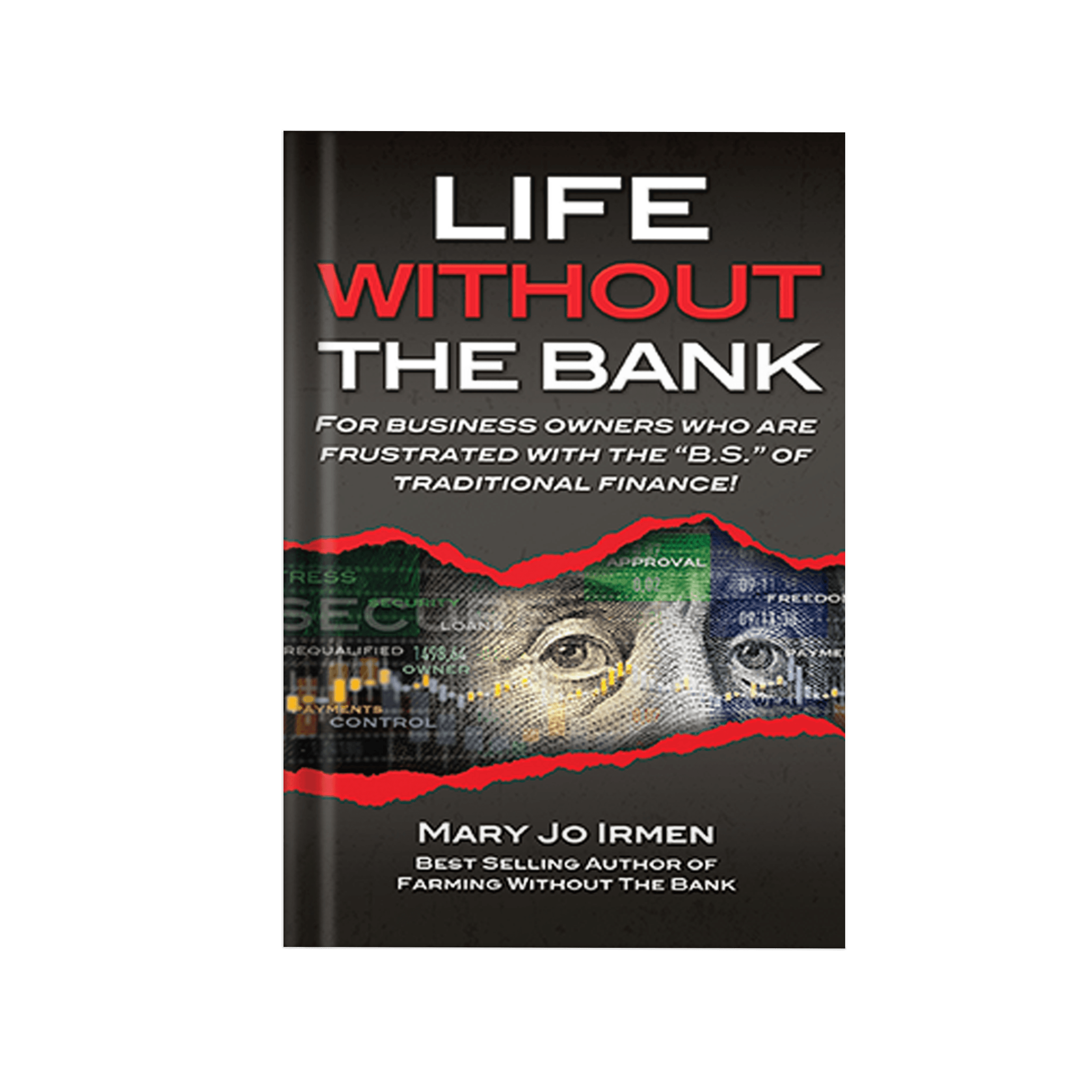
Grab your copy of Life Without the Bank
⭐ Read the Book?
Book your 1-on-1 strategy session: maryjo@withoutthebank.com
Start building a system that pays you back every time you spend.
Links Mentioned
CHAPTER TIMESTAMPS
- 00:00Why Infinite Banking Isn't Just for Business Owners
- 02:30The Client's Story: Paying Cash for Everything
- 04:45The College Tuition Trap Explained
- 07:00Recycling Money Through Policy Loans
- 09:30The $1.2M Lesson: Lost Opportunity Cost
- 12:00Setting Up Policies for Your Kids
- 14:30Why Your Advisor's Approach Might Be Wrong
- 17:00Which Book Is Right for You: Life Without the Bank vs. Farming Without the Bank
YOUTUBE EPISODE
TRANSCRIPTION
“I want to get moving fast. Like, when I’m ready to do something, I’m ready to do something. And the due diligence of that, a lot of agents aren’t doing the due diligence. They’re not having those deep conversations. Sometimes people will say, ‘Oh, here, I’m gonna send you all my financials before we meet.’ And that’s great. That’s fantastic. That doesn’t mean I’m gonna look at them. Because of situations like this, there was a story behind every debt they had. There was a story behind everything they were doing with cash. I needed those stories to understand how they’re using money, where the money’s going, what’s important to them. Those stories do not come out when you just email somebody all of your financials and that’s all they look at with no questions. I don’t like that. That’s just not how it works for me. I want that dialogue. I want to be able to understand what’s happening so I can better serve you as the client and give you a correct strategy.”
Hello, hello, and welcome back to the podcast. Thank you very much for being here. Today, we’re doing a session without Tarisa because I just met with a client and I want to share this. I think it’s very important that people understand you don’t need to have a business to use the infinite banking concept. And I think that a lot of times we’re short-sighted in things that it could be used for, even though we talk about it nonstop, that these are the things that you can be using infinite banking for.
So I had this potential client that I met with today. He said, “Yeah, we’re not looking at using this now. It’s something we’ll probably use in the future. And, you know, I’m just an employee. I’m not looking at farming.” He goes, “I can see how farmers would want to use this now, but for us, there’s not going to be anything that we need to use this for.” And I said, “Oh, okay, that’s fine.” And I just kept my fact-finding process going.
And so if you guys have met with me, you know, if you haven’t met with me, I do an hour and a half call. And in that hour and a half, we are really talking about what you’re doing in life, where money is going, how money is just going through your hands, right? I’m really looking at that kind of stuff. And so we get to all of his finances and, you know, they didn’t have a ton of money in savings, but his wife was a business owner, or is a business owner. And she makes a fair amount of money as a business owner.
And I said, “Okay, so what are you guys all doing? Do you have any rental properties?” “No, we bought this, we sold our house and then we bought this other house, but we had to do a big remodel.” I said, “Oh, okay.” He’s like, “Yeah, so we pay cash for the remodel. So we don’t have any money in savings because we pay cash for the remodel, and we’re going to refi the house and then we’re going to take the money back out of the house and replenish savings.” And I’m like, all right.
And then he proceeds to tell me that they have kids in college and they’re paying cash for the kids’ college, and his wife makes this fair amount of income. And so she doesn’t have any expenses, because it’s basically an office and she’s the only employee. And so he’s like, “Yeah, we’re kind of looking for expenses. So I told her to buy a building.” And in this building, she wants to have, like, office meetings in a place for 30 to 70 people to meet, and a podcast room. And I was like, “Oh, that’s cool.” So she’s trying to create some expenses without having a rental property. And I said, “Okay, so how are you going to do that? What are you going to use for that? Cash?” “Yep.” And they only have two years of the kids for college left. So they’re used to paying $30,000 a year for college.
And I said, okay. So when we got all done fact-finding everything for him, I said, “You know, you actually probably need this more, and just as much as a farmer, because you are paying cash for your kids’ college. That is $30,000 a year. You could put that $30,000 a year into the policy and then borrow against it, pay for college, and then throughout the year pay it back, and then borrow it again.”
And I’m going to slow that strategy down, okay? Because I think a lot of people don’t fully understand how to use the policy and how that strategy would work. So let’s just get rid of the capitalization portion of the policy for year one, and let’s just make it very, very simple and use just simple math. So if the kids’ college is $30,000 and we pay $30,000 as premium, we then have the ability to borrow $30,000. We pay the college. We pay that back throughout the year to the life insurance company. So at the end of the year, we have $30,000 to borrow again, and we borrow that to pay for college.
Now, here’s the part that a lot of people miss, is they’re saying, “But I need $90,000 or $60,000 to pay for college. So I need to save $60,000 for two years of college, $90,000 for three years of college.” No, you don’t. You just keep recycling the same $30,000. Because if you paid cash, yes, you would need to save $30,000. During year one, you would need to save $30,000 to pay for year two’s college. During year two, you need to save $30,000. What we did is we paid $30,000 in premium, we borrowed cash value, and then we paid that $30,000 back. Then we borrowed it again, and then we paid it back, and we borrowed it again. So we’re recycling essentially the same $30,000. We didn’t do anything differently than we did with cash.
If we were using cash like he’s using now, he puts $30,000 in savings, and then he depletes savings to $0, and then he puts $30,000 back into savings, and then he depletes savings to $30,000. So his savings goes up, and then it comes down, and then it goes up, and then it comes down, right? And every time it comes down, that money’s interrupted until it gets back up to $30,000, and then he’s at $30,000, and then he depletes it again. And so if we put it in the policy, now that $30,000 is earning compound interest the rest of our life, the rest of his life, and then he can pay it back and borrow it again.
So now let’s say, oh, the kids are all out of school. We’re done with college. All the kids have gone through college. So now we have this $30,000. What are we going to do with that, right? Because we were used to paying it. Now what are we going to do with it? Well, now you pay it back to the policy for the final time. And then if you want to borrow it to put in the swimming pool they were talking about, now you can use it to put in the swimming pool. And then you can decide how you’re going to pay that swimming pool back over your lifetime. And then if you pay it back by the time you retire, then you have it to use again for retirement.
And so he’s remodeled the house with cash. He’s paying cash for the kids’ college. They want to put a swimming pool in. They want to build out this studio and these office spaces for people to rent. All great things. But all things that have been done with cash over periods of years, and all that money’s gone. It’s just gone. In exchange for a swimming pool that is now earning you nothing, really. And so what if he could put the money in the policy, borrow against that for the swimming pool? Now at least the money to build the swimming pool is earning compound interest and dividends.
And so a lot of times high income earners do not think that, “Oh, this infinite banking concept is for me.” “I’m not going to be able to do the infinite banking concept. I don’t have any expenses. It doesn’t really matter. All I need are cars.” Well, the problem is, is you’re making money as fast as you’re spending it. And if you want a vehicle, you just go buy it. If you want to send the kids to college, you just go do that. But we have to look at the fact that we are losing the opportunity on that money. No different than what this guy is talking about.
And so by the end of the conversation, he said, “Oh my gosh, we have spent $1.2 million on tuition for the kids.” And I said, “Well, that’s a lot of retirement money.” And so in my Life Without the Bank book, that book, if you haven’t gotten it, that might be a book you want. In my Life Without the Bank book, I talk about, I have a whole chapter on college tuition and how it is ruining mom and dad’s retirement. And I talk a lot about the stock market. And that’s very different from my farming book. I don’t have that in my farming book.
And so when we look at college tuition, $1.2 million, that is not earning him any interest and no dividends. And it’s not providing a death benefit to the kids. That’s a huge loss. Because what’s happening is we’re paying cash for the kids’ college. We’re not making them pay us back for that. And then we’re saying, “Well, how are we supposed to retire? Because we don’t have any money. We paid cash for the kids’ college.” And then the kids are saying, “Well, God, you’re losers. Can’t you manage your money? Now I have to pay for you to live when you’re 80 and 90 years old because you didn’t save.” No, it’s not because we didn’t save. It’s because we paid for your college and you never paid us back.
There is a massive lost opportunity on that money. And we need to consider that when we’re sending our kids to college and we want to do the right thing and pay cash for their college. At least make them pay you back. And some of you might say, “Well, they’re not going to get a job.” Okay, but you have control of the loan. So you can say, “Hey, you start paying me back in five years or 10 years,” or whatever that is. But if they pay you back, they’re going to get that money back in the form of death benefit. Right? If they don’t pay you back, then that policy is just, the death benefit is less.
If you have three kids and you’re going to pay cash for each child’s education, then what you might want to do is say, “I’m going to set three policies up for myself, the exact same dollar amount.” And each kid is going to get lent money out of their respective policy that they are beneficiary on. So if they don’t pay it back, then they just get that much less death benefit. But if you’re going to help your kids, that’s phenomenal. That’s awesome. We help our kids. But I expect that money to be paid back. And they should not care. And they don’t care. Because when I die, they’re going to have death benefit. They’re going to get their money back. What an amazing loan. You can’t send them to the bank and say, “Hey, you pay that and then you’re going to get all your money back.” No, they’re never going to see that money again. They’re never going to be able to use it. They’re not buying discounted dollars with it. Right?
And so I just wanted to share this because there’s so many people that think, “Oh, I have to have a business. I have to have a farm. I have to have rental properties. If I just punch a clock eight to five, this is not going to work for me.” Yes, it is going to work for you, because you still have money. You’re still doing things with money.
The other thing that he said is, “I’m going to refinance the house to get my money out.” And I said, “So why do you want to refinance, borrow money at 6.5% to put it in a savings account earning a half a percent?” Now, if you want to borrow money because you want access to cash right away and you’re concerned you’re not going to be able to do that later, that makes sense. But if you have equity in the house and you put $40,000 into a remodel, just decide how you’re going to pay yourself back for that remodel, and that becomes a new premium payment. So we use some cash to remodel. I said, “Okay, now I got to pay myself back for that cash. That becomes a new premium payment.” So I am paying myself back for it because I don’t want to go to the bank and borrow the equity out of the house. I know a lot of people say, “Oh, don’t have any equity in your home,” including me. I get that. But I’m also in a situation where I’m okay having some equity, because I have enough other cash flow coming in that I don’t have to worry about it. Everybody’s situation is a little bit different.
Again, this is why I have an hour and a half meeting. This is what a lot of people do not do with their clients. It really is amazing to me. I met with somebody last week that had met with another agent prior, and we’re an hour and we’re talking about estate planning and trusts and plan B and policies on mom and dad and all the things. And I said, “Did you go over this with the other agent?” And they’re like, “No. We basically went over how infinite banking works.” And I’m like, “Well, that’s awesome, but you’ve read the books, you’ve watched the videos. We need to address strategy in this meeting and what a policy could be used for, and then we lump IBC into that meeting.”
And so not everybody does it the way I do it, but I do it like as if it were mine. If I was meeting with an agent, I would want immediate action. I want to see how I can use it. I want somebody to explain to me the strategies behind it, what that looks like for me. And there’s just not a lot of agents that do that. Nobody has time for a ton of meetings, including me. I would not show up for multiple meetings. Like, if you want to have five or six meetings to get to the point, nope, I’m out. Sorry.
I was going to pay somebody to help me with some stuff this week, as I’m recording this, and her website was not working correctly. I couldn’t figure out how to purchase it. I’m out. I’m done. I’ll just do it on my own. You know, not probably ideal. We’ll see if it works on my own. If it doesn’t, then I will do it. But I’m just like, I was ready to get started and things were not easily accessible and convenient. And so, I’m like, well, I’ll just figure out a different way.
So, I want to get moving fast. Like, when I’m ready to do something, I’m ready to do something. And the due diligence of that. A lot of agents aren’t doing the due diligence. They’re not having those deep conversations. And, you know, sometimes people will say, “Oh, here, I’m going to send you all my financials before we meet.” And that’s great. That’s fantastic. That doesn’t mean I’m going to look at them. Because of situations like this, there was a story behind every debt they had. There was a story behind everything they were doing with cash. I needed those stories to understand how they’re using money, where the money is going, what’s important to them. Those stories do not come out when you just email somebody all of your financials and that’s all they look at with no questions. I don’t like that. That’s just not how it works for me. I want that dialogue. I want to be able to understand what’s happening so I can better serve you as the client and give you a correct strategy.
Because what I would have told him had I not waited, what I would have told him right away, would have been completely opposite of what I told him at the end when I had all the facts. So, it definitely makes a difference how and who you’re meeting with.
Okay, well, you guys know the drill. Get the book. If you don’t have Life Without the Bank, it is about, in my opinion, I’m not going to lie, it’s about 80% the same as Farming Without the Bank. But I do have a chapter in there about paying cash for kids’ college, and I have a lot more stuff in there about 401(k)s, IRAs, market scam. Rates of return versus average rates of return. So, I’ve got stuff in this book that is not in farming, and I don’t have it in farming because a lot of farmers don’t have money in the market. A lot of farmers are not paying cash for their kids’ college. So, I’ve left it out of that book, and then it got put into this one. So, if you only have Farming and you don’t have Life, you may want to pick up Life. If you are not a farmer, Farming is not necessarily for you. If you want to buy them all, fantastic, but I don’t want you thinking that I’m misleading you, saying they’re two completely different books, when in fact, they are very much the same, with just a few tweaks to either one of them.
So, grab your book at withoutthebank.com, schedule your appointment, happy to have that conversation with you, happy to help you run those strategies, clarify anything about how policy structure works, all that kind of thing, and let us know if you need anything. maryjo@withoutthebank.com. You have a fantastic rest of your day.
View MoreHello, hello, and welcome back to the podcast. Thank you very much for being here. Today, we’re doing a session without Tarisa because I just met with a client and I want to share this. I think it’s very important that people understand you don’t need to have a business to use the infinite banking concept. And I think that a lot of times we’re short-sighted in things that it could be used for, even though we talk about it nonstop, that these are the things that you can be using infinite banking for.
So I had this potential client that I met with today. He said, “Yeah, we’re not looking at using this now. It’s something we’ll probably use in the future. And, you know, I’m just an employee. I’m not looking at farming.” He goes, “I can see how farmers would want to use this now, but for us, there’s not going to be anything that we need to use this for.” And I said, “Oh, okay, that’s fine.” And I just kept my fact-finding process going.
And so if you guys have met with me, you know, if you haven’t met with me, I do an hour and a half call. And in that hour and a half, we are really talking about what you’re doing in life, where money is going, how money is just going through your hands, right? I’m really looking at that kind of stuff. And so we get to all of his finances and, you know, they didn’t have a ton of money in savings, but his wife was a business owner, or is a business owner. And she makes a fair amount of money as a business owner.
And I said, “Okay, so what are you guys all doing? Do you have any rental properties?” “No, we bought this, we sold our house and then we bought this other house, but we had to do a big remodel.” I said, “Oh, okay.” He’s like, “Yeah, so we pay cash for the remodel. So we don’t have any money in savings because we pay cash for the remodel, and we’re going to refi the house and then we’re going to take the money back out of the house and replenish savings.” And I’m like, all right.
And then he proceeds to tell me that they have kids in college and they’re paying cash for the kids’ college, and his wife makes this fair amount of income. And so she doesn’t have any expenses, because it’s basically an office and she’s the only employee. And so he’s like, “Yeah, we’re kind of looking for expenses. So I told her to buy a building.” And in this building, she wants to have, like, office meetings in a place for 30 to 70 people to meet, and a podcast room. And I was like, “Oh, that’s cool.” So she’s trying to create some expenses without having a rental property. And I said, “Okay, so how are you going to do that? What are you going to use for that? Cash?” “Yep.” And they only have two years of the kids for college left. So they’re used to paying $30,000 a year for college.
And I said, okay. So when we got all done fact-finding everything for him, I said, “You know, you actually probably need this more, and just as much as a farmer, because you are paying cash for your kids’ college. That is $30,000 a year. You could put that $30,000 a year into the policy and then borrow against it, pay for college, and then throughout the year pay it back, and then borrow it again.”
And I’m going to slow that strategy down, okay? Because I think a lot of people don’t fully understand how to use the policy and how that strategy would work. So let’s just get rid of the capitalization portion of the policy for year one, and let’s just make it very, very simple and use just simple math. So if the kids’ college is $30,000 and we pay $30,000 as premium, we then have the ability to borrow $30,000. We pay the college. We pay that back throughout the year to the life insurance company. So at the end of the year, we have $30,000 to borrow again, and we borrow that to pay for college.
Now, here’s the part that a lot of people miss, is they’re saying, “But I need $90,000 or $60,000 to pay for college. So I need to save $60,000 for two years of college, $90,000 for three years of college.” No, you don’t. You just keep recycling the same $30,000. Because if you paid cash, yes, you would need to save $30,000. During year one, you would need to save $30,000 to pay for year two’s college. During year two, you need to save $30,000. What we did is we paid $30,000 in premium, we borrowed cash value, and then we paid that $30,000 back. Then we borrowed it again, and then we paid it back, and we borrowed it again. So we’re recycling essentially the same $30,000. We didn’t do anything differently than we did with cash.
If we were using cash like he’s using now, he puts $30,000 in savings, and then he depletes savings to $0, and then he puts $30,000 back into savings, and then he depletes savings to $30,000. So his savings goes up, and then it comes down, and then it goes up, and then it comes down, right? And every time it comes down, that money’s interrupted until it gets back up to $30,000, and then he’s at $30,000, and then he depletes it again. And so if we put it in the policy, now that $30,000 is earning compound interest the rest of our life, the rest of his life, and then he can pay it back and borrow it again.
So now let’s say, oh, the kids are all out of school. We’re done with college. All the kids have gone through college. So now we have this $30,000. What are we going to do with that, right? Because we were used to paying it. Now what are we going to do with it? Well, now you pay it back to the policy for the final time. And then if you want to borrow it to put in the swimming pool they were talking about, now you can use it to put in the swimming pool. And then you can decide how you’re going to pay that swimming pool back over your lifetime. And then if you pay it back by the time you retire, then you have it to use again for retirement.
And so he’s remodeled the house with cash. He’s paying cash for the kids’ college. They want to put a swimming pool in. They want to build out this studio and these office spaces for people to rent. All great things. But all things that have been done with cash over periods of years, and all that money’s gone. It’s just gone. In exchange for a swimming pool that is now earning you nothing, really. And so what if he could put the money in the policy, borrow against that for the swimming pool? Now at least the money to build the swimming pool is earning compound interest and dividends.
And so a lot of times high income earners do not think that, “Oh, this infinite banking concept is for me.” “I’m not going to be able to do the infinite banking concept. I don’t have any expenses. It doesn’t really matter. All I need are cars.” Well, the problem is, is you’re making money as fast as you’re spending it. And if you want a vehicle, you just go buy it. If you want to send the kids to college, you just go do that. But we have to look at the fact that we are losing the opportunity on that money. No different than what this guy is talking about.
And so by the end of the conversation, he said, “Oh my gosh, we have spent $1.2 million on tuition for the kids.” And I said, “Well, that’s a lot of retirement money.” And so in my Life Without the Bank book, that book, if you haven’t gotten it, that might be a book you want. In my Life Without the Bank book, I talk about, I have a whole chapter on college tuition and how it is ruining mom and dad’s retirement. And I talk a lot about the stock market. And that’s very different from my farming book. I don’t have that in my farming book.
And so when we look at college tuition, $1.2 million, that is not earning him any interest and no dividends. And it’s not providing a death benefit to the kids. That’s a huge loss. Because what’s happening is we’re paying cash for the kids’ college. We’re not making them pay us back for that. And then we’re saying, “Well, how are we supposed to retire? Because we don’t have any money. We paid cash for the kids’ college.” And then the kids are saying, “Well, God, you’re losers. Can’t you manage your money? Now I have to pay for you to live when you’re 80 and 90 years old because you didn’t save.” No, it’s not because we didn’t save. It’s because we paid for your college and you never paid us back.
There is a massive lost opportunity on that money. And we need to consider that when we’re sending our kids to college and we want to do the right thing and pay cash for their college. At least make them pay you back. And some of you might say, “Well, they’re not going to get a job.” Okay, but you have control of the loan. So you can say, “Hey, you start paying me back in five years or 10 years,” or whatever that is. But if they pay you back, they’re going to get that money back in the form of death benefit. Right? If they don’t pay you back, then that policy is just, the death benefit is less.
If you have three kids and you’re going to pay cash for each child’s education, then what you might want to do is say, “I’m going to set three policies up for myself, the exact same dollar amount.” And each kid is going to get lent money out of their respective policy that they are beneficiary on. So if they don’t pay it back, then they just get that much less death benefit. But if you’re going to help your kids, that’s phenomenal. That’s awesome. We help our kids. But I expect that money to be paid back. And they should not care. And they don’t care. Because when I die, they’re going to have death benefit. They’re going to get their money back. What an amazing loan. You can’t send them to the bank and say, “Hey, you pay that and then you’re going to get all your money back.” No, they’re never going to see that money again. They’re never going to be able to use it. They’re not buying discounted dollars with it. Right?
And so I just wanted to share this because there’s so many people that think, “Oh, I have to have a business. I have to have a farm. I have to have rental properties. If I just punch a clock eight to five, this is not going to work for me.” Yes, it is going to work for you, because you still have money. You’re still doing things with money.
The other thing that he said is, “I’m going to refinance the house to get my money out.” And I said, “So why do you want to refinance, borrow money at 6.5% to put it in a savings account earning a half a percent?” Now, if you want to borrow money because you want access to cash right away and you’re concerned you’re not going to be able to do that later, that makes sense. But if you have equity in the house and you put $40,000 into a remodel, just decide how you’re going to pay yourself back for that remodel, and that becomes a new premium payment. So we use some cash to remodel. I said, “Okay, now I got to pay myself back for that cash. That becomes a new premium payment.” So I am paying myself back for it because I don’t want to go to the bank and borrow the equity out of the house. I know a lot of people say, “Oh, don’t have any equity in your home,” including me. I get that. But I’m also in a situation where I’m okay having some equity, because I have enough other cash flow coming in that I don’t have to worry about it. Everybody’s situation is a little bit different.
Again, this is why I have an hour and a half meeting. This is what a lot of people do not do with their clients. It really is amazing to me. I met with somebody last week that had met with another agent prior, and we’re an hour and we’re talking about estate planning and trusts and plan B and policies on mom and dad and all the things. And I said, “Did you go over this with the other agent?” And they’re like, “No. We basically went over how infinite banking works.” And I’m like, “Well, that’s awesome, but you’ve read the books, you’ve watched the videos. We need to address strategy in this meeting and what a policy could be used for, and then we lump IBC into that meeting.”
And so not everybody does it the way I do it, but I do it like as if it were mine. If I was meeting with an agent, I would want immediate action. I want to see how I can use it. I want somebody to explain to me the strategies behind it, what that looks like for me. And there’s just not a lot of agents that do that. Nobody has time for a ton of meetings, including me. I would not show up for multiple meetings. Like, if you want to have five or six meetings to get to the point, nope, I’m out. Sorry.
I was going to pay somebody to help me with some stuff this week, as I’m recording this, and her website was not working correctly. I couldn’t figure out how to purchase it. I’m out. I’m done. I’ll just do it on my own. You know, not probably ideal. We’ll see if it works on my own. If it doesn’t, then I will do it. But I’m just like, I was ready to get started and things were not easily accessible and convenient. And so, I’m like, well, I’ll just figure out a different way.
So, I want to get moving fast. Like, when I’m ready to do something, I’m ready to do something. And the due diligence of that. A lot of agents aren’t doing the due diligence. They’re not having those deep conversations. And, you know, sometimes people will say, “Oh, here, I’m going to send you all my financials before we meet.” And that’s great. That’s fantastic. That doesn’t mean I’m going to look at them. Because of situations like this, there was a story behind every debt they had. There was a story behind everything they were doing with cash. I needed those stories to understand how they’re using money, where the money is going, what’s important to them. Those stories do not come out when you just email somebody all of your financials and that’s all they look at with no questions. I don’t like that. That’s just not how it works for me. I want that dialogue. I want to be able to understand what’s happening so I can better serve you as the client and give you a correct strategy.
Because what I would have told him had I not waited, what I would have told him right away, would have been completely opposite of what I told him at the end when I had all the facts. So, it definitely makes a difference how and who you’re meeting with.
Okay, well, you guys know the drill. Get the book. If you don’t have Life Without the Bank, it is about, in my opinion, I’m not going to lie, it’s about 80% the same as Farming Without the Bank. But I do have a chapter in there about paying cash for kids’ college, and I have a lot more stuff in there about 401(k)s, IRAs, market scam. Rates of return versus average rates of return. So, I’ve got stuff in this book that is not in farming, and I don’t have it in farming because a lot of farmers don’t have money in the market. A lot of farmers are not paying cash for their kids’ college. So, I’ve left it out of that book, and then it got put into this one. So, if you only have Farming and you don’t have Life, you may want to pick up Life. If you are not a farmer, Farming is not necessarily for you. If you want to buy them all, fantastic, but I don’t want you thinking that I’m misleading you, saying they’re two completely different books, when in fact, they are very much the same, with just a few tweaks to either one of them.
So, grab your book at withoutthebank.com, schedule your appointment, happy to have that conversation with you, happy to help you run those strategies, clarify anything about how policy structure works, all that kind of thing, and let us know if you need anything. maryjo@withoutthebank.com. You have a fantastic rest of your day.



ready to start?
Your financial independence starts with one book.
Only one of three Americans can retire. Part of the fault is the conditioned belief that you must give up the use of your money when you’re young so you can have it later, assuming the stock market doesn’t collapse.