"If you run into me, the insurance companies will say, ah, maybe we should just split it. No, I don't want that on my record. That's your problem that you hit me. No, my insurance company should not pay for your problem. But the insurance companies don't want to take this hit. They're denying all these claims and people are getting super mad about it. Rightfully so. Because we are paying these massive amounts of premium, because things are super expensive to fix, do we go to self-insuring?"
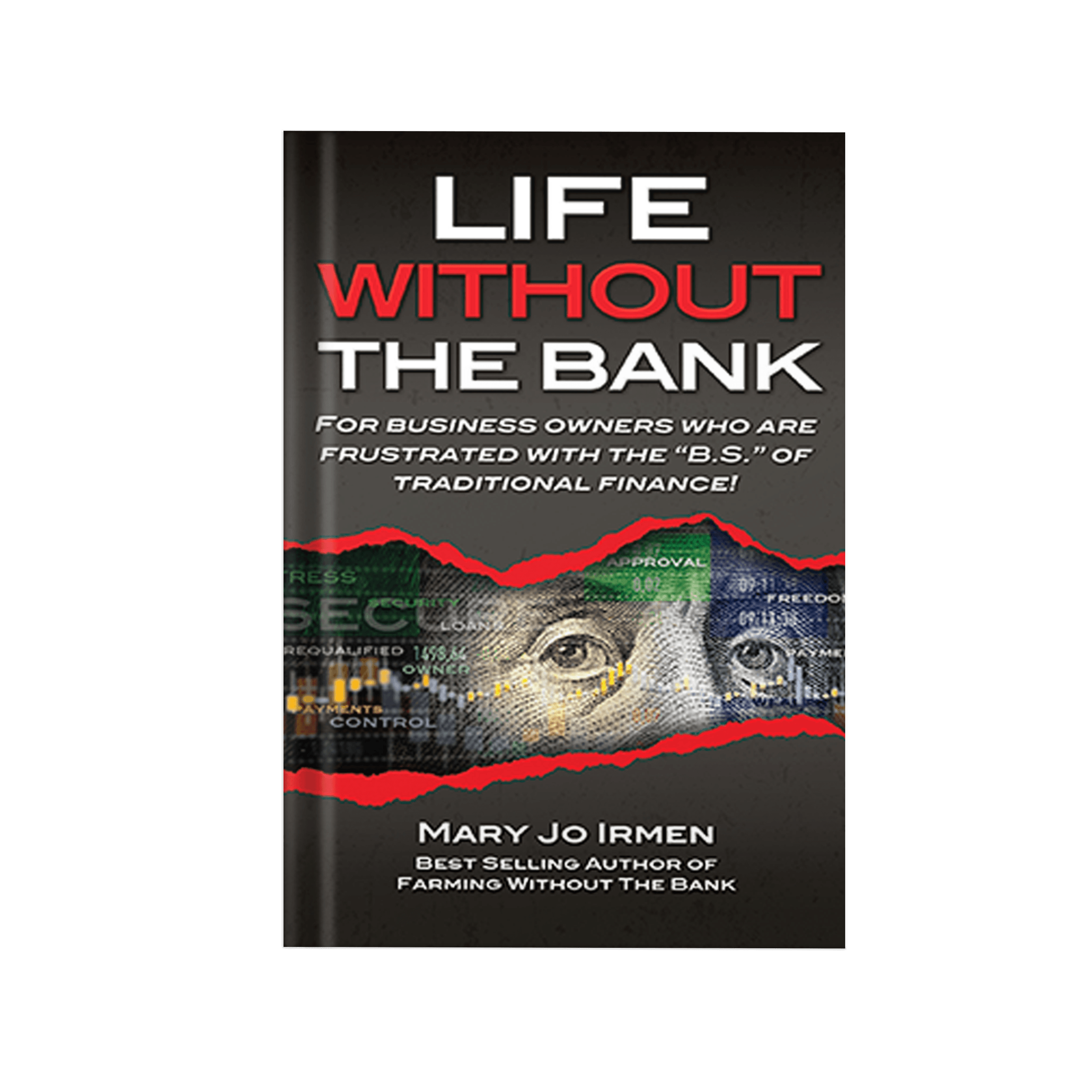
Hello, hello, and welcome back to the podcast. Thanks for being here. Okay, we are back into BYOB, and we are talking about Expanding the System to Accommodate All Income, page 48. So go ahead, grab your book if you like.
Okay, this is a scary chapter. This is one that people have a lot of questions on. Meaning premiums and income should match. I wish Nelson would have not said that. We talked about this in one of our earlier podcasts. Let's not pay interest on French fries.
What he's saying is that our money is going through some bank. It's either going to go through the life insurance policy, or it's going to be deposited into an actual bank. And so that money should go somewhere.
He said that the All-American Male on page 17 is depositing all the paycheck in a bank, and then writing checks for 34.5% of every dollar to pay interest, a loan back to someone else's banking system. "Why does he behave this way? Because no one has ever explained to him there is a better way of doing things."
So again, Nelson is talking about those big purchases. And he goes on to — and we'll talk about it — he goes on to buy a car. So he's not talking about little purchases.
Yeah, and he's basically saying, like, his paradigm is fixed. "When he builds a banking system through life insurance, makes loans to himself to buy automobiles, and pays back to the policy, or policies, the same payment he would have to pay a banking institution, then he makes what the banking institution would have made off of him. And it is done all on a tax-deferred basis. The interest he pays never leaves his account in control."
So here's, like, a fun thing that I think it takes people a long time to wrap their head around is, oh, well, I don't want to pay myself extra interest, or I don't want to have a loan. Well, guess what? You are the banker now. So you are the banker and the consumer. So when consumer Tarisa pays banker Tarisa, Tarisa as a conglomerate has that money again.
You mean one pool of money?
One pool of money, right? I'm boomeranging it to myself.
But so many people think payment and think bad.
Right. Payment, bad.
It's like, well, yeah, if that money is being transferred away from your control and your financial environment, sure, probably not the best thing. But in this situation, you're creating like a closed loop economy where you can revolve that dollar so many times for whatever you're planning on spending it in the first place, which is incredible.
Incredible. And that's where it also says, "Why not expand the system by starting another policy that will finance the other automobiles in the family? This will, of course, require the capitalization period of seven years at the rate of $5,000 per year. By the end of that time, we have kissed the automobile financing business goodbye forever."
So you're going to have to beat Parkinson's Law. You're going to have to capitalize. You're going to have to make some short-term sacrifices to get out of that system. And then you can start buying your cars through the policy.
"The total cash value in the policies are adequate enough to take the next step, self-insuring the automobiles for comp and collision." Not liability, people. And then he goes on to explain liability.
I do not self-insure for comp and collision. And there's a couple reasons why. One, it is insanely expensive to fix a vehicle today. Right? Your liability companies, they're taking more money because a bumper is not just a bumper anymore. Sensors. And your windshield isn't just a windshield. It has sensors in it for rain. And the wipers go on when it detects rain.
And so if you're going to self-insure, yes, you could still do that, but do it and be smart about it.
I have a client that we just talked two weeks ago and they are self-insuring their house.
Really?
Because their insurance went up so high, their house is paid for. She's like, we have no kids at home, and they built their house themselves. Right? Super handy people. She said, if something happens, like what would be worst case scenario? A tornado would come through, wipe out the house. She's like, we have a camper. We could go buy a camper. We could live in the camper. Right? Or we could live with one of the kids. Like what would really be worst case scenario? Like as long as they have the money to rebuild the house, and rebuy the things in the house, why not self-insure?
I just found out we had some friends whose home burned this last winter, and I pay extra on my homeowner's insurance for personal property. Well, I assumed — which I should not, but I assumed — I have personal property covered for X amount. Let's say it's a half a million dollars. That I would get a check for half a million dollars to replace everything in the house. That's not the case. You only get a check for what you can prove you had in the house. So if you don't have pictures, if you don't have receipts of what you paid for everything, you're not getting that half a million dollars.
So the insurance company says, yes, thank you very much, Mary Jo, for paying extra premium, but I'm not going to necessarily give you all that extra money.
What's like the workaround? Do you have to document everything that you have?
Yeah, you have to take pictures. You should be taking video of everything in your house. So for them, they had a brand new home. So their personal property, they just kind of took an average of what it is per room. Well, that's okay if you're an average person, but think about these people that are not average, that are buying really high-end decor. Really, like my kitchen table's not average, right? It's a live edge piece of wood. So I paid a little bit more for that to have live edge wood. I'm not just going to the local store and buying an oak table.
Not that those are cheap.
I know, I'm like, those are still expensive.
Yes, I'm not buying a table off of Amazon, for example. It's not just the cheapest kitchen table I can find. And so what is average? And how do you make sure you get your money out of it? Because our friends didn't have pictures of what they had. They didn't have a video of what they had.
So did they pay out? Like, oh, the insurance company paid.
Absolutely. They had, like, no problems with the insurance company. They paid. It was great. It was fantastic. But they in particular did not have the income to rebuild the house, right? My client has the income to rebuild the house.
And so do you self-insure? Do you continue to give the insurance company, in their case, $8,000 a year for coverage, right? Like, my mom and dad's coverage is very expensive. And they're not getting paid out from the tornado and the hailstorm that went through. They're saying, hey, your roof is more than 10 years old. We're only paying you 40% of it. Well, then why am I paying for insurance?
For them to… insurance.
Yes. My property and casualty insurance lady has told me insurance companies that they — she as an agent — is having to start fighting these insurance companies to get paid. Because if you run into me, the insurance companies will say, ah, maybe we should just split it. No, I don't want that on my record. That's your problem that you hit me, right? No. My insurance company should not pay for your problem.
But the insurance companies don't want to take this hit. And so they're denying all these claims. And people are getting super mad about it. And rightfully so. Because we are paying these massive amounts of premium, because things are super expensive to fix, do we go to self-insuring? We can, but we take the risk.
And Nelson says it's easy. Eh. Hmm. I don't know that I would agree with him there. Because he said it's easy. Just go and get a quote. Just go and get a quote. You know.
But he also says the auto insurance company has to put the premiums to work in the same places as the life insurance company. They also have to pay claims and administer costs, just like the insurance company. And they also pay dividends to whoever owns the company, just like the insurance company. "All you have to do is self-insure to find out how much more you should put into life policies to assume this risk."
And so, you know, another reason we don't self-insure is we live in the country. Scott just got his windshield chipped the other day with a rock, right? Because you have gravel roads. Or you're hitting deer. Or you're hitting cows. Or you're hitting dogs. Or you're hitting something. Like, since we've lived out here, we've had more stuff happen to our vehicles than I've ever had before living in town. Because it's just higher risk. So I think it really matters where you're living as well.
These insurance companies are saying, hey, you know what? We have more accidents. More accidents are happening because people are texting and driving. And so they're mitigating their risk. They understand that risk. We also need to understand that that's what they're doing.
So if you want to self-insure, I think that's great. Go ahead and self-insure. And it 100% makes sense. But does it make sense for your situation?
Right. And are you okay with that level of risk? Because it's also like, because of the inflationary environment that we're in, everything is more expensive.
Yes. And it's easy for wealthy people to say, oh yeah, I could self-insure. But that's not everybody. So you really have to look at what's happening.
But he also says then, when you have enough money in your policy, you should be borrowing against your policy to pay off your mortgage. And then make those payments back to yourself. And then could you get rid of that mortgage insurance? Which is what my clients are doing.
I think that great intentions in this chapter — probably not one of my favorites, to be honest. Because I think it's very misunderstood.
Well, I also think people immediately read it and they're like, I want to put all my money through a policy right away. And it's like, 25 years. 25 years. Let's take baby steps in the right direction. And you'll eventually get to where you want to go. Instead of biting off more than you can chew.
Absolutely. Okay. That was a fast one. The next one, equipment financing, not going to be so fast. So we'll end there. And then we'll see you in the next podcast for equipment financing.
If you need us, you know where to find us. You guys have a fantastic rest of your day.
View More GET THE BOOK