Podcast
EP. 259
Is College a Financial Trap? The Real Cost Parents Never Calculate (Ep. 259)
Mar 5, 2026 ·
18 min
0:00 / 17:58
EPISODE OVERVIEW
ABOUT THIS EPISODE
Is a college degree actually worth the cost — or are parents sacrificing their financial future so their kids can party for four years?
In this episode, we finish the final two chapters of Becoming Your Own Banker by R. Nelson Nash, starting on page 75 with a hard look at the monetary value of a college degree — and ending with a powerful discussion on what to do if you're uninsurable.
We challenge the deeply ingrained belief that everyone deserves a college education, unpack why the cost of college has exploded faster than inflation, and expose how parents are quietly taking on decades of student loan debt for degrees their kids may never need — or use.
We also explore alternative paths: mentorship, real-world experience, vocational skills, and how Infinite Banking can be used intentionally if you do decide to help pay for college — without sacrificing retirement or generational wealth.
Finally, we close the book study with an often-overlooked question: what if I'm uninsurable? Nelson Nash's own story proves that Infinite Banking doesn't stop — it simply shifts to another life and continues building wealth for future generations.
This episode isn't anti-education — it's pro-thinking.
Key Takeaways
- ✔ Why college costs have risen faster than inflation — and who benefits
- ✔ The hidden retirement cost of paying cash for your kids' education
- ✔ Why "the college experience" may be the most expensive party you'll ever fund
- ✔ How mentorship and real-world learning can outperform formal degrees
- ✔ How to use Infinite Banking to fund education without breaking your future
- ✔ What to do if you're uninsurable — and why the concept still works
- ✔ How Nelson Nash built generational wealth even after becoming uninsurable
👉 Schedule an appointment with our team. 👉 Subscribe for more Becoming Your Own Banker breakdowns. 👉 Share this episode with a parent questioning the college path.
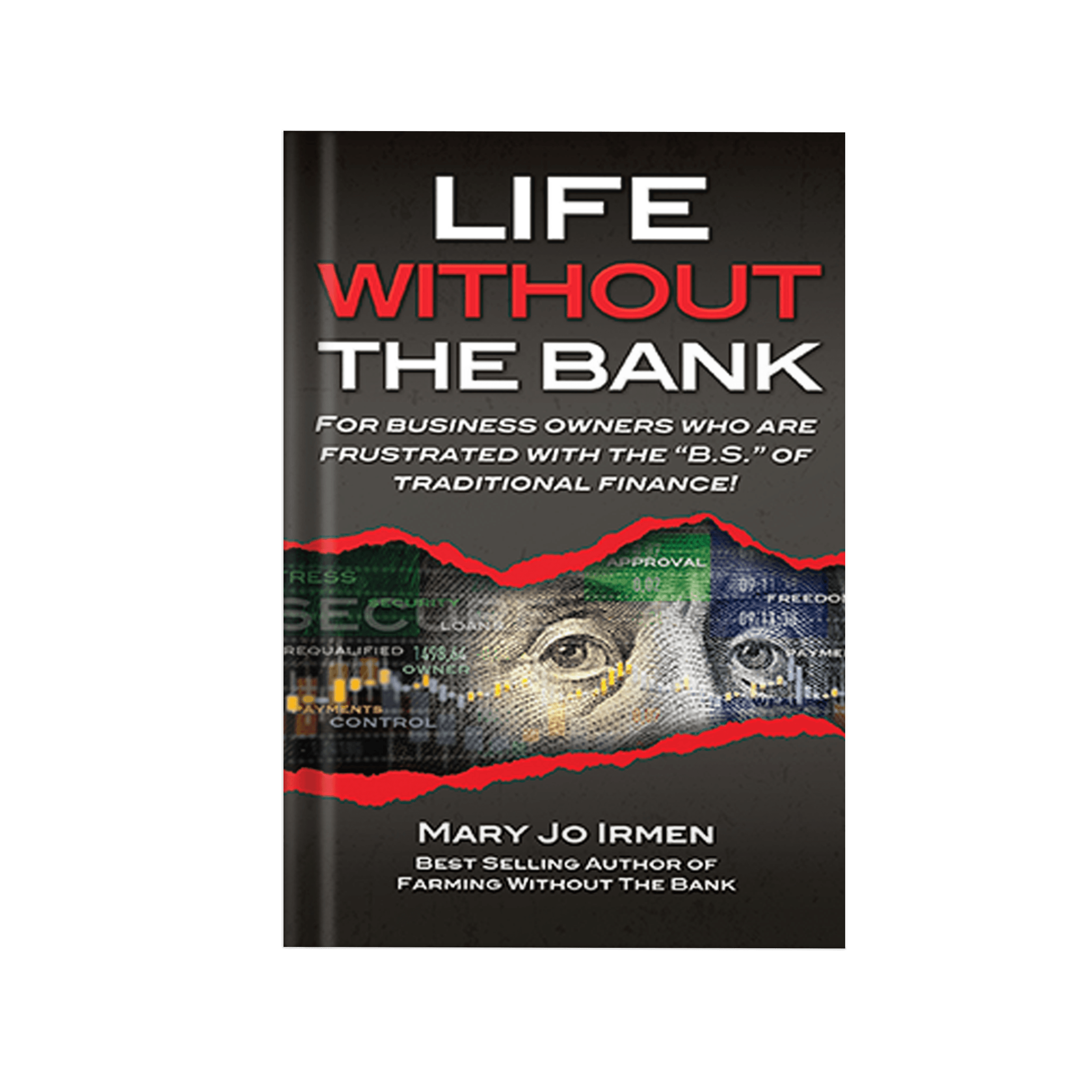
- 📘 Get the book
- 📧 Email Mary Jo: maryjo@withoutthebank.com
- 📧 Email Tarisa: tarisa@withoutthebank.com
- 🌐 withoutthebank.com
- ▶️ Subscribe on YouTube
CHAPTER TIMESTAMPS
- 00:00Do Kids Really Need a College Degree?
- 01:00The Monetary Value of a Degree (Page 75)
- 03:00College vs. Critical Thinking
- 05:00Parents, Student Loans & Retirement Fallout
- 07:30Paying for College the "Right" Way
- 09:00Mentors vs. Professors
- 12:00What If You're Uninsurable?
- 14:00Using Other Lives to Continue Infinite Banking
- 16:30Nelson Nash's Personal Story
- 18:30Final Thoughts on Education & Wealth
YOUTUBE EPISODE
TRANSCRIPTION
"Do they actually need a degree? Is that going to be beneficial? And this is a Gen X problem, if you ask me. Because Gen X is like, oh, we had so much fun in college, I want my kids to have that same experience. And I'm left with all this financial student loan debt, so I'm going to pay for my kids to go to college. You're going to pay for your kids to party. What is right about that? That is not okay to me. If you want to party, you pay for it yourself. But I'm not paying for your time to party. And I'm not paying for you to go get a degree that you didn't need."
Hello, hello, and welcome back to the podcast. Thank you very much for being here. Okay, we got two chapters left, and we are going to finish them in this episode. So if you have been here all along, you know what we're doing. If you're new, welcome. We are going over Becoming Your Own Banker, written by R. Nelson Nash. So go back to the other podcasts, start at the beginning, get your book, study along.
This has been quite the little study guide.
It has. It's been good.
So we're on page 75, and we're talking about a different look at the monetary value of a degree. I'm sort of biased here. I'm not a college girl. I mean, I went to college, but I don't believe in college.
And so, same. I don't believe in college for everybody, I should say.
Yeah. And obviously, Nelson didn't either. I know before Nelson passed, he talked about the fact that his prediction is that there won't be brick-and-mortar colleges, that they'll all be online, and that they'll basically be extinct at some point. Because everything that you want to learn is online. Everything that you could possibly know is online. And so why would you need to go to college and pay somebody a bunch of money for a certificate?
And there are some things that, yes, you could probably benefit from college. Like a doctor.
Yeah, hopefully. You know, or a lawyer. But even on the lawyer side, there's a lot of people that represent themselves. They'll go buy law books and they'll study cases. And just because they didn't go to college doesn't mean they're not smart enough to understand that stuff.
Or that they're incapable of learning something new.
Yes. And we have colleges. Colleges are like — I kind of think of them like cattle shows.
Please explain.
So when you show cattle, they're gonna pick the best animal based on the judge's perception of what was the best animal, right? When I go to college, the professor is going to grade that paper based on what they think their views are, and if your views align with my views. Now, we have kids that have gone to college, and they know if they have a right-wing or left-wing professor, they write according to that so they can get grades appropriately. That's not a degree. That's not freedom of thought.
And Nelson talks about that, that we should be thinking. I just read it in here. He said, Professor Rotfeld said, business leaders do not want business education to be vocationally orientated. It is not in the interest of business leaders to turn public schools into vocational schools. We can teach them how to read balance sheets. What is killing us is having to teach them to read and compute and communicate and to think.
And so he goes on to say, I await the time when business education will be a respected activity for a hardworking scholar, instead of a training ground for future anti-intellectuals and home for retired executives who come to campus so they could themselves quit thinking.
And so that's not even Nelson beating up on the system. But he says, I have a distinct feeling that the college degree is extremely overrated in its value. Witness the number of people you know who have a degree and thus feel that they are educated, but other than the degree, they have very little evidence of fact. Many want credits but don't want to learn.
And so, how many people are like, oh, I have a degree, but they don't know anything about anything. Oh, I have a marketing degree, but I don't like marketing. Then why do you have a marketing degree? Well, that was the easiest subject in school to take.
Right. I was allowed to party for four years. It was great. I made so many friends.
I hear that a lot. Yeah. I want my kids to go to school and have the same college experience I had, because I was drinking and partying and having a good time, and that's where I met so many of my friends. They're not going to meet anybody in the work world.
Also, that's a large expense for a party.
Yeah. Most expensive beer you can drink.
Yeah. And the parents are starting to co-sign. I had a client a couple of weeks ago that had student loans. I did not know this until my assistant's kids went to college, because my youngest did not go to college. She's not going to college. Not happening.
So I did not know that if you make over a certain amount of money — which is not very much money — if you make over a certain amount of money, your kids can't get the full loan themselves. You have to carry it in your name.
Oh, wow.
So she has four kids. Only one's in school. They make a fair amount of money, but they have four children. You need to make a fair amount of money to take care of four children. Right. They're super, super smart with their finances. But she now is going to have to carry a loan for the oldest one, who is in college one year. They have four children. They're about two years apart, two to three years apart. When does she get to quit having student loans, if they all go to school?
Wow. I did not know that.
It's insane. So now you have parents — at 65 you don't need to have any money, your house is paid for, everything's paid off. No, it's not, because I'm still paying on student loans for my children. And these parents think this is okay.
I am not that parent. I don't think that I should have to pay for my kids' college. That's your education. And you're most likely being indoctrinated during that education, depending on where you're going to school, or you're partying it away. Well, I'm not paying for the beer. I'm not paying for that. You may as well not go to school and then figure out what you really want to do in life, because you can always go later.
I remember getting into a very in-depth conversation with my brother about the same thing, right? Like, go to college or… And I was like, honestly, I wish that I would have spent that money that I paid for my college education with a course, or maybe finding a mentor that was already doing what I wanted to be doing, and paying them that money and just being like, teach me how to become like you in a short amount of time. And I told him, I was like, I guarantee you that that path leads to far much more success than paying for a college education. Because I don't remember what I learned.
From a professor — you're going to school for business, from a professor that never had a business.
Right.
When I went to college, I got my four-year degree with an accelerated program. And so it was at night, and all the professors were business owners. And so it was great. And the place I worked at the time paid for the tuition, so I paid $1,000 out of pocket. It was fantastic. But I only had the option of four different degrees, so I got a business degree. Fantastic. Did I actually learn anything that I'm applying now? Zero.
Zero. Instead, I've paid for coaching programs outside, from people that have made money.
And that's exactly what Nelson is saying in this chapter. And we think that everybody deserves a college education. Please notice that the cost of doing so has risen much faster than inflation and the rest of the economy. This is always the pattern when government gets involved in anything.
There is a podcast out there called Degree Free. And they've created these books — it's like a workbook for the parents and the kid to figure out what they want. What time of day do they want to get up? What do they want to do every day that they're going to be fulfilled with? And helping those kids kind of determine where they want to go. Do they actually need a degree? Is that going to be beneficial? Instead of just saying, hey, I want you…
And this is a Gen X problem, if you ask me. Because Gen X is like, oh, we had so much fun in college, and I want my kids to have that same experience. And I'm left with all this financial student loan debt, so I'm going to pay for my kids to go to college. You're going to pay for your kids to party. What is right about that? That is not okay to me. If you want to party, you pay for yourself and you go get a job.
But now the kids can't have a job while they're in college, because they need to study.
You mean when they're not hungover? Because you just paid for them to have alcohol and you wanted them to have fun. So they had so much fun last night that they can't have a job. They have to study. What? I had three jobs and I went to college. And my parents didn't pay for anything. No rent, no gas, no car payment, no car insurance, nothing. And so I figured it out, because I was cut off, you know?
Well, you have to. And it forces you to value the things that are actually important, when you're the one that is not being subsidized, basically, by your parents.
Right. Because I was working two full-time jobs and paying cash for my college, because I didn't want to be in debt. And so I wasn't partying. I was in bed by like 8, 9. I wasn't making friends. I was serving eggs, you know?
Yep.
But we have gotten to this position that everybody deserves a college degree. No, they don't deserve it. They should understand why they should even have it to begin with.
Well, and think about… I am not a proponent of paying for people's student loan debt. I already paid for mine. Why should I pay for yours? And what's crazy is I'm meeting with clients and they have student loan debt. They are not getting anything for payments. They can't log online to see how much it is. They can't pay it even if they want to. They're like, I don't even know if it disappeared. And I've heard that over and over and over and over.
Some people, yep, they can see theirs. And then the vast majority of people with student loan debt, they can't see their student loan debt. So did it get wiped out and we were never told about it? Like, that got passed in through the middle of the night? I don't know. But I'm not paying for your time to party. And I'm not paying for you to go get a degree that you didn't need.
I love it when people are like, oh, I'm going to go to school, get a business degree. What's that going to teach you that you can't learn anywhere else? Or by starting a business?
Right. But how many business owners, how many coaches, all these people that can teach you stuff — you don't need a degree. Those people have never actually run a business. It's like in high school, teaching finance. That teacher doesn't know anything.
People say, oh, we need to be teaching finance in school. Really? I don't want the school system teaching my kids about money. Because the teachers don't know how to manage their own money, and they're the ones that are supposed to be teaching us. The schools don't know how to manage their government money. And you want them to teach our kids about money? No, thank you. I think we'll leave that to the house.
It is strange to me how many things, in my personal opinion, should be taught at home, versus what we expect other people to do. And it's like…
We expect everybody to do everything for us.
Well, right. And it's like, if they're your values or your belief systems or your perspective that you want to be passed down, that's your responsibility, for you to teach your children that. And what they do with it obviously is kind of outside of your control.
But the school systems are okay for the parents that don't know any of this themselves. But that's if the kid is paying attention. If the parent doesn't know anything about money, they're probably in an environment where they're probably not getting sleep at night, right? They're probably in an environment where there's abuse, there's alcohol, drug abuse, addictions. It's just not a good home environment. And so are they going to be open and receptive to that teaching anyway?
And if we're teaching them that in school and high school — this is what I found when I taught some Junior Achievement classes — is we're teaching kids about money before they even have a job. So they don't even have the money to manage. So when they do get the money to manage, you really think that that's going to bring back great memories of, oh, somebody came in and taught me about infinite banking? Oh, the only kids that's going to register with are the kids that already have money.
Well, because if you don't have the resource, or you don't have the practical application of something, it's not going to register to you, because it's all theoretical. It's all up here. It's not impacting your daily life or what you're allowed to do with the resources, or whatever the case may be. It's like you're kind of in this weird bubble where you're not impacted by anything, because you are so sheltered by your parents from the outside world.
And so Nelson goes over the monetary value of a college degree. And so he has a real illustration run about what it actually costs for the monetary value of this degree. We also have Truth Concepts calculators. And I have a whole chapter about college in Life Without the Bank.
And what that calculator goes over is, what is it costing you in retirement to pay for your kids' college, right? A lot of people are saying, well, I don't have any money to retire. Well, that's because you paid cash for your kids' college. Now your kid is like, why am I having to spend my money and take care of you? Well, because I paid for your college, right? And so we don't understand that.
And if we're going to pay cash for our kids' college — I'm not saying don't do it — but we should be running it through a policy first and borrowing cash value. And that kid should be paying back our cash value and paying that loan back. And why wouldn't they want to? Because if they pay the loan back, they get more death benefit. And it just ends up going all to them anyways.
Right. And the extra interest goes into a new policy, in case you missed that in the last podcast.
Okay, last chapter. What if I am uninsurable? And this one is only a little over a half a page as well. And he just talks about in here — well, if you're uninsurable… And then this person had a daughter that he put insurance on. And then during his retirement years, he used the cash value for his retirement. And then when he died, the daughter owned the policy. And then she used it for her retirement, and the death benefit was on her, so it went to her kids as grandkids.
And so if you're uninsurable, the moral of this story is we got to find somebody else's life that you have insurable interest in. I have some potential clients that just came back. Both of them are uninsurable. And so now we have to talk about kids. Our only other option is your two children. Those two children now are adults. So they're going to have to understand that they have to give us their net worth, their gross income. We're going to have to have insurable interest, because you don't always have insurable interest. There's some things that are going to have to be worked out there. But if you are uninsurable, you can still use the concept. You just do it on somebody else's life. Seems simple to me.
Yeah. The thing that I think a lot of people miss is, if I buy a policy on you and I die and you become owner, you get that cash value. And then your kids have a death benefit. So if you're my child, I actually created a really nice pocket of money for my grandkids. And so it's not detrimental if we're uninsurable.
Nelson was uninsurable at 52 years old, because he had a heart attack. So 49 policies — they were not on Nelson. They were on kids, grandkids, in-laws, great-grandkids, business partners. The majority of those policies were not on Nelson. So if somebody understands still being able to do the infinite banking concept being uninsurable, he would be the guy, right?
Yeah, 46 policies. None of them were… 49?
49, oh, excuse me. 49. And I don't know how many he had on himself. I've never asked. He had to have some on himself before he became uninsurable.
He did, absolutely. But I don't know how many after he actually understood the concept. Because remember what really got him into a position to write this book was his heart attack, and him laying in the hospital and understanding he needed to write a book for people. So he was basically uninsurable when he wrote this book.
Oh, wow. I did not actually know that. Oh, hey. Thanks, Nelson. Thanks, Mary Jo.
Well, that's it. That is all we've got for Becoming Your Own Banker — the breakdown of that. We will have more podcasts with Tarisa, just not always in person. But this has been a lot of time in the new studio. It's great.
A lot of time in the new studio. I'm pretty sure we've got our 10 hours in. In our 10-hour course.
That's why it's called a 10-hour course. All right, you guys, let us know if there's anything you need. We're happy to help, happy to answer. But you have a fantastic rest of your day.
View MoreHello, hello, and welcome back to the podcast. Thank you very much for being here. Okay, we got two chapters left, and we are going to finish them in this episode. So if you have been here all along, you know what we're doing. If you're new, welcome. We are going over Becoming Your Own Banker, written by R. Nelson Nash. So go back to the other podcasts, start at the beginning, get your book, study along.
This has been quite the little study guide.
It has. It's been good.
So we're on page 75, and we're talking about a different look at the monetary value of a degree. I'm sort of biased here. I'm not a college girl. I mean, I went to college, but I don't believe in college.
And so, same. I don't believe in college for everybody, I should say.
Yeah. And obviously, Nelson didn't either. I know before Nelson passed, he talked about the fact that his prediction is that there won't be brick-and-mortar colleges, that they'll all be online, and that they'll basically be extinct at some point. Because everything that you want to learn is online. Everything that you could possibly know is online. And so why would you need to go to college and pay somebody a bunch of money for a certificate?
And there are some things that, yes, you could probably benefit from college. Like a doctor.
Yeah, hopefully. You know, or a lawyer. But even on the lawyer side, there's a lot of people that represent themselves. They'll go buy law books and they'll study cases. And just because they didn't go to college doesn't mean they're not smart enough to understand that stuff.
Or that they're incapable of learning something new.
Yes. And we have colleges. Colleges are like — I kind of think of them like cattle shows.
Please explain.
So when you show cattle, they're gonna pick the best animal based on the judge's perception of what was the best animal, right? When I go to college, the professor is going to grade that paper based on what they think their views are, and if your views align with my views. Now, we have kids that have gone to college, and they know if they have a right-wing or left-wing professor, they write according to that so they can get grades appropriately. That's not a degree. That's not freedom of thought.
And Nelson talks about that, that we should be thinking. I just read it in here. He said, Professor Rotfeld said, business leaders do not want business education to be vocationally orientated. It is not in the interest of business leaders to turn public schools into vocational schools. We can teach them how to read balance sheets. What is killing us is having to teach them to read and compute and communicate and to think.
And so he goes on to say, I await the time when business education will be a respected activity for a hardworking scholar, instead of a training ground for future anti-intellectuals and home for retired executives who come to campus so they could themselves quit thinking.
And so that's not even Nelson beating up on the system. But he says, I have a distinct feeling that the college degree is extremely overrated in its value. Witness the number of people you know who have a degree and thus feel that they are educated, but other than the degree, they have very little evidence of fact. Many want credits but don't want to learn.
And so, how many people are like, oh, I have a degree, but they don't know anything about anything. Oh, I have a marketing degree, but I don't like marketing. Then why do you have a marketing degree? Well, that was the easiest subject in school to take.
Right. I was allowed to party for four years. It was great. I made so many friends.
I hear that a lot. Yeah. I want my kids to go to school and have the same college experience I had, because I was drinking and partying and having a good time, and that's where I met so many of my friends. They're not going to meet anybody in the work world.
Also, that's a large expense for a party.
Yeah. Most expensive beer you can drink.
Yeah. And the parents are starting to co-sign. I had a client a couple of weeks ago that had student loans. I did not know this until my assistant's kids went to college, because my youngest did not go to college. She's not going to college. Not happening.
So I did not know that if you make over a certain amount of money — which is not very much money — if you make over a certain amount of money, your kids can't get the full loan themselves. You have to carry it in your name.
Oh, wow.
So she has four kids. Only one's in school. They make a fair amount of money, but they have four children. You need to make a fair amount of money to take care of four children. Right. They're super, super smart with their finances. But she now is going to have to carry a loan for the oldest one, who is in college one year. They have four children. They're about two years apart, two to three years apart. When does she get to quit having student loans, if they all go to school?
Wow. I did not know that.
It's insane. So now you have parents — at 65 you don't need to have any money, your house is paid for, everything's paid off. No, it's not, because I'm still paying on student loans for my children. And these parents think this is okay.
I am not that parent. I don't think that I should have to pay for my kids' college. That's your education. And you're most likely being indoctrinated during that education, depending on where you're going to school, or you're partying it away. Well, I'm not paying for the beer. I'm not paying for that. You may as well not go to school and then figure out what you really want to do in life, because you can always go later.
I remember getting into a very in-depth conversation with my brother about the same thing, right? Like, go to college or… And I was like, honestly, I wish that I would have spent that money that I paid for my college education with a course, or maybe finding a mentor that was already doing what I wanted to be doing, and paying them that money and just being like, teach me how to become like you in a short amount of time. And I told him, I was like, I guarantee you that that path leads to far much more success than paying for a college education. Because I don't remember what I learned.
From a professor — you're going to school for business, from a professor that never had a business.
Right.
When I went to college, I got my four-year degree with an accelerated program. And so it was at night, and all the professors were business owners. And so it was great. And the place I worked at the time paid for the tuition, so I paid $1,000 out of pocket. It was fantastic. But I only had the option of four different degrees, so I got a business degree. Fantastic. Did I actually learn anything that I'm applying now? Zero.
Zero. Instead, I've paid for coaching programs outside, from people that have made money.
And that's exactly what Nelson is saying in this chapter. And we think that everybody deserves a college education. Please notice that the cost of doing so has risen much faster than inflation and the rest of the economy. This is always the pattern when government gets involved in anything.
There is a podcast out there called Degree Free. And they've created these books — it's like a workbook for the parents and the kid to figure out what they want. What time of day do they want to get up? What do they want to do every day that they're going to be fulfilled with? And helping those kids kind of determine where they want to go. Do they actually need a degree? Is that going to be beneficial? Instead of just saying, hey, I want you…
And this is a Gen X problem, if you ask me. Because Gen X is like, oh, we had so much fun in college, and I want my kids to have that same experience. And I'm left with all this financial student loan debt, so I'm going to pay for my kids to go to college. You're going to pay for your kids to party. What is right about that? That is not okay to me. If you want to party, you pay for yourself and you go get a job.
But now the kids can't have a job while they're in college, because they need to study.
You mean when they're not hungover? Because you just paid for them to have alcohol and you wanted them to have fun. So they had so much fun last night that they can't have a job. They have to study. What? I had three jobs and I went to college. And my parents didn't pay for anything. No rent, no gas, no car payment, no car insurance, nothing. And so I figured it out, because I was cut off, you know?
Well, you have to. And it forces you to value the things that are actually important, when you're the one that is not being subsidized, basically, by your parents.
Right. Because I was working two full-time jobs and paying cash for my college, because I didn't want to be in debt. And so I wasn't partying. I was in bed by like 8, 9. I wasn't making friends. I was serving eggs, you know?
Yep.
But we have gotten to this position that everybody deserves a college degree. No, they don't deserve it. They should understand why they should even have it to begin with.
Well, and think about… I am not a proponent of paying for people's student loan debt. I already paid for mine. Why should I pay for yours? And what's crazy is I'm meeting with clients and they have student loan debt. They are not getting anything for payments. They can't log online to see how much it is. They can't pay it even if they want to. They're like, I don't even know if it disappeared. And I've heard that over and over and over and over.
Some people, yep, they can see theirs. And then the vast majority of people with student loan debt, they can't see their student loan debt. So did it get wiped out and we were never told about it? Like, that got passed in through the middle of the night? I don't know. But I'm not paying for your time to party. And I'm not paying for you to go get a degree that you didn't need.
I love it when people are like, oh, I'm going to go to school, get a business degree. What's that going to teach you that you can't learn anywhere else? Or by starting a business?
Right. But how many business owners, how many coaches, all these people that can teach you stuff — you don't need a degree. Those people have never actually run a business. It's like in high school, teaching finance. That teacher doesn't know anything.
People say, oh, we need to be teaching finance in school. Really? I don't want the school system teaching my kids about money. Because the teachers don't know how to manage their own money, and they're the ones that are supposed to be teaching us. The schools don't know how to manage their government money. And you want them to teach our kids about money? No, thank you. I think we'll leave that to the house.
It is strange to me how many things, in my personal opinion, should be taught at home, versus what we expect other people to do. And it's like…
We expect everybody to do everything for us.
Well, right. And it's like, if they're your values or your belief systems or your perspective that you want to be passed down, that's your responsibility, for you to teach your children that. And what they do with it obviously is kind of outside of your control.
But the school systems are okay for the parents that don't know any of this themselves. But that's if the kid is paying attention. If the parent doesn't know anything about money, they're probably in an environment where they're probably not getting sleep at night, right? They're probably in an environment where there's abuse, there's alcohol, drug abuse, addictions. It's just not a good home environment. And so are they going to be open and receptive to that teaching anyway?
And if we're teaching them that in school and high school — this is what I found when I taught some Junior Achievement classes — is we're teaching kids about money before they even have a job. So they don't even have the money to manage. So when they do get the money to manage, you really think that that's going to bring back great memories of, oh, somebody came in and taught me about infinite banking? Oh, the only kids that's going to register with are the kids that already have money.
Well, because if you don't have the resource, or you don't have the practical application of something, it's not going to register to you, because it's all theoretical. It's all up here. It's not impacting your daily life or what you're allowed to do with the resources, or whatever the case may be. It's like you're kind of in this weird bubble where you're not impacted by anything, because you are so sheltered by your parents from the outside world.
And so Nelson goes over the monetary value of a college degree. And so he has a real illustration run about what it actually costs for the monetary value of this degree. We also have Truth Concepts calculators. And I have a whole chapter about college in Life Without the Bank.
And what that calculator goes over is, what is it costing you in retirement to pay for your kids' college, right? A lot of people are saying, well, I don't have any money to retire. Well, that's because you paid cash for your kids' college. Now your kid is like, why am I having to spend my money and take care of you? Well, because I paid for your college, right? And so we don't understand that.
And if we're going to pay cash for our kids' college — I'm not saying don't do it — but we should be running it through a policy first and borrowing cash value. And that kid should be paying back our cash value and paying that loan back. And why wouldn't they want to? Because if they pay the loan back, they get more death benefit. And it just ends up going all to them anyways.
Right. And the extra interest goes into a new policy, in case you missed that in the last podcast.
Okay, last chapter. What if I am uninsurable? And this one is only a little over a half a page as well. And he just talks about in here — well, if you're uninsurable… And then this person had a daughter that he put insurance on. And then during his retirement years, he used the cash value for his retirement. And then when he died, the daughter owned the policy. And then she used it for her retirement, and the death benefit was on her, so it went to her kids as grandkids.
And so if you're uninsurable, the moral of this story is we got to find somebody else's life that you have insurable interest in. I have some potential clients that just came back. Both of them are uninsurable. And so now we have to talk about kids. Our only other option is your two children. Those two children now are adults. So they're going to have to understand that they have to give us their net worth, their gross income. We're going to have to have insurable interest, because you don't always have insurable interest. There's some things that are going to have to be worked out there. But if you are uninsurable, you can still use the concept. You just do it on somebody else's life. Seems simple to me.
Yeah. The thing that I think a lot of people miss is, if I buy a policy on you and I die and you become owner, you get that cash value. And then your kids have a death benefit. So if you're my child, I actually created a really nice pocket of money for my grandkids. And so it's not detrimental if we're uninsurable.
Nelson was uninsurable at 52 years old, because he had a heart attack. So 49 policies — they were not on Nelson. They were on kids, grandkids, in-laws, great-grandkids, business partners. The majority of those policies were not on Nelson. So if somebody understands still being able to do the infinite banking concept being uninsurable, he would be the guy, right?
Yeah, 46 policies. None of them were… 49?
49, oh, excuse me. 49. And I don't know how many he had on himself. I've never asked. He had to have some on himself before he became uninsurable.
He did, absolutely. But I don't know how many after he actually understood the concept. Because remember what really got him into a position to write this book was his heart attack, and him laying in the hospital and understanding he needed to write a book for people. So he was basically uninsurable when he wrote this book.
Oh, wow. I did not actually know that. Oh, hey. Thanks, Nelson. Thanks, Mary Jo.
Well, that's it. That is all we've got for Becoming Your Own Banker — the breakdown of that. We will have more podcasts with Tarisa, just not always in person. But this has been a lot of time in the new studio. It's great.
A lot of time in the new studio. I'm pretty sure we've got our 10 hours in. In our 10-hour course.
That's why it's called a 10-hour course. All right, you guys, let us know if there's anything you need. We're happy to help, happy to answer. But you have a fantastic rest of your day.



ready to start?
Your financial independence starts with one book.
Only one of three Americans can retire. Part of the fault is the conditioned belief that you must give up the use of your money when you’re young so you can have it later, assuming the stock market doesn’t collapse.