Podcast
EP. 271
The 401k Deal Nobody Would Take | Average vs Actual Returns (Ep. 271)
May 28, 2026 ·
14 min
0:00 / 13:44
EPISODE OVERVIEW
ABOUT THIS EPISODE
Your 401(k) says 25% average return — but your actual return could be zero. Here's the math.
Part 4 of the 401(k) Half-Truths series breaks down the biggest illusion in retirement planning: average vs. actual returns. You've probably heard your 401(k) grows "5-10% on average" — but that number hides a painful truth.
Tarisa walks through a real math example that shows how a 25% average return can equal a 0% actual return, shares her own mom's experience of having less in her 401(k) than she contributed, and poses a simple question: would you take a deal where someone tells you how much to give them, charges you fees even when they lose your money, locks your money away, and penalizes you for needing it early? That's essentially what a 401(k) is.
If you're contributing the max to your 401(k), you need to understand the difference between inputs and outputs — how much you've actually put in versus what you can actually access. There are alternatives that aren't subject to market risk. This episode is about empowering you with information to make better decisions for your future.
📘 Books Mentioned
- 📘 Get the books
- 📧 Email Mary Jo: maryjo@withoutthebank.com
- 📧 Email Tarisa: tarisa@withoutthebank.com
- 🌐 withoutthebank.com
- ▶️ Subscribe on YouTube
CHAPTER TIMESTAMPS
- 0:00The Problem with 401k "Average Returns"
- 0:42401k Half-Truths Part 4: Average vs Actual
- 1:30The 25% Average, 0% Actual Math Example
- 3:47My Mom's 401k Story
- 5:15How Losses Destroy Growth
- 6:30Global Economy Risk: Tariffs & Inflation
- 7:47Why Actual Return Matters More Than Average
- 8:50The 401k Deal Nobody Would Take
- 10:14Inputs vs Outputs: Audit Your 401k
- 11:35Seed vs Harvest: The Tax Trap
- 12:03Simulate Your Portfolio's Past Performance
- 12:34Guaranteed Alternatives & Final Thoughts
YOUTUBE EPISODE
TRANSCRIPTION
"I really hate that you have all this money put aside for retirement, and you can't use it for anything else." And if you're a bit like me, you probably don't like to be told what to do, and that's what I think that these plans are made for. They're made to tell you what to do. They want your money as long as possible. They don't wanna give it to you. They wanna give it back to you as little as possible. It's essentially kind of a way for the government to participate in the stock market legally, because they're giving you tax deferral, and then they know that they're gonna get a bigger chunk of taxes when you start taking out that withdrawal, right? It's like the question: would you rather get taxed on the seed or the harvest? So if you get taxed on the seed, you're paying less tax. If you're paying tax on the harvest, you're probably paying a lot more than you had originally anticipated.
Hello, welcome back to the podcast. Today we are going to go over the fourth part of 401(k) half-truths. So if you've been listening to the previous ones, thanks for sticking along with me. I hope it's been valuable. Today we're gonna go over the difference of average versus actual returns, and why it makes a difference in your overall performance in your portfolio.
We've kind of briefly touched on this in previous podcasts, but I think that this is really important — the growth assumptions. You know, when you're contributing to your 401(k), a lot of people hear, you know, your 401(k) grows on average between five to ten percent, and that is just not really how it grows.
There's a really big difference between average and actual, and I'm going to dive into how you can kind of dissect the difference and why it's important.
So let's say, for example, you're starting out with a hundred thousand dollars, and you are going to invest it for a rate of return. So the first year, doing really good, it goes up by a hundred percent. So instead of at a hundred thousand dollars, you now have two hundred thousand dollars. Now, the second year is a bit of a bummer. It goes down by fifty percent, so now you're back to a hundred thousand dollars. And then year three, you go up by a hundred percent. Fantastic. So now you're at two hundred thousand again. And then by year four, it again goes down by fifty percent.
So if you add up all of those numbers, what happens is you still get a twenty-five percent average rate of return. So you add the hundred percent, a hundred percent, so that gives you two hundred percent, and then you subtract obviously the down years, so that's a hundred percent. So that still gives you a hundred percent, and then you divide it by how many years you're investing, so that's four years, and that's what gives you the twenty-five percent average rate of return.
So even if you were, like, a D student in math, that's pretty simple. You can understand how you're getting to the twenty-five percent average rate of return. This is why this is really misleading, because you've essentially ended right back where you started, except it's four years later, and you still have a positive average rate of return, but your actual return is zero.
This type of foolishness is pervasive in the financial world, and I don't think people fully understand how that can be very misleading. So I always go back to inputs and outputs. It's like, okay, how much have you put in, and how much do you have access to, is really the better question, because it gives you an accurate answer, whereas average can be very misleading.
So that was an extreme example, but it illustrates how you can actually have a positive rate of return and have the same amount of money that you started with, and/or a loss, essentially.
So I actually, if you are contributing to a 401(k) plan, want to encourage you to really dive deep into how much you have contributed, how much has your employer contributed, and how many years have you been contributing, and what's your actual account balance now. And that will give you your real return over the years instead of just an average.
And I'll never forget this moment. I was in the car with my mom, and she was a teacher at the time. We were talking about retirement, actually, and she was like, "I have less in my 401(k) account than I have even contributed." And this was during not-so-great economic times. She was like, "I'm not gonna be able to retire off of this."
And it was a very real, very sad moment that made me realize, like, what we're taught to do with money is not necessarily going to be the best for what we want out of life. And I just remember thinking back to that conversation and just really questioning what we're taught, number one, and number two, just being so shocked that you can essentially do all of the right things in life — go to school, get a good job, get a 401(k) — and it still doesn't pan out in the way that you had anticipated it to.
And that's kind of why I also really wanted to go over this series with you all today. Because every single client that I sit in front of, you know, I treat them like — not my mom per se, but like I care about them, because I wish that someone had sat down with my parents and really given them the information that they needed to be empowered to make different decisions.
So yeah, a personal story, but I really want you all to just pay attention to where you're putting your money and why. This is kind of the hope of this series: that you have more information to make empowered decisions about your future.
Okay, so let's go back to how loss impacts growth. So if you're losing in any given year, you're reducing the amount that can grow. That's opportunity cost, because you're putting your retirement money at risk to market performance.
And just out of curiosity, I went and researched, you know, what were the worst years of stock market performance. And this quote was: "The twenty-first century is only twenty-six years old, but it already accounts for four out of ten worst years in terms of stock market performance."
It gets you thinking, like, if you zoom out, the big picture is we're a global economy. So yes, things we do daily are impacted by global economics — like the tariffs going on right now, or just the cost of living is going up. Because the truth of the matter is we're in a global economy, we're in a global market, so nothing happens in isolation.
And looking at just America right now, there are so many things happening. We are facing inflation. We are facing the government spending a lot of money that we as taxpayers are on the hook for. So it just gets you thinking: if you are subject to all of this risk, the question is, are you aware of it? And then the second question is, what are you going to do about it?
I believe that we all have the power to choose what is best for us, and sometimes that means making decisions that people don't fully understand, or just choosing to live life in a different way than most people are taught to.
Why this difference matters for you and your family — average and actual — is large losses in early years reduce the base for recovery. Meaning, like, if you have a lot of money in your portfolio, and let's say you were around when 2008 happened, and then your portfolio was reduced by thirty to forty percent, that can impact how much your money can grow, because you've reduced the base of it. You've reduced that pot of money, and it's now a lot smaller, and so it has to work a lot harder, or has to not face future risk, in order for it to grow in the way that you want it to.
The other thing is that the timing of gains and losses can really impact the final outcome more than an average suggests. So that means that stock market is up, it's down, it's up, it's down, it's up. There's a lot of volatility there. So receiving the returns over the long term makes a really big difference.
And then this was a really good point: the actual rate of return is more relevant for retirement, wealth growth, and purchasing power, because it reflects real compounded growth — meaning that's actually the amount that you can take home or withdraw. It's not based on averages.
So this is especially for the people, if you're contributing the maximum amount to your 401(k) — you really need to be aware of what's going on and how it can play out in the future and how it can impact you.
I think it's normal when you're kind of assessing things to do a risk assessment. Like, I troubleshoot a lot of this with clients: ask the what-if questions. But the thing is, we have to ask the what-if questions to everything we're doing to make sure that it's where we want to go. And if you ask yourself the question about the 401(k) — why am I contributing? Do I like how it's growing? What's my actual return, not my average? What are my management fees? What taxes am I going to have to pay in the future? All of these things impact how you're able to live your life in the future, especially if you're using that as your main vehicle for retirement.
And I'm just going to pose this example to you all. I mean, it sounds kind of silly, honestly. But here it goes. Okay.
So I will make a deal with you. I am going to tell you how much money to give me. I will promise to grow it for you, although sometimes I may lose you money. And if I lose you money, you still have to pay me a management fee. And if you need the money, I'm going to tell you what events qualify for me giving you some of your money back. And if you need your money earlier, I will charge you a 10% penalty. And I said, you can lose money or you can gain money — it depends on things that are outside of your control. What do you say?
Would you take this deal is the question. And if the answer is no, then maybe you should look at different options and realize that there are really good ways to store money that are not subject to market risk — i.e. whole life insurance, the unsexy option.
So this goes without saying, but essentially, if you're basing your decisions on average rate of returns, chances are the actual returns are a lot lower than what the average illustrates. And this is important, because if on average you have $10,000 in your bank account, but actually you have five thousand, that's $5,000 worth of difference that you should be paying attention to, is my point.
So here's how you can kind of determine inputs and outputs, right? How much have I put in? How much has my employer contributed? How much management fees am I paying for this plan? What are the loan rules? Sometimes there's different loan provisions depending on the plan that you have. And this is growth — how does it grow? And I want you guys to, if you have a plan, look into that for yourselves and be empowered with the information for you to make a really good decision for yourself and for your family.
I was listening to this other podcast, and he was talking about the idea of you being able to use your 401(k) money for a primary residence, and he really agreed with that. And he's like, "You know, I really hate that you have all this money put aside for retirement, and you can't use it for anything else."
And if you're a bit like me, you probably don't like to be told what to do, and that's what I think that these plans are made for. They're made to tell you what to do. They want your money as long as possible. They don't wanna give it to you. They wanna give it back to you as little as possible.
It's essentially kind of a way for the government to participate in the stock market legally, because they're giving you tax deferral, and then they know that they're gonna get a bigger chunk of taxes when you start taking out that withdrawal, right? It's like the question: would you rather get taxed on the seed or the harvest? So if you get taxed on the seed, you're paying less tax. If you're paying tax on the harvest, you're probably paying a lot more than you had originally anticipated.
So this is a good thing to consider and to ask yourself: am I on the right track for where I wanna go? For my mom, she ended up switching to paying policies instead of her 401(k) plan. And it makes me happy knowing that her money is growing guaranteed, versus impacted by things that are outside of her control, like who's in office or what the taxes are gonna be at that time.
The other thing that's kind of fun and interesting is there are calculators where you can simulate past performance based off of your assets. So, like, if you have a 401(k), you can input the worst five years of the stock market, the best five years of the stock market, and randomize it, essentially, to see where your ending balance is. And it sounds like a kind of silly exercise, but if you are contributing to a 401(k) plan, that's essentially what you're doing anyways — you're just leaving it up to the forces that be of how the market is going to be doing.
And I really fundamentally think if you can't afford to lose that money, then maybe you should think about putting a portion of that money you're saving for retirement in a place that has guarantees.
And again, I'm not a financial advisor. This is just based off of my research, on the IRS website even. So if you guys have questions or you're unsure about something, please reach out to us. We're here to help. If you haven't read the book, I would highly recommend it. It will really change your perception on money and give you really good answers probably to most of the questions that you have.
All right. Make sure you pay attention to average versus actual, and inputs and outputs, and ask yourself really good questions. I hope that you all have a really lovely rest of the week. All right. Bye-bye.
View MoreHello, welcome back to the podcast. Today we are going to go over the fourth part of 401(k) half-truths. So if you've been listening to the previous ones, thanks for sticking along with me. I hope it's been valuable. Today we're gonna go over the difference of average versus actual returns, and why it makes a difference in your overall performance in your portfolio.
We've kind of briefly touched on this in previous podcasts, but I think that this is really important — the growth assumptions. You know, when you're contributing to your 401(k), a lot of people hear, you know, your 401(k) grows on average between five to ten percent, and that is just not really how it grows.
There's a really big difference between average and actual, and I'm going to dive into how you can kind of dissect the difference and why it's important.
So let's say, for example, you're starting out with a hundred thousand dollars, and you are going to invest it for a rate of return. So the first year, doing really good, it goes up by a hundred percent. So instead of at a hundred thousand dollars, you now have two hundred thousand dollars. Now, the second year is a bit of a bummer. It goes down by fifty percent, so now you're back to a hundred thousand dollars. And then year three, you go up by a hundred percent. Fantastic. So now you're at two hundred thousand again. And then by year four, it again goes down by fifty percent.
So if you add up all of those numbers, what happens is you still get a twenty-five percent average rate of return. So you add the hundred percent, a hundred percent, so that gives you two hundred percent, and then you subtract obviously the down years, so that's a hundred percent. So that still gives you a hundred percent, and then you divide it by how many years you're investing, so that's four years, and that's what gives you the twenty-five percent average rate of return.
So even if you were, like, a D student in math, that's pretty simple. You can understand how you're getting to the twenty-five percent average rate of return. This is why this is really misleading, because you've essentially ended right back where you started, except it's four years later, and you still have a positive average rate of return, but your actual return is zero.
This type of foolishness is pervasive in the financial world, and I don't think people fully understand how that can be very misleading. So I always go back to inputs and outputs. It's like, okay, how much have you put in, and how much do you have access to, is really the better question, because it gives you an accurate answer, whereas average can be very misleading.
So that was an extreme example, but it illustrates how you can actually have a positive rate of return and have the same amount of money that you started with, and/or a loss, essentially.
So I actually, if you are contributing to a 401(k) plan, want to encourage you to really dive deep into how much you have contributed, how much has your employer contributed, and how many years have you been contributing, and what's your actual account balance now. And that will give you your real return over the years instead of just an average.
And I'll never forget this moment. I was in the car with my mom, and she was a teacher at the time. We were talking about retirement, actually, and she was like, "I have less in my 401(k) account than I have even contributed." And this was during not-so-great economic times. She was like, "I'm not gonna be able to retire off of this."
And it was a very real, very sad moment that made me realize, like, what we're taught to do with money is not necessarily going to be the best for what we want out of life. And I just remember thinking back to that conversation and just really questioning what we're taught, number one, and number two, just being so shocked that you can essentially do all of the right things in life — go to school, get a good job, get a 401(k) — and it still doesn't pan out in the way that you had anticipated it to.
And that's kind of why I also really wanted to go over this series with you all today. Because every single client that I sit in front of, you know, I treat them like — not my mom per se, but like I care about them, because I wish that someone had sat down with my parents and really given them the information that they needed to be empowered to make different decisions.
So yeah, a personal story, but I really want you all to just pay attention to where you're putting your money and why. This is kind of the hope of this series: that you have more information to make empowered decisions about your future.
Okay, so let's go back to how loss impacts growth. So if you're losing in any given year, you're reducing the amount that can grow. That's opportunity cost, because you're putting your retirement money at risk to market performance.
And just out of curiosity, I went and researched, you know, what were the worst years of stock market performance. And this quote was: "The twenty-first century is only twenty-six years old, but it already accounts for four out of ten worst years in terms of stock market performance."
It gets you thinking, like, if you zoom out, the big picture is we're a global economy. So yes, things we do daily are impacted by global economics — like the tariffs going on right now, or just the cost of living is going up. Because the truth of the matter is we're in a global economy, we're in a global market, so nothing happens in isolation.
And looking at just America right now, there are so many things happening. We are facing inflation. We are facing the government spending a lot of money that we as taxpayers are on the hook for. So it just gets you thinking: if you are subject to all of this risk, the question is, are you aware of it? And then the second question is, what are you going to do about it?
I believe that we all have the power to choose what is best for us, and sometimes that means making decisions that people don't fully understand, or just choosing to live life in a different way than most people are taught to.
Why this difference matters for you and your family — average and actual — is large losses in early years reduce the base for recovery. Meaning, like, if you have a lot of money in your portfolio, and let's say you were around when 2008 happened, and then your portfolio was reduced by thirty to forty percent, that can impact how much your money can grow, because you've reduced the base of it. You've reduced that pot of money, and it's now a lot smaller, and so it has to work a lot harder, or has to not face future risk, in order for it to grow in the way that you want it to.
The other thing is that the timing of gains and losses can really impact the final outcome more than an average suggests. So that means that stock market is up, it's down, it's up, it's down, it's up. There's a lot of volatility there. So receiving the returns over the long term makes a really big difference.
And then this was a really good point: the actual rate of return is more relevant for retirement, wealth growth, and purchasing power, because it reflects real compounded growth — meaning that's actually the amount that you can take home or withdraw. It's not based on averages.
So this is especially for the people, if you're contributing the maximum amount to your 401(k) — you really need to be aware of what's going on and how it can play out in the future and how it can impact you.
I think it's normal when you're kind of assessing things to do a risk assessment. Like, I troubleshoot a lot of this with clients: ask the what-if questions. But the thing is, we have to ask the what-if questions to everything we're doing to make sure that it's where we want to go. And if you ask yourself the question about the 401(k) — why am I contributing? Do I like how it's growing? What's my actual return, not my average? What are my management fees? What taxes am I going to have to pay in the future? All of these things impact how you're able to live your life in the future, especially if you're using that as your main vehicle for retirement.
And I'm just going to pose this example to you all. I mean, it sounds kind of silly, honestly. But here it goes. Okay.
So I will make a deal with you. I am going to tell you how much money to give me. I will promise to grow it for you, although sometimes I may lose you money. And if I lose you money, you still have to pay me a management fee. And if you need the money, I'm going to tell you what events qualify for me giving you some of your money back. And if you need your money earlier, I will charge you a 10% penalty. And I said, you can lose money or you can gain money — it depends on things that are outside of your control. What do you say?
Would you take this deal is the question. And if the answer is no, then maybe you should look at different options and realize that there are really good ways to store money that are not subject to market risk — i.e. whole life insurance, the unsexy option.
So this goes without saying, but essentially, if you're basing your decisions on average rate of returns, chances are the actual returns are a lot lower than what the average illustrates. And this is important, because if on average you have $10,000 in your bank account, but actually you have five thousand, that's $5,000 worth of difference that you should be paying attention to, is my point.
So here's how you can kind of determine inputs and outputs, right? How much have I put in? How much has my employer contributed? How much management fees am I paying for this plan? What are the loan rules? Sometimes there's different loan provisions depending on the plan that you have. And this is growth — how does it grow? And I want you guys to, if you have a plan, look into that for yourselves and be empowered with the information for you to make a really good decision for yourself and for your family.
I was listening to this other podcast, and he was talking about the idea of you being able to use your 401(k) money for a primary residence, and he really agreed with that. And he's like, "You know, I really hate that you have all this money put aside for retirement, and you can't use it for anything else."
And if you're a bit like me, you probably don't like to be told what to do, and that's what I think that these plans are made for. They're made to tell you what to do. They want your money as long as possible. They don't wanna give it to you. They wanna give it back to you as little as possible.
It's essentially kind of a way for the government to participate in the stock market legally, because they're giving you tax deferral, and then they know that they're gonna get a bigger chunk of taxes when you start taking out that withdrawal, right? It's like the question: would you rather get taxed on the seed or the harvest? So if you get taxed on the seed, you're paying less tax. If you're paying tax on the harvest, you're probably paying a lot more than you had originally anticipated.
So this is a good thing to consider and to ask yourself: am I on the right track for where I wanna go? For my mom, she ended up switching to paying policies instead of her 401(k) plan. And it makes me happy knowing that her money is growing guaranteed, versus impacted by things that are outside of her control, like who's in office or what the taxes are gonna be at that time.
The other thing that's kind of fun and interesting is there are calculators where you can simulate past performance based off of your assets. So, like, if you have a 401(k), you can input the worst five years of the stock market, the best five years of the stock market, and randomize it, essentially, to see where your ending balance is. And it sounds like a kind of silly exercise, but if you are contributing to a 401(k) plan, that's essentially what you're doing anyways — you're just leaving it up to the forces that be of how the market is going to be doing.
And I really fundamentally think if you can't afford to lose that money, then maybe you should think about putting a portion of that money you're saving for retirement in a place that has guarantees.
And again, I'm not a financial advisor. This is just based off of my research, on the IRS website even. So if you guys have questions or you're unsure about something, please reach out to us. We're here to help. If you haven't read the book, I would highly recommend it. It will really change your perception on money and give you really good answers probably to most of the questions that you have.
All right. Make sure you pay attention to average versus actual, and inputs and outputs, and ask yourself really good questions. I hope that you all have a really lovely rest of the week. All right. Bye-bye.



ready to start?
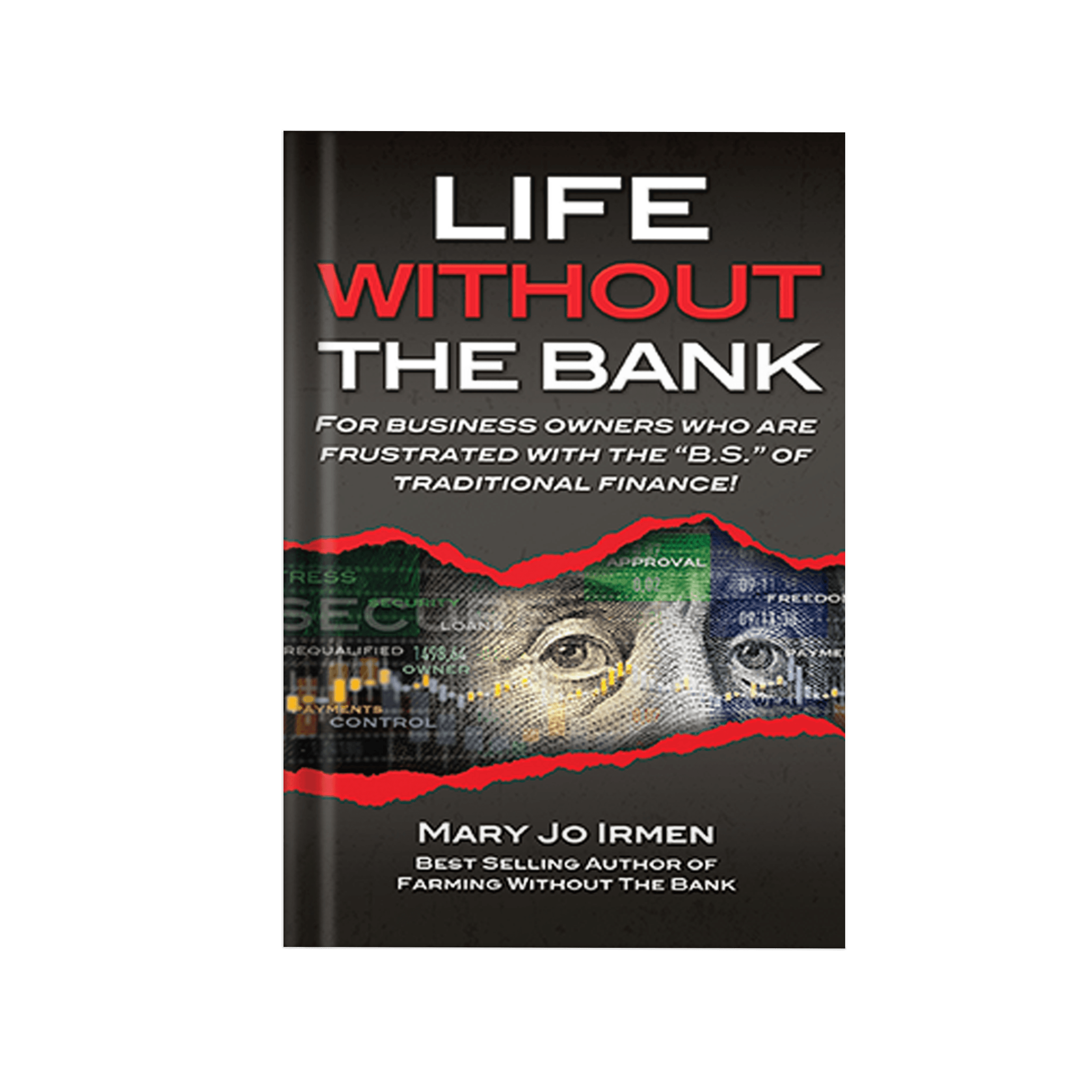
Your financial independence starts with one book.
Only one of three Americans can retire. Part of the fault is the conditioned belief that you must give up the use of your money when you’re young so you can have it later, assuming the stock market doesn’t collapse.