Podcast
EP. 249
The Financial Independence Trap Nobody Warns You About (Ep. 249)
Dec 25, 2025 ·
28 min
0:00 / 28:20
EPISODE OVERVIEW
ABOUT THIS EPISODE
What if your 401(k) isn’t really your money?
In this episode, we break down Willie Sutton’s Law and expose how government-controlled retirement plans quietly limit your freedom, liquidity, and control over your wealth.
In WTB Episode 249, we continue our Becoming Your Own Banker chapter review, diving deep into Willie Sutton’s Law: “Wherever wealth is accumulated, someone will try to steal it.”
This episode challenges conventional thinking around 401(k)s, IRAs, Roth limits, and tax-deferred retirement plans. We unpack how taxation works, why qualified plans were created, and how government incentives quietly shape your financial behavior, often at your expense.
We also discuss the historical role of churches vs. government welfare, the dangers of inaccessible retirement savings, and why many people feel “broke” while technically having money they can’t touch.
Key Takeaways
- Why tax-deferred retirement plans come with hidden control and risk
- How Willie Sutton’s Law applies directly to 401(k)s and IRAs
- The real reason Roth IRAs are limited and capped
- Why tax refunds are NOT a win
- How lack of liquidity keeps people financially stressed
- Why responsibility, not government, is the key to financial freedom
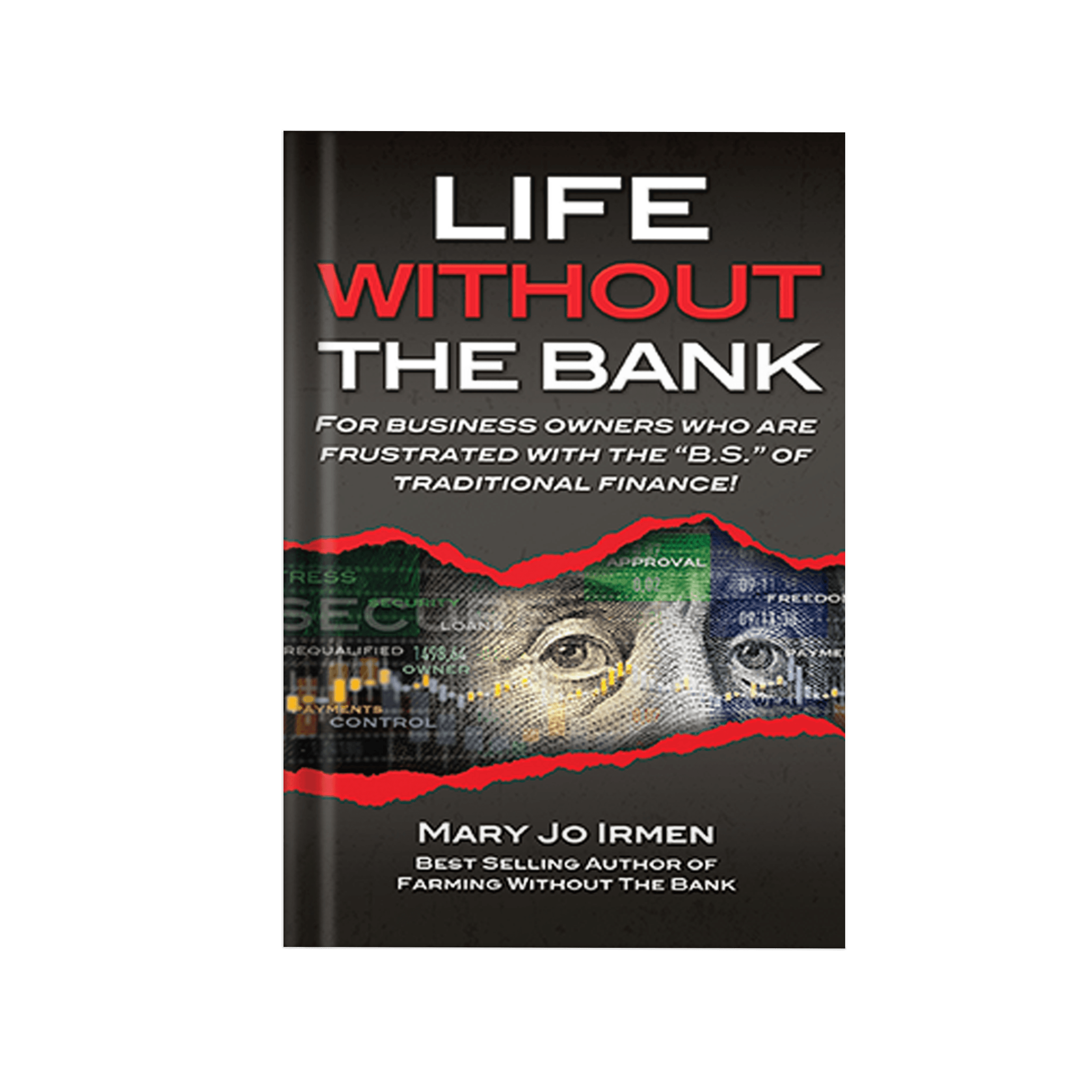
Grab your copy of Becoming Your Own Banker and follow along with us.
Drop your questions or comments. We read them.
Like, subscribe, and share if this episode made you rethink retirement.
Links Mentioned
CHAPTER TIMESTAMPS
- 00:00Is the Government Your Savings Account?
- 05:50Willie Sutton's Law & Government Taxation
- 10:37Qualified Plans & Changing the Rules
- 15:38Roth IRAs, 401(k)s, and Control
- 20:55Liquidity Problems & Opportunity Cost
- 25:07Tax Refunds Explained
- 30:08A Private Solution Outside Government Control
YOUTUBE EPISODE
TRANSCRIPTION
"The government has all of our money and we're like, oh, it's our savings account. If you're allowing the government to control your finances, we have a problem. And the problem is not the government, it's you at that point. That's going to sound harsh. But if you are saying I am not good enough to put my money in a separate savings account without touching it, then there's work to be done on you. I would not be giving the government my money and hoping and trusting that they're going to give that back."
Hello, hello, hello, and welcome back to the podcast. Thank you very much for being here. All right. We are moving on BYOB. We are recording. If you know, if you're just joining, where have you been? We are breaking down, Becoming Your Own Banker and doing chapter reviews. So we are on Willie Sutton's Law, page 29. All right, Tris, I'm going to let you start this one.
Okay, so this is in bold at the top of this page. Sutton's Law is formulated. And essentially, he's saying wherever wealth is accumulated, someone will try to steal it. And then Nelson goes on to say, because clearly he had lots of love for the government. Who is the biggest thief in the world? If you answered the Internal Revenue Service, you are correct. Most people have this feeling but lack the ability to explain that it is indeed theft. I explain it this way. Let's go to a shopping mall or some such place where there are lots of people to witness what I'm about to do to you. At this point, I pull out a gun and place it against your head and direct you to give me the contents of your wallet. Or I will blow your brains out.
A little dramatic player.
I can predict the certainty that those who saw this act will describe it as theft and call for my punishment. But if you allow me to gather the same crowd for about an hour before you show up and let me talk to them about how we're going to divide the contents of your wallet and distribute among them, now they will call the act democracy in action. Hmm?
Because it is theft. It's theft. It's theft. It's theft. We're going to steal from the people that have the money. This is a little fun fact if you didn't know. The government cannot penalize us. They have to tax us. That is why the early withdrawal from your 401(k) and the tax on healthcare when we had national, like, everybody had to have healthcare. I call it Obamacare. But if you had, they had to create a tax in order to get that money from us. And so taxing is just a way to say, hey, we need your money so that we can equally distribute it because we know better how to do that than you do.
Wasn't it, what's like the, most people work until April. Like, that timeframe, that four months is all money that's going to the government.
Oh, I've never heard that.
Yeah. So people work essentially, what is that? Four months out of the year? Yeah, four months out of the year. To pay taxes. Yeah. Yeah.
But if they take a little at a time, we don't even notice it. We don't question it because exactly what Nelson is saying. They get all together and then they brainwash us into believing that they're doing this great service for us because they're going to take care of the unfortunate, right? Those people that can't make it. Well, one, can we educate them instead? And two, whatever happened to, like, if you look back in history, and I did this several years ago, I'm like, who used to take care of these people? Well, churches.
Interesting.
Right? So the churches used to say, oh, I'm going to come in and I'm going to feed the hungry. I'm going to make sure they have a place to stay. You had your homeless shelters, right? You had people giving to those things. And now they just go to the local government office and they're taken care of.
We have one church in town that we used to go to. And the pastor was telling us that he is basically the only church in town that will do a funeral for somebody that's not a member. He will answer the phone and come down to the church and let people stay in the church. If they're coming through town and they don't have a place to stay and they really, truly need a place. What if a homeless shelter can accept men? He will let them stay. He will put them in a hotel. Like, that particular church, they are, it's a super old church and it's a super old congregation. But they basically don't, it's not a fancy church. They're not putting a ton of money into the church. They have money set aside for that. But that is very sad to know that a lot of these other churches who are much, much, much, much larger in town are not doing the same thing. Their pastor's phone numbers are nowhere. They're not on the website. They're not on a sign. His phone number is on the sign of the church. And so his phone rings all the time.
It's interesting, right? And so the churches used to do that. Now the government has stepped in and said, hey, let's take care of them. And so at this point of the book, though, if y'all didn't know, because you haven't read it yet, Nelson had no love for the government. And he was an Austrian economist. He studied through the Mises Institute. He was a huge proponent of FEE.org. And so he very much was more on the, I don't want to say libertarian side, but a little bit more on the libertarian side of saying, hey, we don't need them to step in and do what they think is best for us. So you're going to see in these next few chapters, you're going to get an earful.
Yes. So then he goes on to say, see if the law takes from some persons what belongs to them and gives it to another persons to whom it does not belong. See if the law benefits one citizen at the expense of another by doing what the citizen himself cannot do without committing a crime. So he goes on to say, as a result of the above bit of history, you will find yourself engulfed in confiscatory taxation. If you are the least bit effective in producing any accumulating wealth, you can count on it. Willie Sutton's law is active. At this point, there are many that resort to despair, but there is no need for it. He said there is a parasite host relationship. Government is not capable of producing anything. It gets all of its sustenance from the productive element of society. Government is a parasite and lives off of productive taxpayers, the host. It is self-evident that if the parasite takes all the produce of the host, then both parties die.
That is true. I truly try very, very hard to understand how people can't get that because that is a problem. People do not understand how if we tax the rich to 80% that they will just quit producing.
Or they'll move to a different country.
Right. And if we quit producing, then there is nothing to tax, which means that there is nothing to take. So they probably killed the parasite. But everybody dies. The host is also going to die if we start taking 80%. It's very interesting to me that also, you know, he says government is not capable of producing anything. We talked about this earlier. I don't understand how people don't understand that government does not create money. They are not a business. They are literally the parasite he's talking about. They're taking our money through taxes like we just said. Where do people think that comes from?
Well, and that's why we were just talking about this other day. It's like nothing is free. All these things that the government is paying for are propped up by tax paying dollars. So it's like you are paying for it indirectly. And unfortunately, the government is not efficient or effective with the majority of those dollars. And there's no accountability of like, is this system successful? Or what are the parameters in which like this money is allocated? And what is the accountability system for those tax paying dollars? Like when I worked in DC for the animation studio, we worked with like a lot of people that had government money, essentially, to produce stuff. And it was very opposite to how like a business owner thinks. Like a business owner thinks, how can I take this money and make things the most efficient? Give the best service for the least cost, right? In their mind, it's like, oh, well, if we don't spend this money, we're not going to get the same budget next year.
Right.
And I just remember thinking like, that's kind of backwards. You know, I'm like, do you need the same budget next year?
Yeah, it's a use it or lose it scenario. They can just spend it on foolish things. Because I've heard that in other industries, big companies that give out budgets will say, well, if I don't spend it, then we're not going to use it next year. Well, what happens is you spend it, you spend it, you spend it, and then a budget gets cut. And you're like, oh, my God, I don't have any money.
Well, it's like you're not incentivized.
Well, you didn't need it to begin with because you are not being responsible with our money. That department is then not responsible and saying, oh, we actually didn't need that. So now we can reduce taxes because we didn't need it. Yeah.
So Nelson isn't saying anything new, but he's ruffling some feathers with some of this stuff. Or he's opening eyes. I can't tell you how many people that I've had that have come back to me, clients are like, thanks. Now I'm just mad all the time. I'm like, mad about what? What are you talking about? They're like, I had no idea that any of this was going on. I didn't know that the Federal Reserve was just printing money. I didn't know it wasn't backed by anything. And they're like, now I'm down this huge rabbit hole and I'm just mad all the time. I'm like, you're going to have to take a step back. Because I was mad as well. Like when I didn't realize, I didn't know what fractional reserve banking was. He opened my eyes. I knew that the taxation thing, but I didn't know that they were just printing money. I didn't know the banks were moving money 10 to 1, right? A lot of that stuff I was unaware of. And so I was mad and I was consumed with it. And it didn't help because then none of my conversations with anybody led to anything except that the government's a scam. So you got to kind of take it. You kind of have to just slowly incorporate it if it's new.
Well, you have to look at it through the lens of like, what can I do about this? You know, and I think that that's usually helps. It helps me with my angry feelings.
I like that he says, when taxation becomes onerous to the point where government officials sense rebellion, they always resort to exceptions to the rule. They invented qualified pension plans, HR 10 plans, 401(k) plans, IRAs, etc. What a classic case of appointing the fox to guard the chicken house. How totally absurd. Did you also notice that all these plans were not installed simultaneously? First, it was pension plans, which blessed one select group of citizens. And then HR 10 plans for another group. Finally, it came down to IRAs so that everyone has an exception to the rule. Can you believe it? The lawmakers create a problem by spending money that they do not have, which results in strangling taxation. And then they create a solution in the form of an exception to the rules they created.
When I read this, I couldn't really put a full like comprehensive list together as to why I'd never really believed in qualified plans. And then when I read this, I'm like, if the government knows that they can have their hands in this money, and the longer you keep it there, the more they can eventually take. Why would I want to put something that I've worked hard for in a place where I don't know how deep someone's going to be in my pockets? I just never felt right to me. And then when I read this, I'm like, yeah, it's Willie Sutton's law. Wherever wealth has accumulated, someone's going to try to steal it. And guess who has the ability to make the rules that impact how you are able to retire?
And he goes on to say, the natural result of such a process is a system in which the government controls everything you do. And they can and will change their mind upon the slightest whim of the times. And they keep changing the rules so that it looks like they are trying to help you out. And this is very, very evident. So 401(k)s were born in 74, IRAs in 80. Okay, this is during COVID. Oh, you can take money up to $100,000 out of your 401(k) without penalty. It was 70 and a half when you had to take your required minimum distribution. Now it is 73. I thought it was 72 and it's 73. So I don't know if they move that again or not.
Like moved it up.
Well, why would they want to move it up? Exactly. Or move it to 73 because people are wanting, needing to work longer, right? And so they're doing you a favor, which is exactly what Nelson is saying. They're letting you believe that this is your favor. We are doing you this great service of saying, hey, we're going to make an exception. And you can take money out of that 401(k) if you're in hardship. But we're going to determine what your hardship is, right? Because you can take money out of an IRA if you are in hardship, but they have to determine what that hardship is and okay that. I mean, do we really want that?
He said, participate to the fullest extent possible in your tax sheltered programs. So when this started, they're saying, hey, put as much in as you can. And they even limit. Here's another thing that people don't know. So a Roth IRA is not subject that it grows income tax free. Okay. Think about this, you guys. A Roth grows income tax free, but they limit how much money you can put in a Roth and a high income earner cannot put money in a Roth. So if you earn over X amount per year, you can't even put it in. And if you earn under that, I think the limit is $6,000 or $7,500. It changes every year. So they're making some exceptions to the rules, right? But why? Why would they not want us to put all of our money in a Roth? Because it's really, if we're going to look at investments, it's a great, I got to look at the best of the worst. It's going to be the best of the worst because it's going to grow income tax free. What's going to happen to taxes later? But instead, we're going to limit how much they can put in. But we're going to let them put more in their IRAs and 401(k)s. So now you can put up to $12,000 or $16,000 in your deferred tax plan. So when you go to retire, they know there's going to be tax later. And why would they push everybody into this system?
I haven't looked recently. Years ago, the amount of money sitting in investments was very close to the amount of money Social Security needed to be bailed out. There is, and again, haven't looked in years, but there was. This was during the Obama administration. I think it's a qualified retirement account bill. And they've tried to slip it in over the years and it's never gotten passed through. But what they want to do is say, hey, you are not smart enough to manage your own money. So we therefore will take 4% of every one of your paychecks and we will put it in a retirement account for you. Isn't that already called Social Security? They couldn't even manage that. And now they want this qualified retirement account bill to pass that they can just garnish our wages by 4%.
Wow.
So years later, another bill was attached to that one that said, if this bill passes, this bill will seize everybody's retirement accounts so that they can access it because there's going to be a massive, a massive withdrawal of that system. People that are employed. Here's something for you guys to know. People that are employed are not able to take the money out of their 401(k). As long as you work for your employer, you cannot take that money. You have to quit to have access to it. And so during COVID, when market crashes happen, it's crazy how many people. I've had people that work at the life insurance company text me and say, Mary Jo, I am mad. I tried to take money out of my 401(k) and I can't access it. I'm like, no, you still are employed there. People don't know that. They actually think, and I get, I hear that a lot. People actually think that they have access to that money anytime they want. And they don't know about all these rules.
Well, most people, like the average person has the majority of their savings, like the bulk of their income inside of these qualified plans. So it's like, can you afford to not touch that money in the event of emergency or an opportunity? Like let's say there's an investment that comes along. Can you participate in it? Like what's the opportunity cost of not being able to access your money on top of the opportunity cost of that fluctuating?
And we also have to look at when I was in the punch your clock environment and I was an employee, I had to opt in to a 401(k). Now it's an opt out program. Most people are paying in and they don't even know it. So like when my daughter went and got her first full-time job, I'm like, you watch that 401(k). That is going to be an opt out. And she had to opt out.
Really?
And they could not believe it. They're like, what do you mean you don't want to contribute? Why should she contribute? She's not going to be a lifer here. Like she's not going to work here forever. She's 18 years old. It's her first job. We'll be lucky if she makes it six months, depending on management. Right? Like, and the other thing that I think is fun about this is Nelson saw this. Right? Like he was already old. Older. In his 50s, obviously. When 40s, 50s, when a lot of this stuff went down. He had already been studying Austrian economics. He had already seen some of the things that they were touting that were going to help us and all those things. And so he was aware of it. And I think the problem is, is so many people are unaware of it. They're like, no, no, no. Government would never do that. They would never take our money. What makes you think that they wouldn't? When they make all the rules and you have to follow those rules, you may want to think twice. It's no different than the bank making those rules. When you go to the bank, you have to follow the bank's rules. So do you really want to invite them into your bed? Right? They're like a bad boyfriend. They never leave.
Right. Well, and they treat you just nice enough to make you stay.
Yeah. Look at the rules. Look at the limitations and start asking, why are they limiting a Roth? Why can't wealthy people put money in a Roth? Why, if I have an IRA, a self-directed IRA, and I want to buy real estate through that, why does that money that I make have to go back into that IRA? Like a lot of people are like, oh, that's a great strategy, Mary Jo. I want to use that strategy because the money's already in the IRA. Well, okay, but the income then has to go back into that IRA. And then there's penalty associated with anything over 59 and a half. My accountant's like, well, Mary Jo, if you want to buy real estate, put it in an IRA. You're going to get the tax break. I'm like, do you think I'm going to make less money? The goal is to make more money. How idiotic. You're fired. Right. Like if we can't even be on the same page with something that simple, and you know what I do, I'm done here. Because that's the best advice that you've got is to help me reduce taxes. Because it doesn't matter how, like the more money you make, the more taxes they're going to take. Yes, there are tax things that we can do as high income earners, but there's a limit to those as well. I've talked to my colleagues. You look at people that are super wealthy and they're saying, oh, we're not paying any taxes. The only way that you're not paying taxes that I've seen is if you constantly buy real estate and you keep doing cost segregations on it. But that's a five-year, every five-year thing. Well, do I want that many rental properties? And again, even the cost segregation is just kicking that can down the road. So I may as well just pay the taxes now. I've not found the way out. If you guys know what it is, please let me know. Please. But I've not found that way out.
Well, and I think just the pervasive thinking of like, if you're earning a really high income and you're also paying taxes, the answer shouldn't be to make less income. And I feel like that's like the answer for most people. Like, oh, well, at that time, I'll be making less money and I'll have less write-offs. And it's just like, that's what you're excited about looking forward to.
Yeah. And people don't understand either that the people paying the most taxes are employees. They have no write-offs. So if you're an employee and you can be a 1099 employee, you're better off to do that. So you can write off a room in your house. You can write off mileage. You could write off a portion of your car. You can write off your computer. You can write off your cell phone. You can write a lot of those expenses off because you're a 1099 employee. But they're still not paying the majority of the taxes. Employees in this country are still not paying the majority of taxes. But they're the ones getting hurt the worst because their income to tax ratio is very hurtful.
Because they take it first. It's like the government is in your pocket even before you get your paycheck, which is insane to me.
And you shouldn't be getting a tax refund.
Yeah. I should explain this to people because this is good. You should not want a tax refund. So if you're a terrible saver and things come up and you don't have an adequate savings, then you may want it to try to break even. But if you're a bad person to where maybe you get 100 bucks back or you maybe get 500 bucks back or something like that. But if you're getting a three, five, $10,000 tax refund in a year, that is because you have overpaid the government. And they have to pay you back. You are not getting that tax refund for any other reason. You have overpaid them. And a lot of you act like it's a savings account. So what happens is I'm going to overpay them $10,000. But now I'm going to go put $10,000 on a credit card because I don't have access to any money. So I'm going to pay 20%. Well, if you just changed your withholdings, then you could be getting more money back every single month and get that kind of to close even. Now, I'm not an accountant. Tris is not an accountant. You need to talk to a tax professional to figure out what that withholding needs to be to get you into the position where you're getting back the least amount of money possible without having to pay in.
Because essentially, you're giving the government an interest-free loan.
Yes. That's exactly what you're doing. Now, I did talk to somebody and they said, I talked to an accountant and he said that the government does figure interest in on the money they give back to you. But it's going to be what, 1% maybe?
That's interesting.
It's going to be pretty small because I was super mad because I get a tax penalty because I don't pay until the end of the year. I do not give them one single dime throughout the year. So my tax bill at the end of the year is massive. And my old accountant is like, Mary Jo, you need to pay quarterlies. I'm like, why am I giving them money and then hoping that they give it back to me? Because if they change their mind and don't want to give it back to me, they don't have to give it back to me. And I know business owners that have not gotten it back because they're like, we'll just apply it to your quarterlies going forward. Or I talked to someone the other day. It is September that we're recording this and they still had not gotten their tax refund. So what, the government's holding that? They have control because they now have that money in their control. We're challenged on a day-to-day basis of how are we going to buy groceries, pay for childcare, pay for all the things that need to be done. And yet the government has all of our money. And we're like, oh, it's okay. It's our savings account. If you're allowing the government to control your finances, we have a problem. And the problem is not the government, it's you at that point. That's going to sound harsh. But if you are saying, I am not good enough to put my money in a separate savings account without touching it, then there's work to be done on you. I would not be giving the government my money and hoping and trusting that they're going to give that back.
I remember having this conversation with my husband because I was like, I just honestly, personally, don't see how people can't understand this. And he's like, well, a lot of people don't want to take responsibility. And a lot of people don't want to pay attention to it. Because it's easier to be like, oh, well, I'm just saving for retirement in my 401(k). End of thought, you know. And it's like, but you cannot afford to not care about it.
Right.
Because you are in charge of your future. And if you neglect that piece of it, only you and your family suffer because of that.
Yep.
And so you have to pay attention to it. And I remember sitting down with this lady that I actually went to high school with. And we were going through everything and talking about infinite banking. And she was like, I just would really love to have like $30,000 in savings. And I was like, you do. But it's in your 401(k). But it's like not even top of mind for her because she can't touch it.
Yep. And it's like, why is that normal? People are like, I'm broke. I'm broke. I don't have any money. But they're putting 12% into their 401(k). Or they're putting 5% into their 401(k). I can't afford to buy groceries. But we're still putting money into our 401(k).
And paying interest on the credit card.
Yep. And then Nelson kind of ends this chapter with, problems are best solved by people freely contracting with one another and with government limited to the function of enforcing these contracts. And the best way to do this is through the magnificent idea of dividend paying whole life insurance. It's been around for 200 years. It is not a government-sponsored idea. It preceded the income tax idea by a long time. It is private property. And we went over that a little bit yesterday as well. And we do find a lot of people like this solution because the government doesn't have their hands on it. But it's also very, this chapter is very eye-opening to what's happening with the government. And the fact that we think that these lawmakers have our best interest in mind. They don't care about us. They care about their bottom pocket.
And maybe they do when they get into office. I do have faith in a little bit in humanity and the fact that when they get into office, they have great intentions. And they soon learn that that is not possible. Like how the system actually works. I know local people and I have clients locally that are involved in government stuff. And they're great, amazing people. And the amount of behind-the-scenes stuff that goes on, the amount they get ridiculed, belittled, yelled at. Like it's bad when you're not part of the clan. And so it's easy to stay in and be part of the clan or you get out and then a snake gets in.
All right, guys. Let us know if you have comments, questions, concerns. Grab your book. Follow along. We got more to come. Have a great rest of your day.
View MoreHello, hello, hello, and welcome back to the podcast. Thank you very much for being here. All right. We are moving on BYOB. We are recording. If you know, if you're just joining, where have you been? We are breaking down, Becoming Your Own Banker and doing chapter reviews. So we are on Willie Sutton's Law, page 29. All right, Tris, I'm going to let you start this one.
Okay, so this is in bold at the top of this page. Sutton's Law is formulated. And essentially, he's saying wherever wealth is accumulated, someone will try to steal it. And then Nelson goes on to say, because clearly he had lots of love for the government. Who is the biggest thief in the world? If you answered the Internal Revenue Service, you are correct. Most people have this feeling but lack the ability to explain that it is indeed theft. I explain it this way. Let's go to a shopping mall or some such place where there are lots of people to witness what I'm about to do to you. At this point, I pull out a gun and place it against your head and direct you to give me the contents of your wallet. Or I will blow your brains out.
A little dramatic player.
I can predict the certainty that those who saw this act will describe it as theft and call for my punishment. But if you allow me to gather the same crowd for about an hour before you show up and let me talk to them about how we're going to divide the contents of your wallet and distribute among them, now they will call the act democracy in action. Hmm?
Because it is theft. It's theft. It's theft. It's theft. We're going to steal from the people that have the money. This is a little fun fact if you didn't know. The government cannot penalize us. They have to tax us. That is why the early withdrawal from your 401(k) and the tax on healthcare when we had national, like, everybody had to have healthcare. I call it Obamacare. But if you had, they had to create a tax in order to get that money from us. And so taxing is just a way to say, hey, we need your money so that we can equally distribute it because we know better how to do that than you do.
Wasn't it, what's like the, most people work until April. Like, that timeframe, that four months is all money that's going to the government.
Oh, I've never heard that.
Yeah. So people work essentially, what is that? Four months out of the year? Yeah, four months out of the year. To pay taxes. Yeah. Yeah.
But if they take a little at a time, we don't even notice it. We don't question it because exactly what Nelson is saying. They get all together and then they brainwash us into believing that they're doing this great service for us because they're going to take care of the unfortunate, right? Those people that can't make it. Well, one, can we educate them instead? And two, whatever happened to, like, if you look back in history, and I did this several years ago, I'm like, who used to take care of these people? Well, churches.
Interesting.
Right? So the churches used to say, oh, I'm going to come in and I'm going to feed the hungry. I'm going to make sure they have a place to stay. You had your homeless shelters, right? You had people giving to those things. And now they just go to the local government office and they're taken care of.
We have one church in town that we used to go to. And the pastor was telling us that he is basically the only church in town that will do a funeral for somebody that's not a member. He will answer the phone and come down to the church and let people stay in the church. If they're coming through town and they don't have a place to stay and they really, truly need a place. What if a homeless shelter can accept men? He will let them stay. He will put them in a hotel. Like, that particular church, they are, it's a super old church and it's a super old congregation. But they basically don't, it's not a fancy church. They're not putting a ton of money into the church. They have money set aside for that. But that is very sad to know that a lot of these other churches who are much, much, much, much larger in town are not doing the same thing. Their pastor's phone numbers are nowhere. They're not on the website. They're not on a sign. His phone number is on the sign of the church. And so his phone rings all the time.
It's interesting, right? And so the churches used to do that. Now the government has stepped in and said, hey, let's take care of them. And so at this point of the book, though, if y'all didn't know, because you haven't read it yet, Nelson had no love for the government. And he was an Austrian economist. He studied through the Mises Institute. He was a huge proponent of FEE.org. And so he very much was more on the, I don't want to say libertarian side, but a little bit more on the libertarian side of saying, hey, we don't need them to step in and do what they think is best for us. So you're going to see in these next few chapters, you're going to get an earful.
Yes. So then he goes on to say, see if the law takes from some persons what belongs to them and gives it to another persons to whom it does not belong. See if the law benefits one citizen at the expense of another by doing what the citizen himself cannot do without committing a crime. So he goes on to say, as a result of the above bit of history, you will find yourself engulfed in confiscatory taxation. If you are the least bit effective in producing any accumulating wealth, you can count on it. Willie Sutton's law is active. At this point, there are many that resort to despair, but there is no need for it. He said there is a parasite host relationship. Government is not capable of producing anything. It gets all of its sustenance from the productive element of society. Government is a parasite and lives off of productive taxpayers, the host. It is self-evident that if the parasite takes all the produce of the host, then both parties die.
That is true. I truly try very, very hard to understand how people can't get that because that is a problem. People do not understand how if we tax the rich to 80% that they will just quit producing.
Or they'll move to a different country.
Right. And if we quit producing, then there is nothing to tax, which means that there is nothing to take. So they probably killed the parasite. But everybody dies. The host is also going to die if we start taking 80%. It's very interesting to me that also, you know, he says government is not capable of producing anything. We talked about this earlier. I don't understand how people don't understand that government does not create money. They are not a business. They are literally the parasite he's talking about. They're taking our money through taxes like we just said. Where do people think that comes from?
Well, and that's why we were just talking about this other day. It's like nothing is free. All these things that the government is paying for are propped up by tax paying dollars. So it's like you are paying for it indirectly. And unfortunately, the government is not efficient or effective with the majority of those dollars. And there's no accountability of like, is this system successful? Or what are the parameters in which like this money is allocated? And what is the accountability system for those tax paying dollars? Like when I worked in DC for the animation studio, we worked with like a lot of people that had government money, essentially, to produce stuff. And it was very opposite to how like a business owner thinks. Like a business owner thinks, how can I take this money and make things the most efficient? Give the best service for the least cost, right? In their mind, it's like, oh, well, if we don't spend this money, we're not going to get the same budget next year.
Right.
And I just remember thinking like, that's kind of backwards. You know, I'm like, do you need the same budget next year?
Yeah, it's a use it or lose it scenario. They can just spend it on foolish things. Because I've heard that in other industries, big companies that give out budgets will say, well, if I don't spend it, then we're not going to use it next year. Well, what happens is you spend it, you spend it, you spend it, and then a budget gets cut. And you're like, oh, my God, I don't have any money.
Well, it's like you're not incentivized.
Well, you didn't need it to begin with because you are not being responsible with our money. That department is then not responsible and saying, oh, we actually didn't need that. So now we can reduce taxes because we didn't need it. Yeah.
So Nelson isn't saying anything new, but he's ruffling some feathers with some of this stuff. Or he's opening eyes. I can't tell you how many people that I've had that have come back to me, clients are like, thanks. Now I'm just mad all the time. I'm like, mad about what? What are you talking about? They're like, I had no idea that any of this was going on. I didn't know that the Federal Reserve was just printing money. I didn't know it wasn't backed by anything. And they're like, now I'm down this huge rabbit hole and I'm just mad all the time. I'm like, you're going to have to take a step back. Because I was mad as well. Like when I didn't realize, I didn't know what fractional reserve banking was. He opened my eyes. I knew that the taxation thing, but I didn't know that they were just printing money. I didn't know the banks were moving money 10 to 1, right? A lot of that stuff I was unaware of. And so I was mad and I was consumed with it. And it didn't help because then none of my conversations with anybody led to anything except that the government's a scam. So you got to kind of take it. You kind of have to just slowly incorporate it if it's new.
Well, you have to look at it through the lens of like, what can I do about this? You know, and I think that that's usually helps. It helps me with my angry feelings.
I like that he says, when taxation becomes onerous to the point where government officials sense rebellion, they always resort to exceptions to the rule. They invented qualified pension plans, HR 10 plans, 401(k) plans, IRAs, etc. What a classic case of appointing the fox to guard the chicken house. How totally absurd. Did you also notice that all these plans were not installed simultaneously? First, it was pension plans, which blessed one select group of citizens. And then HR 10 plans for another group. Finally, it came down to IRAs so that everyone has an exception to the rule. Can you believe it? The lawmakers create a problem by spending money that they do not have, which results in strangling taxation. And then they create a solution in the form of an exception to the rules they created.
When I read this, I couldn't really put a full like comprehensive list together as to why I'd never really believed in qualified plans. And then when I read this, I'm like, if the government knows that they can have their hands in this money, and the longer you keep it there, the more they can eventually take. Why would I want to put something that I've worked hard for in a place where I don't know how deep someone's going to be in my pockets? I just never felt right to me. And then when I read this, I'm like, yeah, it's Willie Sutton's law. Wherever wealth has accumulated, someone's going to try to steal it. And guess who has the ability to make the rules that impact how you are able to retire?
And he goes on to say, the natural result of such a process is a system in which the government controls everything you do. And they can and will change their mind upon the slightest whim of the times. And they keep changing the rules so that it looks like they are trying to help you out. And this is very, very evident. So 401(k)s were born in 74, IRAs in 80. Okay, this is during COVID. Oh, you can take money up to $100,000 out of your 401(k) without penalty. It was 70 and a half when you had to take your required minimum distribution. Now it is 73. I thought it was 72 and it's 73. So I don't know if they move that again or not.
Like moved it up.
Well, why would they want to move it up? Exactly. Or move it to 73 because people are wanting, needing to work longer, right? And so they're doing you a favor, which is exactly what Nelson is saying. They're letting you believe that this is your favor. We are doing you this great service of saying, hey, we're going to make an exception. And you can take money out of that 401(k) if you're in hardship. But we're going to determine what your hardship is, right? Because you can take money out of an IRA if you are in hardship, but they have to determine what that hardship is and okay that. I mean, do we really want that?
He said, participate to the fullest extent possible in your tax sheltered programs. So when this started, they're saying, hey, put as much in as you can. And they even limit. Here's another thing that people don't know. So a Roth IRA is not subject that it grows income tax free. Okay. Think about this, you guys. A Roth grows income tax free, but they limit how much money you can put in a Roth and a high income earner cannot put money in a Roth. So if you earn over X amount per year, you can't even put it in. And if you earn under that, I think the limit is $6,000 or $7,500. It changes every year. So they're making some exceptions to the rules, right? But why? Why would they not want us to put all of our money in a Roth? Because it's really, if we're going to look at investments, it's a great, I got to look at the best of the worst. It's going to be the best of the worst because it's going to grow income tax free. What's going to happen to taxes later? But instead, we're going to limit how much they can put in. But we're going to let them put more in their IRAs and 401(k)s. So now you can put up to $12,000 or $16,000 in your deferred tax plan. So when you go to retire, they know there's going to be tax later. And why would they push everybody into this system?
I haven't looked recently. Years ago, the amount of money sitting in investments was very close to the amount of money Social Security needed to be bailed out. There is, and again, haven't looked in years, but there was. This was during the Obama administration. I think it's a qualified retirement account bill. And they've tried to slip it in over the years and it's never gotten passed through. But what they want to do is say, hey, you are not smart enough to manage your own money. So we therefore will take 4% of every one of your paychecks and we will put it in a retirement account for you. Isn't that already called Social Security? They couldn't even manage that. And now they want this qualified retirement account bill to pass that they can just garnish our wages by 4%.
Wow.
So years later, another bill was attached to that one that said, if this bill passes, this bill will seize everybody's retirement accounts so that they can access it because there's going to be a massive, a massive withdrawal of that system. People that are employed. Here's something for you guys to know. People that are employed are not able to take the money out of their 401(k). As long as you work for your employer, you cannot take that money. You have to quit to have access to it. And so during COVID, when market crashes happen, it's crazy how many people. I've had people that work at the life insurance company text me and say, Mary Jo, I am mad. I tried to take money out of my 401(k) and I can't access it. I'm like, no, you still are employed there. People don't know that. They actually think, and I get, I hear that a lot. People actually think that they have access to that money anytime they want. And they don't know about all these rules.
Well, most people, like the average person has the majority of their savings, like the bulk of their income inside of these qualified plans. So it's like, can you afford to not touch that money in the event of emergency or an opportunity? Like let's say there's an investment that comes along. Can you participate in it? Like what's the opportunity cost of not being able to access your money on top of the opportunity cost of that fluctuating?
And we also have to look at when I was in the punch your clock environment and I was an employee, I had to opt in to a 401(k). Now it's an opt out program. Most people are paying in and they don't even know it. So like when my daughter went and got her first full-time job, I'm like, you watch that 401(k). That is going to be an opt out. And she had to opt out.
Really?
And they could not believe it. They're like, what do you mean you don't want to contribute? Why should she contribute? She's not going to be a lifer here. Like she's not going to work here forever. She's 18 years old. It's her first job. We'll be lucky if she makes it six months, depending on management. Right? Like, and the other thing that I think is fun about this is Nelson saw this. Right? Like he was already old. Older. In his 50s, obviously. When 40s, 50s, when a lot of this stuff went down. He had already been studying Austrian economics. He had already seen some of the things that they were touting that were going to help us and all those things. And so he was aware of it. And I think the problem is, is so many people are unaware of it. They're like, no, no, no. Government would never do that. They would never take our money. What makes you think that they wouldn't? When they make all the rules and you have to follow those rules, you may want to think twice. It's no different than the bank making those rules. When you go to the bank, you have to follow the bank's rules. So do you really want to invite them into your bed? Right? They're like a bad boyfriend. They never leave.
Right. Well, and they treat you just nice enough to make you stay.
Yeah. Look at the rules. Look at the limitations and start asking, why are they limiting a Roth? Why can't wealthy people put money in a Roth? Why, if I have an IRA, a self-directed IRA, and I want to buy real estate through that, why does that money that I make have to go back into that IRA? Like a lot of people are like, oh, that's a great strategy, Mary Jo. I want to use that strategy because the money's already in the IRA. Well, okay, but the income then has to go back into that IRA. And then there's penalty associated with anything over 59 and a half. My accountant's like, well, Mary Jo, if you want to buy real estate, put it in an IRA. You're going to get the tax break. I'm like, do you think I'm going to make less money? The goal is to make more money. How idiotic. You're fired. Right. Like if we can't even be on the same page with something that simple, and you know what I do, I'm done here. Because that's the best advice that you've got is to help me reduce taxes. Because it doesn't matter how, like the more money you make, the more taxes they're going to take. Yes, there are tax things that we can do as high income earners, but there's a limit to those as well. I've talked to my colleagues. You look at people that are super wealthy and they're saying, oh, we're not paying any taxes. The only way that you're not paying taxes that I've seen is if you constantly buy real estate and you keep doing cost segregations on it. But that's a five-year, every five-year thing. Well, do I want that many rental properties? And again, even the cost segregation is just kicking that can down the road. So I may as well just pay the taxes now. I've not found the way out. If you guys know what it is, please let me know. Please. But I've not found that way out.
Well, and I think just the pervasive thinking of like, if you're earning a really high income and you're also paying taxes, the answer shouldn't be to make less income. And I feel like that's like the answer for most people. Like, oh, well, at that time, I'll be making less money and I'll have less write-offs. And it's just like, that's what you're excited about looking forward to.
Yeah. And people don't understand either that the people paying the most taxes are employees. They have no write-offs. So if you're an employee and you can be a 1099 employee, you're better off to do that. So you can write off a room in your house. You can write off mileage. You could write off a portion of your car. You can write off your computer. You can write off your cell phone. You can write a lot of those expenses off because you're a 1099 employee. But they're still not paying the majority of the taxes. Employees in this country are still not paying the majority of taxes. But they're the ones getting hurt the worst because their income to tax ratio is very hurtful.
Because they take it first. It's like the government is in your pocket even before you get your paycheck, which is insane to me.
And you shouldn't be getting a tax refund.
Yeah. I should explain this to people because this is good. You should not want a tax refund. So if you're a terrible saver and things come up and you don't have an adequate savings, then you may want it to try to break even. But if you're a bad person to where maybe you get 100 bucks back or you maybe get 500 bucks back or something like that. But if you're getting a three, five, $10,000 tax refund in a year, that is because you have overpaid the government. And they have to pay you back. You are not getting that tax refund for any other reason. You have overpaid them. And a lot of you act like it's a savings account. So what happens is I'm going to overpay them $10,000. But now I'm going to go put $10,000 on a credit card because I don't have access to any money. So I'm going to pay 20%. Well, if you just changed your withholdings, then you could be getting more money back every single month and get that kind of to close even. Now, I'm not an accountant. Tris is not an accountant. You need to talk to a tax professional to figure out what that withholding needs to be to get you into the position where you're getting back the least amount of money possible without having to pay in.
Because essentially, you're giving the government an interest-free loan.
Yes. That's exactly what you're doing. Now, I did talk to somebody and they said, I talked to an accountant and he said that the government does figure interest in on the money they give back to you. But it's going to be what, 1% maybe?
That's interesting.
It's going to be pretty small because I was super mad because I get a tax penalty because I don't pay until the end of the year. I do not give them one single dime throughout the year. So my tax bill at the end of the year is massive. And my old accountant is like, Mary Jo, you need to pay quarterlies. I'm like, why am I giving them money and then hoping that they give it back to me? Because if they change their mind and don't want to give it back to me, they don't have to give it back to me. And I know business owners that have not gotten it back because they're like, we'll just apply it to your quarterlies going forward. Or I talked to someone the other day. It is September that we're recording this and they still had not gotten their tax refund. So what, the government's holding that? They have control because they now have that money in their control. We're challenged on a day-to-day basis of how are we going to buy groceries, pay for childcare, pay for all the things that need to be done. And yet the government has all of our money. And we're like, oh, it's okay. It's our savings account. If you're allowing the government to control your finances, we have a problem. And the problem is not the government, it's you at that point. That's going to sound harsh. But if you are saying, I am not good enough to put my money in a separate savings account without touching it, then there's work to be done on you. I would not be giving the government my money and hoping and trusting that they're going to give that back.
I remember having this conversation with my husband because I was like, I just honestly, personally, don't see how people can't understand this. And he's like, well, a lot of people don't want to take responsibility. And a lot of people don't want to pay attention to it. Because it's easier to be like, oh, well, I'm just saving for retirement in my 401(k). End of thought, you know. And it's like, but you cannot afford to not care about it.
Right.
Because you are in charge of your future. And if you neglect that piece of it, only you and your family suffer because of that.
Yep.
And so you have to pay attention to it. And I remember sitting down with this lady that I actually went to high school with. And we were going through everything and talking about infinite banking. And she was like, I just would really love to have like $30,000 in savings. And I was like, you do. But it's in your 401(k). But it's like not even top of mind for her because she can't touch it.
Yep. And it's like, why is that normal? People are like, I'm broke. I'm broke. I don't have any money. But they're putting 12% into their 401(k). Or they're putting 5% into their 401(k). I can't afford to buy groceries. But we're still putting money into our 401(k).
And paying interest on the credit card.
Yep. And then Nelson kind of ends this chapter with, problems are best solved by people freely contracting with one another and with government limited to the function of enforcing these contracts. And the best way to do this is through the magnificent idea of dividend paying whole life insurance. It's been around for 200 years. It is not a government-sponsored idea. It preceded the income tax idea by a long time. It is private property. And we went over that a little bit yesterday as well. And we do find a lot of people like this solution because the government doesn't have their hands on it. But it's also very, this chapter is very eye-opening to what's happening with the government. And the fact that we think that these lawmakers have our best interest in mind. They don't care about us. They care about their bottom pocket.
And maybe they do when they get into office. I do have faith in a little bit in humanity and the fact that when they get into office, they have great intentions. And they soon learn that that is not possible. Like how the system actually works. I know local people and I have clients locally that are involved in government stuff. And they're great, amazing people. And the amount of behind-the-scenes stuff that goes on, the amount they get ridiculed, belittled, yelled at. Like it's bad when you're not part of the clan. And so it's easy to stay in and be part of the clan or you get out and then a snake gets in.
All right, guys. Let us know if you have comments, questions, concerns. Grab your book. Follow along. We got more to come. Have a great rest of your day.



ready to start?
Your financial independence starts with one book.
Only one of three Americans can retire. Part of the fault is the conditioned belief that you must give up the use of your money when you’re young so you can have it later, assuming the stock market doesn’t collapse.