Podcast
EP. 277
The Top Infinite Banking Questions Everyone’s Asking — Answered (Ep. 277)
Jul 9, 2026 ·
16 min
0:00 / 16:02
EPISODE OVERVIEW
ABOUT THIS EPISODE
Got questions about the Infinite Banking Concept? Tarisa breaks down the most frequently asked questions about IBC — straight answers, no fluff.
In this episode of the Without the Bank Podcast, Tarisa covers everything from insuring your kids first and legacy coverage, to what happens if you miss premiums, how cash value actually grows uninterrupted even while your money is out on a loan, and how to read your policy illustrations like a pro. Whether you're brand new to infinite banking or have been sitting on questions for months — this is the episode for you.
Topics covered include: uninsurable family members, age limits for coverage, the truth behind policy loans, and why so many people think infinite banking sounds "too good to be true" — and what the real answer is.
Ready to Get Started?
CHAPTER TIMESTAMPS
- 00:00Welcome And Today's FAQ
- 00:25Should I Insure My Kids First Because It's Cheaper?
- 01:40Same Premium, Different Death Benefit
- 01:51What Legacy Are You Passing On?
- 03:11What If I'm Uninsurable?
- 04:18Am I Too Old To Start?
- 05:30How Long Does A Policy Loan Take?
- 06:09What If I Can't Pay My Premium?
- 07:00Reduced Paid-Up, And Why PUAs Are Optional
- 09:03"It's Too Good To Be True"
- 10:30How Does Cash Value Actually Grow?
- 11:05Using Your Money While It Keeps Compounding
- 13:00The Misleading Illustration Story
- 14:30Illustrations Are Only A Snapshot
- 15:30Wrap-Up
YOUTUBE EPISODE
TRANSCRIPTION
Hello, and welcome back to the podcast. Today we're gonna go over some more frequently asked questions. I think this is a fun thing to do because usually this pops up, so I just figure why not do a podcast about it?
Here is one that comes up a lot. And I think we'll go over the question, and then we'll go over the thinking that probably led to the question. Okay, so first question is: should I just get policies on my kids first because it's cheaper?
Okay, so the important thing to know is that kids are able to be insured for up to half of what the highest parent is insured for. Let's say you have a couple, and let's say the dad is insured for two million and the wife is insured for one million. The kids are allowed to be insured for up to half of what the highest parent is insured for. So in this case, they could be insured for up to one million dollars. That's one thing. So if you don't have coverage on yourself, then the kids aren't able to get insurance, if that makes sense. So that's the first thing.
Your coverage matters, and your coverage matters in relation to how much coverage you're able to get on your children. So it's usually up to one million kids can be insured for max, and sometimes if you have, like, a higher net worth, you can advocate for a case to push that limit up over one million.
So the thinking behind this question is, "I don't want to pay as much premium for myself," is usually what that goes down to. It's like, "Oh, the kids' policies are going to be cheaper." Is that true? Yes. However, we went over this in a previous podcast. Let's say you have, for the sake of this example, let's say a 10-year-old and a 50-year-old, and they're each paying $5,000 in premium yearly.
The cash value works similarly. The death benefit is the thing that's going to be different. You could be paying the same premium. The cash value works pretty much the same. The death benefit is going to be lesser on the 50-year-old.
The other thing that comes to mind when people ask this question is, well, what kind of legacy are you wanting to pass on to your kids? Because if you are wanting to pass on legacy, you know, we're not getting any younger. Someone asked me how old I was the other day, and I was like, "Oh my gosh." And then my husband just had a birthday, and I was like, "Dang, you're kinda getting up there." He's like — he didn't really appreciate that I said that.
But my point is, we are the youngest and probably healthiest we're going to be today. It's important for you to have coverage on yourself: one, to pass on income tax-free death benefits; two, to get the family banking system started; and three, to make sure that your kids actually can get insurance, because it's up to what you're covered for.
So that's a question that I get a lot, and I will say, you're probably thinking that because you're looking at this as like, "I don't want to pay a lot," and I can understand that. However, Nelson says, "If you knew you could get back everything that you had put in and more, why would you object to putting more into the system?"
So that's kind of the thinking that needs to change in order for someone to truly come around to this concept. It's not like, "What's the cheapest policy I can get?" It's, "What value am I looking for? What's important to me in a policy? And am I going to be passing on the legacy that I want to?" So that's a question I get a lot. I hope that helps for that one.
Okay, this is also a good question. What if I am uninsurable? Really good question. And you will know that you're uninsurable if you go through underwriting. So we can't issue a policy on anyone unless they go through underwriting, and that's kind of a collection of things. They take your medical records, they do a background history check, and then they do, obviously, an updated urine and blood for you.
So if you did all of that and you are uninsurable, the other options are to get insurance on other people that you have insurable interest on. So let's say you have a business partner, or let's say you co-own a property with your brother or your sister or one of your kids. You can get insurance on them. That doesn't count you out of the game if you're uninsurable. It just means we need to find insurable interest on someone else.
Another example of that is I know a gentleman who purchased policies on his parents because the argument was, "I'm going to be purchasing my siblings out of their share of their house once they pass." Essentially what I'm saying is there's kind of a bunch of ways to make sure that you can still get a policy.
Okay, the other one — we kinda went over this. Am I too old? So like I said, if you had a fifty-year-old and a twenty-year-old have $20 worth of cash, and they go to the grocery store — I mean, now they might not be able to buy many groceries, but it would still be the same amount of groceries for each of them, the same things. The same $20. It spends the same. The only difference is that the 50-year-old is going to have less death benefit.
So I think this kind of gets a lot of people wrapped up. It's like, "Okay, well, I don't wanna pay a lot of premium," or "I wanna make sure I'm not biting off more than I can chew," which I think is really wise. However, it's important, if you're a parent especially, and if you're married especially, that you have coverage on yourself. So you're not too old.
The case study that I went over, the gentleman started when he was in his 50s, and by the time he was 85, had paid a little over half a million dollars in premium, but he had access to over $700,000 worth of cash value. So you're not too old. As long as you're healthy — I should say there is a limit. So usually if you're over 80, they don't allow you to get life insurance. There is kind of an age cutoff to that. But no, you're not too old.
As long as you're healthy, as long as you can get a policy, and as long as you know what premium feels comfortable for you, you're good to go. So hope that puts some listeners at ease.
Okay, how long does it take to process a loan? This is another question, because I think sometimes people don't understand how quickly they can have access to their cash value. So when you pay your premium, I usually recommend wait two weeks, and then you have access to your cash value right away. So you can request a loan. It gets delivered in five to 10 business days, especially if you have a direct deposit form on file, which is really — I would recommend doing that before you take your policy loan. So that is an option.
This question came up in one of my previous meetings with a client who was interested in getting started, which is, "What if I can't pay my premium?" Which I think is a really good question. So if you can't pay your premium, you have a few options. One, if you have cash value in your policy, you can borrow that out to pay your premium. Is that the best thing to do? No. Is that what we're going to plan to do? No. But if you can't pay your premium, that's an option.
The other option is you can change your mode of premium. So I usually recommend yearly just because it's easier that way — less, I don't know, maintenance, I would say. But let's say you're in a spot for cash, and you had to change your mode of premium. You could change it to monthly. You could change it to quarterly. You could change it to semi-annually. You have flexibility in how that premium is getting paid, which is helpful.
And the other thing is — and I wouldn't recommend this unless it's, like, past year seven in your policy — but you can do something that's called a reduced paid-up. And what that means is it's taking the entire contract that you have, and it's squishing it into the years that you've paid premium. And so the life insurance company is going to say, "Okay, we're going to tell you how much death benefit you'll have based on how much premium you've paid over these years, and you don't have to pay us any more premium."
The caveats to that are you can't pay more premium, which is not good, especially once your policy gets older. But it is good if you're in a tight spot, and you don't know what to do with your policy, and you don't wanna get rid of it. So essentially that just is like, okay, your policy will still grow. The cash value will still grow. The death benefit will still grow, but you can't put any more money into the policy.
And then the other thing, which is really good to know, is that these policies are really flexible. So let's say you're paying $10,000 a year in premium. Well, half of that is obligated premium, roughly, depending on how you design it. So what that means is if you're paying $10,000 a year, and let's say year four you're like, "Uh-oh, I only have $5,000," then that's fine. Your policy still keeps going. It's just not going to be as efficient as if you had paid $10,000.
So what a lot of people don't understand is that the paid-up additions rider is optional. So as long as you're paying the $120 minimum to keep it active on the policy, anything past that number is not obligated premium. If we say it's a $10,000 a year policy, it means that your obligated premium is going to be around $5,000. And again, this depends on how we design it. But that puts a lot of people at ease.
So when people are like, "Well, I don't know how much I should get started with," it's like, okay, what do you know you can pay yearly, and how much do you want to put into it? Because we can design for both scenarios. It's like, okay, let's plan for worst case and best case at the same time so that you don't bite off more than you can chew, and so that it feels sustainable for you. That's really important when we're thinking about thinking long term. You wanna make sure you can pay these premiums.
This comes up a lot: it's too good to be true. Like I told you all before, we were just in Puerto Rico with One America, and we were there, and Mary Jo got her award, which is incredible. And one of the other people there — his story of how he got started was he was a chiropractor for a really long time, and he went to this conference, and someone was speaking about infinite banking, and he's like, "Ah, this just sounds too good to be true." And so he read the book, he put it down, he didn't do anything with it.
And then he came back to a conference a couple years later, and three or four of his colleagues had already started doing this, and they were telling him that it's working. So in his mind, he's like, "Okay, well, my colleagues wouldn't lie to me." So he got started, and off to the races.
So you're going to hear it's too good to be true. However, it really works. I mean, this product has been around for over hundreds of years. People have used it to store capital for a really long time, and it wasn't until the stock market became a really shiny object thing that people were like, "Oh, you know, maybe I should go put money at risk." So that kind of diverted money that people were used to putting in whole life insurance policies to the stock market. So you're going to hear it's too good to be true, but really it's contractually guaranteed to you how it's going to grow. Just tried and true product.
All right. Another question that I get often is, how does the cash value grow? It grows by a few things. One, there is a guaranteed rate that you're earning. It's a formula, so it's impacted by your insurability, like how healthy you are. And it's also impacted by the dividend. So you're earning uninterrupted compound interest, and you're also receiving a dividend. So that's how the cash value grows.
This other one, I think people kind of get a little bit confused, so I wanna make sure that I walk through this part slowly. So how can I use money and it still grows uninterrupted? Let's say, for example, you have money in your bank account, and then you use it. Well, now you've subtracted whatever that cost was from your total balance. If you have five hundred dollars in your account and you use a hundred of it, now you only have four hundred.
It's different in this scenario because your life insurance policy has cash value, and you're not actually going to be using your cash value. What you're going to be doing is putting your cash value up for collateral for whatever you're taking your loan out for. So if you have twenty thousand dollars worth of cash value, and you borrow against a policy for five, you still have twenty thousand dollars working for you, and you have the five thousand dollars.
And the question is: well, where does that money come from? It comes from the life insurance company's general portfolio. So they're going to send you five thousand dollars from their general portfolio while your twenty thousand dollars is still growing. Now, you are going to pay them a rate of interest for that, but that is the cost essentially of not interrupting the compounding of your original dollars, which ends up to be a significant amount over time.
So that's how your money grows uninterrupted — because you're not actually using your money, you're using the life insurance company's money, which you happen to be part owner of. So it's a pretty good deal.
And this question also comes up as a caveat to that, which is, "Okay, well, what happens if something happens to me, and I have a loan outstanding?" Well, what happens is they subtract your loan amount and the interest from your total death benefit, and then your beneficiaries get the difference. The life insurance company has flexibility in how you pay them back because they know they're going to get paid either while you're alive or after you've passed. So to them, it doesn't really make a difference. They don't care how they get their money back. They just know that they will.
Okay, this is a good one. I'll tell you this story. So when I first started out being an agent, I was talking to people I knew, and one of the guys that I was helping with getting started with a policy was someone that I had went to college with. And he showed me this illustration that someone else had given to him, and I was so confused. I was so new at the time, and I couldn't figure out why this illustration for the same amount of premium had so much more money compared to the one that I did for him.
And what ended up happening was the gentleman that did the illustration for him had this guy paying premium — so the full scheduled premium — for much longer than I had illustrated. So it took me a really long time to figure that out, 'cause I was like, "Man, this company must be amazing," or whatever was going through my head. And it just ended up being that that guy was paying premium, let's say, for twenty years with full PUA versus what I had illustrated.
So illustrations can be misleading if you don't know what to look for. So you're like, "Oh, well, how come this one has more money than this one?" Well, make sure that you're looking at the guaranteed column, and also make sure you're looking at apples to apples. So if they're paying the full scheduled premium with paid-up additions for ten years, then it needs to be the same thing on the other illustration.
So sometimes people try to make things shinier than they are. Just don't be manipulated, I guess, is what I'm getting at, by how someone runs an illustration. Always look at the guaranteed, always, because that's the most important thing.
The other thing about illustrations is this: when someone runs an illustration, whether it's an in-force illustration or an illustration before you get started, it's really just a snapshot of what that policy will do. Just a snapshot. There are things that you personally can do to alter that illustration in the future, which is if you pay more paid-up additions, if you max fund your policy in the first year, if you don't pay your scheduled premium, and let's say you don't pay the full paid-up additions. All of those activities that you're doing are going to impact how that policy performs.
Just like, if you have two really good vehicles, like a Toyota and a Honda, they're both gonna get you where you wanna go, great. But how you drive it, how you maintenance it, is going to impact how well that car is going to perform for you long term. Just something to consider.
So those were a handful of frequently asked questions. If you have more questions, send them to me so I can go over them for you. I hope this was valuable to you. If you really enjoyed this podcast and you have one or two minutes left of your day or in listening to this, please send this to someone that you care about and ask them what they think about it.
All right, that's all I have for you. Have an amazing rest of your week.
View MoreHere is one that comes up a lot. And I think we'll go over the question, and then we'll go over the thinking that probably led to the question. Okay, so first question is: should I just get policies on my kids first because it's cheaper?
Okay, so the important thing to know is that kids are able to be insured for up to half of what the highest parent is insured for. Let's say you have a couple, and let's say the dad is insured for two million and the wife is insured for one million. The kids are allowed to be insured for up to half of what the highest parent is insured for. So in this case, they could be insured for up to one million dollars. That's one thing. So if you don't have coverage on yourself, then the kids aren't able to get insurance, if that makes sense. So that's the first thing.
Your coverage matters, and your coverage matters in relation to how much coverage you're able to get on your children. So it's usually up to one million kids can be insured for max, and sometimes if you have, like, a higher net worth, you can advocate for a case to push that limit up over one million.
So the thinking behind this question is, "I don't want to pay as much premium for myself," is usually what that goes down to. It's like, "Oh, the kids' policies are going to be cheaper." Is that true? Yes. However, we went over this in a previous podcast. Let's say you have, for the sake of this example, let's say a 10-year-old and a 50-year-old, and they're each paying $5,000 in premium yearly.
The cash value works similarly. The death benefit is the thing that's going to be different. You could be paying the same premium. The cash value works pretty much the same. The death benefit is going to be lesser on the 50-year-old.
The other thing that comes to mind when people ask this question is, well, what kind of legacy are you wanting to pass on to your kids? Because if you are wanting to pass on legacy, you know, we're not getting any younger. Someone asked me how old I was the other day, and I was like, "Oh my gosh." And then my husband just had a birthday, and I was like, "Dang, you're kinda getting up there." He's like — he didn't really appreciate that I said that.
But my point is, we are the youngest and probably healthiest we're going to be today. It's important for you to have coverage on yourself: one, to pass on income tax-free death benefits; two, to get the family banking system started; and three, to make sure that your kids actually can get insurance, because it's up to what you're covered for.
So that's a question that I get a lot, and I will say, you're probably thinking that because you're looking at this as like, "I don't want to pay a lot," and I can understand that. However, Nelson says, "If you knew you could get back everything that you had put in and more, why would you object to putting more into the system?"
So that's kind of the thinking that needs to change in order for someone to truly come around to this concept. It's not like, "What's the cheapest policy I can get?" It's, "What value am I looking for? What's important to me in a policy? And am I going to be passing on the legacy that I want to?" So that's a question I get a lot. I hope that helps for that one.
Okay, this is also a good question. What if I am uninsurable? Really good question. And you will know that you're uninsurable if you go through underwriting. So we can't issue a policy on anyone unless they go through underwriting, and that's kind of a collection of things. They take your medical records, they do a background history check, and then they do, obviously, an updated urine and blood for you.
So if you did all of that and you are uninsurable, the other options are to get insurance on other people that you have insurable interest on. So let's say you have a business partner, or let's say you co-own a property with your brother or your sister or one of your kids. You can get insurance on them. That doesn't count you out of the game if you're uninsurable. It just means we need to find insurable interest on someone else.
Another example of that is I know a gentleman who purchased policies on his parents because the argument was, "I'm going to be purchasing my siblings out of their share of their house once they pass." Essentially what I'm saying is there's kind of a bunch of ways to make sure that you can still get a policy.
Okay, the other one — we kinda went over this. Am I too old? So like I said, if you had a fifty-year-old and a twenty-year-old have $20 worth of cash, and they go to the grocery store — I mean, now they might not be able to buy many groceries, but it would still be the same amount of groceries for each of them, the same things. The same $20. It spends the same. The only difference is that the 50-year-old is going to have less death benefit.
So I think this kind of gets a lot of people wrapped up. It's like, "Okay, well, I don't wanna pay a lot of premium," or "I wanna make sure I'm not biting off more than I can chew," which I think is really wise. However, it's important, if you're a parent especially, and if you're married especially, that you have coverage on yourself. So you're not too old.
The case study that I went over, the gentleman started when he was in his 50s, and by the time he was 85, had paid a little over half a million dollars in premium, but he had access to over $700,000 worth of cash value. So you're not too old. As long as you're healthy — I should say there is a limit. So usually if you're over 80, they don't allow you to get life insurance. There is kind of an age cutoff to that. But no, you're not too old.
As long as you're healthy, as long as you can get a policy, and as long as you know what premium feels comfortable for you, you're good to go. So hope that puts some listeners at ease.
Okay, how long does it take to process a loan? This is another question, because I think sometimes people don't understand how quickly they can have access to their cash value. So when you pay your premium, I usually recommend wait two weeks, and then you have access to your cash value right away. So you can request a loan. It gets delivered in five to 10 business days, especially if you have a direct deposit form on file, which is really — I would recommend doing that before you take your policy loan. So that is an option.
This question came up in one of my previous meetings with a client who was interested in getting started, which is, "What if I can't pay my premium?" Which I think is a really good question. So if you can't pay your premium, you have a few options. One, if you have cash value in your policy, you can borrow that out to pay your premium. Is that the best thing to do? No. Is that what we're going to plan to do? No. But if you can't pay your premium, that's an option.
The other option is you can change your mode of premium. So I usually recommend yearly just because it's easier that way — less, I don't know, maintenance, I would say. But let's say you're in a spot for cash, and you had to change your mode of premium. You could change it to monthly. You could change it to quarterly. You could change it to semi-annually. You have flexibility in how that premium is getting paid, which is helpful.
And the other thing is — and I wouldn't recommend this unless it's, like, past year seven in your policy — but you can do something that's called a reduced paid-up. And what that means is it's taking the entire contract that you have, and it's squishing it into the years that you've paid premium. And so the life insurance company is going to say, "Okay, we're going to tell you how much death benefit you'll have based on how much premium you've paid over these years, and you don't have to pay us any more premium."
The caveats to that are you can't pay more premium, which is not good, especially once your policy gets older. But it is good if you're in a tight spot, and you don't know what to do with your policy, and you don't wanna get rid of it. So essentially that just is like, okay, your policy will still grow. The cash value will still grow. The death benefit will still grow, but you can't put any more money into the policy.
And then the other thing, which is really good to know, is that these policies are really flexible. So let's say you're paying $10,000 a year in premium. Well, half of that is obligated premium, roughly, depending on how you design it. So what that means is if you're paying $10,000 a year, and let's say year four you're like, "Uh-oh, I only have $5,000," then that's fine. Your policy still keeps going. It's just not going to be as efficient as if you had paid $10,000.
So what a lot of people don't understand is that the paid-up additions rider is optional. So as long as you're paying the $120 minimum to keep it active on the policy, anything past that number is not obligated premium. If we say it's a $10,000 a year policy, it means that your obligated premium is going to be around $5,000. And again, this depends on how we design it. But that puts a lot of people at ease.
So when people are like, "Well, I don't know how much I should get started with," it's like, okay, what do you know you can pay yearly, and how much do you want to put into it? Because we can design for both scenarios. It's like, okay, let's plan for worst case and best case at the same time so that you don't bite off more than you can chew, and so that it feels sustainable for you. That's really important when we're thinking about thinking long term. You wanna make sure you can pay these premiums.
This comes up a lot: it's too good to be true. Like I told you all before, we were just in Puerto Rico with One America, and we were there, and Mary Jo got her award, which is incredible. And one of the other people there — his story of how he got started was he was a chiropractor for a really long time, and he went to this conference, and someone was speaking about infinite banking, and he's like, "Ah, this just sounds too good to be true." And so he read the book, he put it down, he didn't do anything with it.
And then he came back to a conference a couple years later, and three or four of his colleagues had already started doing this, and they were telling him that it's working. So in his mind, he's like, "Okay, well, my colleagues wouldn't lie to me." So he got started, and off to the races.
So you're going to hear it's too good to be true. However, it really works. I mean, this product has been around for over hundreds of years. People have used it to store capital for a really long time, and it wasn't until the stock market became a really shiny object thing that people were like, "Oh, you know, maybe I should go put money at risk." So that kind of diverted money that people were used to putting in whole life insurance policies to the stock market. So you're going to hear it's too good to be true, but really it's contractually guaranteed to you how it's going to grow. Just tried and true product.
All right. Another question that I get often is, how does the cash value grow? It grows by a few things. One, there is a guaranteed rate that you're earning. It's a formula, so it's impacted by your insurability, like how healthy you are. And it's also impacted by the dividend. So you're earning uninterrupted compound interest, and you're also receiving a dividend. So that's how the cash value grows.
This other one, I think people kind of get a little bit confused, so I wanna make sure that I walk through this part slowly. So how can I use money and it still grows uninterrupted? Let's say, for example, you have money in your bank account, and then you use it. Well, now you've subtracted whatever that cost was from your total balance. If you have five hundred dollars in your account and you use a hundred of it, now you only have four hundred.
It's different in this scenario because your life insurance policy has cash value, and you're not actually going to be using your cash value. What you're going to be doing is putting your cash value up for collateral for whatever you're taking your loan out for. So if you have twenty thousand dollars worth of cash value, and you borrow against a policy for five, you still have twenty thousand dollars working for you, and you have the five thousand dollars.
And the question is: well, where does that money come from? It comes from the life insurance company's general portfolio. So they're going to send you five thousand dollars from their general portfolio while your twenty thousand dollars is still growing. Now, you are going to pay them a rate of interest for that, but that is the cost essentially of not interrupting the compounding of your original dollars, which ends up to be a significant amount over time.
So that's how your money grows uninterrupted — because you're not actually using your money, you're using the life insurance company's money, which you happen to be part owner of. So it's a pretty good deal.
And this question also comes up as a caveat to that, which is, "Okay, well, what happens if something happens to me, and I have a loan outstanding?" Well, what happens is they subtract your loan amount and the interest from your total death benefit, and then your beneficiaries get the difference. The life insurance company has flexibility in how you pay them back because they know they're going to get paid either while you're alive or after you've passed. So to them, it doesn't really make a difference. They don't care how they get their money back. They just know that they will.
Okay, this is a good one. I'll tell you this story. So when I first started out being an agent, I was talking to people I knew, and one of the guys that I was helping with getting started with a policy was someone that I had went to college with. And he showed me this illustration that someone else had given to him, and I was so confused. I was so new at the time, and I couldn't figure out why this illustration for the same amount of premium had so much more money compared to the one that I did for him.
And what ended up happening was the gentleman that did the illustration for him had this guy paying premium — so the full scheduled premium — for much longer than I had illustrated. So it took me a really long time to figure that out, 'cause I was like, "Man, this company must be amazing," or whatever was going through my head. And it just ended up being that that guy was paying premium, let's say, for twenty years with full PUA versus what I had illustrated.
So illustrations can be misleading if you don't know what to look for. So you're like, "Oh, well, how come this one has more money than this one?" Well, make sure that you're looking at the guaranteed column, and also make sure you're looking at apples to apples. So if they're paying the full scheduled premium with paid-up additions for ten years, then it needs to be the same thing on the other illustration.
So sometimes people try to make things shinier than they are. Just don't be manipulated, I guess, is what I'm getting at, by how someone runs an illustration. Always look at the guaranteed, always, because that's the most important thing.
The other thing about illustrations is this: when someone runs an illustration, whether it's an in-force illustration or an illustration before you get started, it's really just a snapshot of what that policy will do. Just a snapshot. There are things that you personally can do to alter that illustration in the future, which is if you pay more paid-up additions, if you max fund your policy in the first year, if you don't pay your scheduled premium, and let's say you don't pay the full paid-up additions. All of those activities that you're doing are going to impact how that policy performs.
Just like, if you have two really good vehicles, like a Toyota and a Honda, they're both gonna get you where you wanna go, great. But how you drive it, how you maintenance it, is going to impact how well that car is going to perform for you long term. Just something to consider.
So those were a handful of frequently asked questions. If you have more questions, send them to me so I can go over them for you. I hope this was valuable to you. If you really enjoyed this podcast and you have one or two minutes left of your day or in listening to this, please send this to someone that you care about and ask them what they think about it.
All right, that's all I have for you. Have an amazing rest of your week.



ready to start?
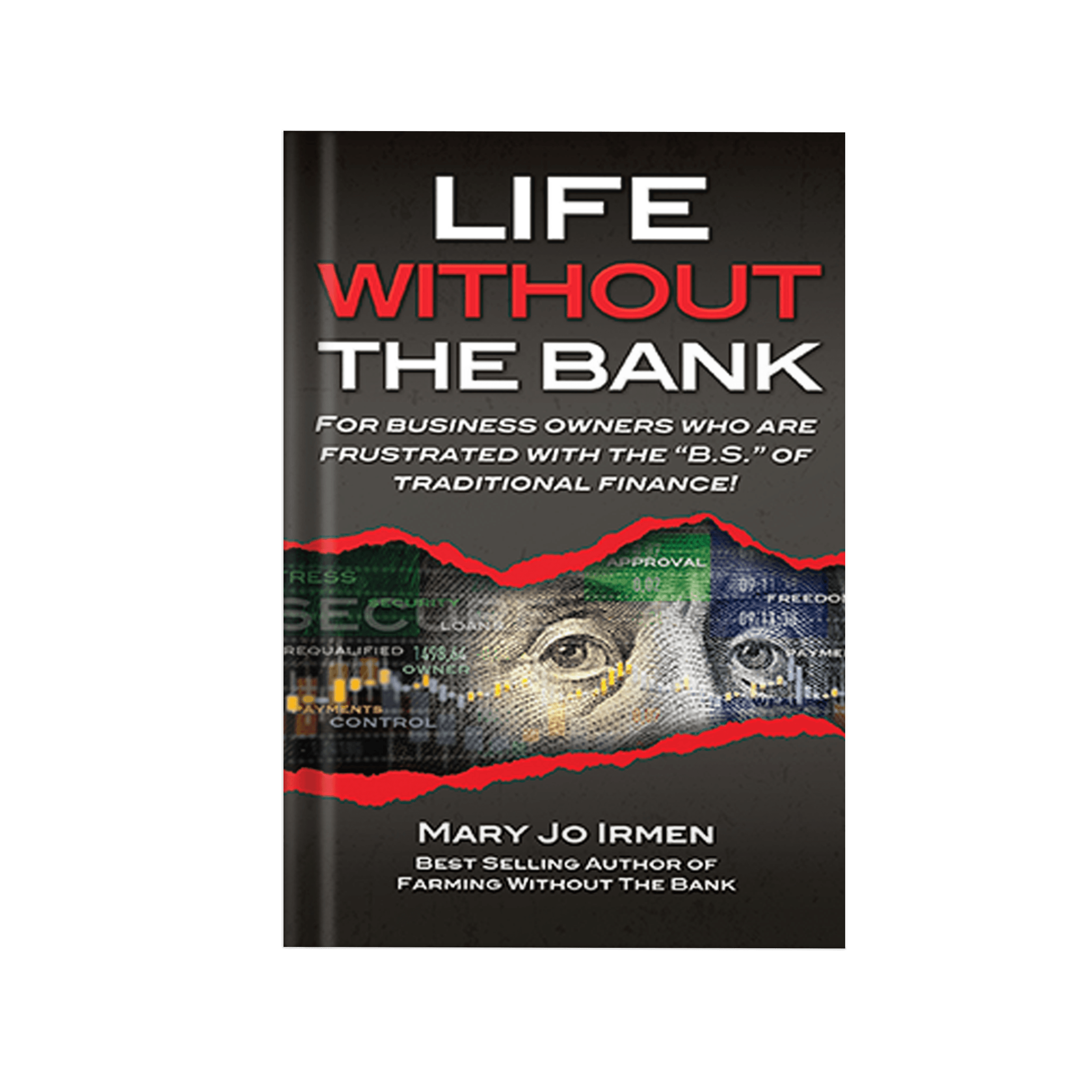
Your financial independence starts with one book.
Only one of three Americans can retire. Part of the fault is the conditioned belief that you must give up the use of your money when you’re young so you can have it later, assuming the stock market doesn’t collapse.