Podcast
EP. 266
Why Being Debt-Free Could Leave You Broke (And What To Do Instead) (Ep. 266)
Apr 23, 2026 ·
25 min
0:00 / 25:05
EPISODE OVERVIEW
ABOUT THIS EPISODE
Is debt-free the wrong goal? Discover how your life insurance policy works like your own bank.
Most people spend their lives chasing "debt-free" — but what if that's the wrong goal entirely?
Today MJ and Tarisa break down the infinite banking concept, showing you how a whole life insurance policy can work as your own personal bank. Route your money through your policy, borrow against it for everyday expenses, and let compound interest work for you around the clock — even while you're spending.
In This Episode, You'll Learn
- ✅ Why "debt-free" doesn't equal financial security — cash flow does
- ✅ The baseball analogy that rewires how you think about your money
- ✅ How policyholders end up $2 million ahead of the cash payer over a lifetime
- ✅ Real-life examples: vehicles, private school tuition, braces, sporting events
- ✅ Why your whole life policy is simpler to understand than your 401(k)
- ✅ How to stop fearing the "sales conversation" and start getting real answers
💬 "We either pay interest or we give up the ability to earn interest." — Nelson Nash
📖 Referenced
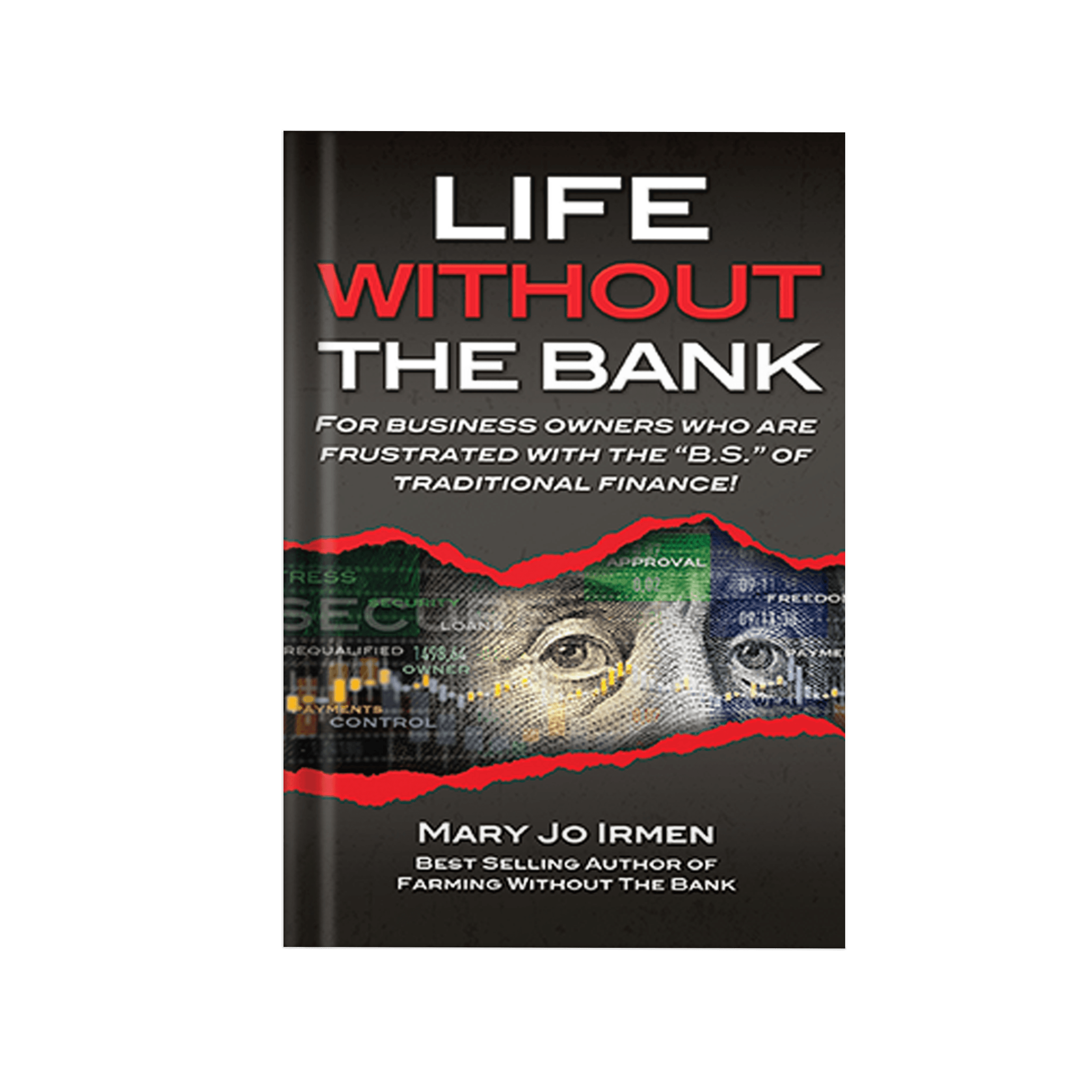
📅 Ready to see your own numbers? Get the books and schedule a strategy session.
- 📘 Get the books
- 📧 Email Mary Jo: maryjo@withoutthebank.com
- 📧 Email Tarisa: tarisa@withoutthebank.com
- ▶️ Subscribe on YouTube
CHAPTER TIMESTAMPS
- 00:00Introduction — Is "Debt-Free" Actually the Goal?
- 01:03The Baseball Analogy: Your Policy as Home Base
- 02:41Why People Struggle with "Premium" and "Loan Repayment"
- 05:28Borrowing vs. Paying Cash: The Savings Account Comparison
- 06:28Uninterrupted Compound Interest Explained
- 08:06Funneling Everyday Expenses Through Your Policy
- 09:39Why Most People Can't Wrap Their Head Around It
- 11:00Redirecting Existing Loan Payments Into Your Policy
- 12:00"Caught, Not Taught" — Real-Life Policy Examples
- 14:24The Debt-Free Myth: Cash Flow Is King
- 15:34Cash Payer vs. Policyholder — The $2 Million Outcome
- 16:56Borrowing Wisely: What Loans Should Be For
- 18:00Why the Policy Is Simpler Than a 401k
- 19:39Overcoming the Fear of Being "Sold"
- 22:59The "Before Asset" Concept & Next Steps
YOUTUBE EPISODE
TRANSCRIPTION
"People think that debt-free is going to get them somewhere, when in fact debt-free means nothing. The homeless guy is on the street, debt-free, begging for cash flow. We all need to remember that we can be debt-free, and our house can be paid off, and our cars can be paid off, and we're paying cash for kids' college and all the things. And when we get to retirement, we have nothing there because everything is paid off — but we still have taxes to pay. We still have property taxes to pay. We still have electricity to pay. The groceries to buy. We still have all the expenses we need cash flow for. So where did that get us?"
Hello, hello, and welcome back to the podcast. Thank you very much for being here. I'm joining Teresa today, and we are going to talk about utilization of money, because we get this a lot: I don't have any money. Where is this money supposed to come from to start these policies? It's really a thought process change. So that's what we're gonna talk about today.
Let's do it. I'm excited. Yeah, I think this is a really good topic.
Yeah, it is. So what are your thoughts? Let's start with you, Theresa.
Okay, let's do that. So I'm going to walk everyone through how I think about this in, like, a fourth-grader level, because that's how I understand concepts — as basic as possible, please.
So the first thing is, I think about it like baseball. So I think of my policy as home base, and I think a lot of people mistake home base for their bank account. And then they put whatever's left over in the policy. But if you just kind of flip that thinking and say, okay, if I have as many players run across home base as possible, then I will win.
And that's how I think of the policy. It's like, you wanna put that money there first, and then deploy it for whatever you're going to use it for, and then put it back, right? Have it start out there and go back. So that's kind of how I like to think about it, because I think if you think of it as like an after thing, you kind of have it wrong.
And if you think about it as a before thing, then it's like, okay, I put this here before I do anything with it. A lot of people think about their bank accounts as, like, a flow-through, you know? Like the money is flowing through the environment. It's the same thing with a policy. And you do have to be disciplined in how you treat that, because of the loan and interest and all that stuff. But I think if you orient your thinking as, like, first base — that for me helped my thinking of, like, I can afford this because I can put my money here first and then use it.
But what do you think, Mary Jo?
I like that analogy.
Thank you.
I mean, in my head I'm like, what happens to base one, two, and three though?
Base one, two, and three.
So I'm making that literal, 'cause that's what a client will do, right? They'll make that literal. We're gonna go through base one, two, and three. First base is going to be your paycheck. Second base is gonna be the policy. Third base, it's gonna be buying whatever it is you're gonna need, right? And then home base, as we've gone through.
I like the analogy. I think that a lot of people struggle because of a couple of things. One, they don't like the word payment. And they feel like their loan repayment is a payment. And they feel like their premium is an expense, because it's another payment. So we can't get over the hurdle of, oh, we've just created this payment. That's one thing that we can talk about.
And then the other thing I feel like is that people are not using the loan for creating cash flow. When we borrow money, and if that money is used to create cash flow, whatever we used it for then is going to create income. And that income is what pays that loan back.
I think there's a couple of things that people struggle with. And even if we go back to the first one — well, the premium is an expense. It absolutely is. Like, you have to have the money to pay for that. It acts like: if I put money into a savings account, I now have access to use that money, right? I can go to the bank and I can take it out and I can use it.
When we're paying for premium, it's the same thing. We're gonna pay our premium. When the policy is structured correctly, we have access to the cash. Okay? We don't have access to all of it right away, because we have to capitalize the system. But guess what? You capitalized your 401(k). You capitalized your business. You capitalized everything else you're doing. So that's a null point. And you capitalized the house you were in by putting a down payment on it. So to me, the capitalization is a null point.
But if we pay our premium and we can turn around and borrow against it, then people say, well, now I created a loan repayment. I don't like loan payments. But if I pay back $500 and I have access to $500 in 10 days — it's a payment, technically, yes, but it's acting more like a deposit into a savings account. That I put 500 bucks in savings and now I can borrow against it.
So I had this question on TikTok the other day, that somebody was questioning a video I put out, and they were questioning, why would you have a payment back? Why would you use somebody else's money?
And I said, but you're already doing that, 'cause you told me you use cash. So you're putting money into a savings account, you're then taking it out to buy a vehicle, and then you keep putting money back to savings as a deposit, because you wanna buy your next vehicle with cash. Because cash purchasers are good savers.
Right. So they're gonna fill up their savings account, and then they're gonna take it out, and then they're gonna fill it up again so that they can buy their next vehicle, put braces on the kids, buy their next boat, buy their next rental property. Whatever it is, you're gonna put money back into that savings account so that you can just go back and use it. The policy's acting the same way.
Yeah, it is. And I think you're right. I think people get lost on the expense and payment. Those are the two words that, like, make people's brain cells go in a frenzy, because it's like, well, I don't like either of those things. I don't like payments, and I don't like, you know, long-term commitments.
But it's true. You're using this environment as a place to store money and to have access to it on your terms. And you're already doing the same thing in your savings account, except you're not getting the benefits of ownership. You're not getting the uninterrupted compound interest, you're not getting the dividend, you're not in charge of your repayment schedule.
And to your point too — if you do put that money in your policy, you take a loan against it, and then you make a payment schedule back, that $500 a month or whatever you amortize it out to is going back into your pocket. But if you look at who's in control of all of that, and it's you, and you know that $500 payment is adding to your balance sheet, your access to cash that you have, then you're better off for it. Because someone else that's financing their vehicle somewhere else, that $500, they're never gonna see again.
Right. By putting it in the policy first, we've got the ability to have uninterrupted compound interest, 'cause we're borrowing somebody else's money. So then people say, well, I don't wanna pay interest on my money. You're not paying interest on your money. You're earning interest on your money, and you're paying the life insurance company to use their money.
And guess who else owns that pool of money? You and I. Because we have policies with the same company. So now you and I own part of that company, so when they make money, we get some of that in the form of a dividend.
Right. So it's a matter of, how much can we funnel through? What are we using cash for? Are we using cash to buy a vehicle? Are we using cash to send kids to college? Are we using cash to pay for all the sporting events that I talked about in the last podcast — which is hundreds of thousands of dollars in our kids' lifetime, that is going through our hands, that we are not looking at putting into a policy first?
And this is where it's gonna get harder. Some of those things don't create cash flow to pay them back. But when we can put extra money into a policy year one, we can start using that extra income, or that extra money that went into the policy year one, and we're just turning that like a line of credit, like a HELOC or a second mortgage or whatever you wanna call it. We're just turning that to use it for kids, for braces, for cars, whatever. We're not having to maybe have a total premium every single year that's super high.
So how the policy is structured for you also makes a difference. And there's so many people that have read the book, but they choose to not schedule an appointment with us 'cause they can't get their head around it.
Well, that's like buying exercise equipment and never using it, because you never researched how to use it. Like, why would you do that? You should be calling and making your appointment, so we can help you use your own scenario to run it through the policy, so you can see what that looks like.
I think when you help people orient themselves around the concept with their own numbers that are relevant to them, it becomes more meaningful, and it's like, oh, this is way more possible than I thought it was going to be.
I had a client meeting the other day, and I think the gentleman that was there with his wife, I think he couldn't fully understand the payment portion of it. It's like, okay, well, how do we pay back the policy? And it's like, okay, well, you have a car loan payment that you're paying monthly. Now it's just like a redirection. That makes it so much more simple. It's like, okay, if you're happy to pay Chase or Bank of America, whatever, that rate of interest and that payment monthly, shouldn't you be equally excited, if not more, then, to know that money is being diverted back to your family to then recycle for something else?
So yeah, I would say if you have questions, definitely book a strategy meeting, because Mary Jo and I don't bite. We don't. And we're really here to help people, because we love this business and we love what we do. And also it's just super fun to help people out with this concept, because once you understand it fully and you implement it in your life, it's incredible.
I remember one gentleman asking — he is like, so what's your opinion of this after being in this industry for this amount of time? And I was like, I just love it more every single day, because I am logging into my portal and seeing my cash values grow monthly. And it's like, I want people to feel that same security and that same peace of mind that I have. And I know that you feel the same.
Yep. And sometimes it's caught more than it's taught. Like, I had a meeting last week. I was explaining to an existing client how to think about it, and they go, oh my God, the light bulb just came on. Sometimes I've had clients that have said, I've listened to other podcasts with other people and now I get it. And I said, well, what did they say that I didn't say? They're like, nothing. They said it the exact same way you've always been saying it. I just got it. And Nelson says that — it's caught, not taught, right?
Let's say you spend $10,000 a year sending your kids to sporting events. Okay? Less than a thousand dollars a month. So $10,000 a year, you go to sporting events. If you've got that money, put it into the policy year one. Now we have $10,000 we borrow against, and every month you pay it back. Then next year you'll have your $10,000.
Are we sending our kids to private schools? Is that four or $5,000 a child? Okay. Put your $5,000 in, borrow it, and then throughout the year, pay it back. Because what you were going to do anyway is pay it back into a savings account so that you could use it and pay for it.
That way, it's like — are we putting money into a 401(k) and then we're saying, hey, we don't have any money to go do anything, because we're putting money into this 401(k)? Well, should that money, could that money be redirected and used more efficiently? Or we don't have any money to save in a 401(k) because our kids are in sporting events and we gotta buy cars and we have doctor's appointments and all this stuff to pay for. Well, could that go into a policy first?
Then we borrow against it, and you don't even have to pay it back year one. That's the thing. Like, if you get it into the policy one time — you get the $10,000 into the policy one time — that's earning you uninterrupted compound interest your whole life. And now you just use your checking account. You borrow it, you put it in a checking account, you pay for the sporting events. The money goes back into the checking account from your work, okay? And you borrow, and you just keep using the checking account to buy shoes and travel and hotels and whatever. But you never actually have to put it back into the policy, because they don't care — you're gonna die. So, but we've got it through the policy. So now this is earning us uninterrupted compound interest.
That is such a hard concept. I have this post on social media, and I don't think I have — I have two nice comments on the entire post. Everybody is just eating it alive, because I am saying that you should not pay off all your debt. And they just can't fathom not being debt-free.
Because people think that debt-free is going to get them somewhere, when in fact debt-free means nothing, right? The homeless guy is on the street, debt-free, begging for cash flow. We all need to remember that we can be debt-free, and our house can be paid off, and our cars can be paid off, and we're paying cash for kids' college and all the things. And when we get to retirement, we have nothing there because everything is paid off — but we still have taxes to pay. We still have property taxes to pay. We still have electricity to pay. We still have all the groceries to buy. We still have all the expenses we need cash flow for. So where did that get us?
Yeah. I always am like, what's the outcome? What's the outcome of either situation? And to me it boils down to two very simple things. Like you just mentioned — one, you can pay cash for that and have zero to show for it, other than obviously great memories or whatever it is that you spent it on. Or you could put it through the policy and have that money working for you your entire life, and have way more than the number zero.
And I think — but Nelson said, I don't mean to cut you off, but Nelson said we finance everything we buy. We either pay interest or we give up the ability to earn interest.
I was thinking back to this podcast that I recorded about the pay-cash person, because I specifically wanted to speak to the people that can't wrap their head around, oh, I have to pay interest, oh, I have a loan repayment, oh, I have to pay premium. If you take the pay-cash person and the person that uses the policy, the policyholder ends up $2 million more ahead than the pay-cash person, because they've had that earning potential work for them their entire lifetime. And that doesn't even include the death benefit. And did that person pay, like, over six figures in policy loan interest? Yes. But they ended up $2 million more ahead than the pay-cash person. And it's like, is that worth it to you?
Mm-hmm. And all we gotta do is get it through the policy first, so that we can borrow against it, and the payment back is going to come from the cash flow that whatever you used it for created. Which is ideal. That's number one. If we're gonna take a loan, we should be taking it for something that cash flows.
However, if we're going to use it for something that does not cash flow, that's okay too. But as Nelson also said, you should not be taking a loan for a boat if you can't afford to pay the boat back. Just because you have cash value does not mean there should be a loan there if you can't afford to pay it back. Because if you couldn't afford to get a bank loan to pay the bank back for the boat, then you shouldn't be borrowing the money from your own policy to buy a boat. There's some common sense that has to be wrapped up in here too.
But I do think it's so hard for people to understand, well, how do I get it through? The other thing is, if you don't do it and you don't start at some level, how do you think you're going to ever understand it? Do you understand your 401(k) and your IRAs? Do you 100% understand what they're invested in, how they work, who's managing it, do you know what the fees are? Do you understand 100% how that works?
I would say that there's way more nuance and complication to the 401(k) comparatively.
Mm-hmm. Yeah. And we're still putting money there, right? We don't understand it. The majority of people do not understand it, but they are putting money there blindly, because that is what we have been told to do. Right? So we're willing to take that risk and follow the crowd, but we're not willing to take the risk of just having a strategy session with one of us to see what that looks like and how that would look in our own finances.
But if you think about it, we're doing a lot of things that the majority of the population is doing, and we're not understanding it. Or it's like saying, I'm never gonna buy a car until I understand how every piece of the engine works, right? Like, I don't much care. Like, I care that it's built decently and I'm not gonna be left on the side of the road, but I don't need to know how the carburetor's put on. I don't need to know how all the seals are put on. I don't need to know how the muffler works. I don't care to know all that stuff. But I go buy a car.
You know enough to feel comfortable to get started. And I think that's the thing. Yes. Because I am the look-under-the-hood, evaluate-the-engine type of person, so…
Yeah. But you don't know how it's put together.
That's true. That's true. But I think what's helped me, especially just in becoming wiser, is like asking myself, hey, what do I need to know in order to feel comfortable getting started? That's helped me make a lot of decisions faster than I have normally.
But if you have questions about the vehicle that you're purchasing — 'cause we watch a lot of YouTube in this house about engines, and what vehicles are good and what vehicles are not good, and oh my God, I know more than I need to know. Okay. I mean, I did grow up with a dad that was a motorhead, so I do know a fair amount about engines. But still, I don't know how the transmission works. I don't know all that stuff.
But if you're doing research on a vehicle, are you going to go to the salesman, to the lot, and talk to them when you buy a vehicle? Right? Yeah. You're gonna go there and you're gonna have a conversation with them, because you need to. And you need to ask them, well, what's it gonna be?
So, you know how it works in your environment with your finances — you are going to go and have that conversation. You're not gonna just research online and never go buy the vehicle, because you need the vehicle. Just like you need life insurance.
And so it's so crazy to think that we are sitting here and saying, well, we can't make a strategy session with Mary Jo, Trisler or John, because they might sell us something. You did your research, you read the book. So it's like, you researched your vehicle, you went and talked to the salesman to buy the vehicle. You need to talk to us so we can see if it's a fit. Unlike a car salesman — they won't tell you not to buy the vehicle. We'll tell you not to buy the policy if it's not a fit.
You know?
That's true. We're not slimy car salesmen or slimy life insurance agents. 'Cause there are slimy in every category.
Yeah.
But think about all the things that we're doing in life without understanding it a hundred percent. We go ask people for advice, we ask a financial advisor about stuff, we're okay going there and asking them that. And we set up meetings with our financial advisors. It's not any different in this arena.
Mm-hmm. And I would say don't ask questions to the person that's not an expert in that field. Right? I think a lot of people make that mistake as well. It's like, oh, well, let me see what my brother-in-law thinks, who is, like, kind of good with money. And it's like, okay, well…
Yeah.
He doesn't have the same experience, he doesn't have the same knowledge. He is not an expert in infinite banking. A lot of people do that as well. I never did. I think because I was so certain that this is what I wanted to do, that I just was like, oh yeah, it makes sense to me. That's all that matters, to make sense to me. But a lot of people don't operate that way. It's like, oh, well hey, what do you think about this? And it's like, that person hasn't done the research that you have. They just don't know.
Mm-hmm. Yeah. And we have a really good family friend that is an amazing mechanic, and so I'll call him and be like, hey, I'm interested in this vehicle. How often are you seeing repairs?
Smart.
Right? So I'm gonna call him before I buy a vehicle, because he's the one working on 'em. He works for, like, a RAM and a GMC dealer, and we typically buy RAMs or GMCs. And so I'm like, hey, can you tell me what you see here? I also have a cousin that works for Ford. So before I bought my last vehicle, I reached out to him and said, hey, how many issues are you guys actually seeing in the shop with X, Y, and Z problem that I'm finding online?
Right? So I'm gonna go online, then I'm gonna go to the expert, because the salesman can't always tell you all of that. Both of them are experts in their field to some extent. Mm-hmm. I'm gonna talk to those people.
But at the end of the day, all we're doing is using this as the before asset, that we're gonna put the money here before we use it for other things. How that's going to look for you in particular, I don't know. Those sort of things have to happen in a strategy session, because I would also be very, very lost.
But I am also not afraid to say, hey, I don't like it, I'm out. And we also don't hate when you guys say that. If you say, hey, this is just not for me — then thank God. Like, just tell us it's not for you. I think that people are so scared to be sold something 'cause they're too chicken to say, I'm out, it's not for me.
My husband is awful at that. He will know he's not buying something and be like, oh, we're gonna go think about it. And then I get in the car and lose my mind. I'm like, no. Just tell them no.
Yeah.
Salespeople hate being told yes, or maybe, and then you really don't mean yes or maybe. Just say, no, this isn't for me. Or, no, I don't get it, can you explain it further? Right? That's what we're here for. Because you should understand it.
If I wanted to sell 401(k)s and IRAs, I could do that. It would be a lot easier.
Exactly.
It would be. And then we could be like, just trust me, you know? And you'd be like, okay, I like you, I'll trust you. No, don't trust us. We're not asking for trust, we're asking for understanding. We're trying really hard to make sure that you can understand what that looks like.
Yeah, and we're just here to help. I remember when I first got started, I asked a million questions. But if I didn't have that person to coach and guide me along, I don't know if I would've felt comfortable. So do what you need to in order to feel comfortable. Come to us, ask the questions. We'll show you what it looks like in your own personal financial economy, and whether or not it even makes sense to get started.
Because some people aren't in the get-the-policy-started phase, and that's okay. It's good to work towards something. Like, I have a friend — she's getting a term policy right now, and I was like, hey, you guys need to pay off this debt first before you get started. But in the meantime, make sure you have coverage that's convertible, so that if anything happens to either one of you, your family is taken care of. Right? There's a ton of different options for people out there, but until you come and talk to us, you're not gonna be aware of it. And we're really here to help.
Right. Okay. With that, we are out of time. So if you guys need us, you know where to find us. Unless you're new here — you go to withoutthebank.com, grab your books, or email maryjo@withoutthebank.com or tarisa@withoutthebank.com. We'll get back to you. We're happy to visit with you, answer any of those questions for you. Hopefully this clarified a few things. But otherwise, you have a fantastic rest of your day.
View MoreHello, hello, and welcome back to the podcast. Thank you very much for being here. I'm joining Teresa today, and we are going to talk about utilization of money, because we get this a lot: I don't have any money. Where is this money supposed to come from to start these policies? It's really a thought process change. So that's what we're gonna talk about today.
Let's do it. I'm excited. Yeah, I think this is a really good topic.
Yeah, it is. So what are your thoughts? Let's start with you, Theresa.
Okay, let's do that. So I'm going to walk everyone through how I think about this in, like, a fourth-grader level, because that's how I understand concepts — as basic as possible, please.
So the first thing is, I think about it like baseball. So I think of my policy as home base, and I think a lot of people mistake home base for their bank account. And then they put whatever's left over in the policy. But if you just kind of flip that thinking and say, okay, if I have as many players run across home base as possible, then I will win.
And that's how I think of the policy. It's like, you wanna put that money there first, and then deploy it for whatever you're going to use it for, and then put it back, right? Have it start out there and go back. So that's kind of how I like to think about it, because I think if you think of it as like an after thing, you kind of have it wrong.
And if you think about it as a before thing, then it's like, okay, I put this here before I do anything with it. A lot of people think about their bank accounts as, like, a flow-through, you know? Like the money is flowing through the environment. It's the same thing with a policy. And you do have to be disciplined in how you treat that, because of the loan and interest and all that stuff. But I think if you orient your thinking as, like, first base — that for me helped my thinking of, like, I can afford this because I can put my money here first and then use it.
But what do you think, Mary Jo?
I like that analogy.
Thank you.
I mean, in my head I'm like, what happens to base one, two, and three though?
Base one, two, and three.
So I'm making that literal, 'cause that's what a client will do, right? They'll make that literal. We're gonna go through base one, two, and three. First base is going to be your paycheck. Second base is gonna be the policy. Third base, it's gonna be buying whatever it is you're gonna need, right? And then home base, as we've gone through.
I like the analogy. I think that a lot of people struggle because of a couple of things. One, they don't like the word payment. And they feel like their loan repayment is a payment. And they feel like their premium is an expense, because it's another payment. So we can't get over the hurdle of, oh, we've just created this payment. That's one thing that we can talk about.
And then the other thing I feel like is that people are not using the loan for creating cash flow. When we borrow money, and if that money is used to create cash flow, whatever we used it for then is going to create income. And that income is what pays that loan back.
I think there's a couple of things that people struggle with. And even if we go back to the first one — well, the premium is an expense. It absolutely is. Like, you have to have the money to pay for that. It acts like: if I put money into a savings account, I now have access to use that money, right? I can go to the bank and I can take it out and I can use it.
When we're paying for premium, it's the same thing. We're gonna pay our premium. When the policy is structured correctly, we have access to the cash. Okay? We don't have access to all of it right away, because we have to capitalize the system. But guess what? You capitalized your 401(k). You capitalized your business. You capitalized everything else you're doing. So that's a null point. And you capitalized the house you were in by putting a down payment on it. So to me, the capitalization is a null point.
But if we pay our premium and we can turn around and borrow against it, then people say, well, now I created a loan repayment. I don't like loan payments. But if I pay back $500 and I have access to $500 in 10 days — it's a payment, technically, yes, but it's acting more like a deposit into a savings account. That I put 500 bucks in savings and now I can borrow against it.
So I had this question on TikTok the other day, that somebody was questioning a video I put out, and they were questioning, why would you have a payment back? Why would you use somebody else's money?
And I said, but you're already doing that, 'cause you told me you use cash. So you're putting money into a savings account, you're then taking it out to buy a vehicle, and then you keep putting money back to savings as a deposit, because you wanna buy your next vehicle with cash. Because cash purchasers are good savers.
Right. So they're gonna fill up their savings account, and then they're gonna take it out, and then they're gonna fill it up again so that they can buy their next vehicle, put braces on the kids, buy their next boat, buy their next rental property. Whatever it is, you're gonna put money back into that savings account so that you can just go back and use it. The policy's acting the same way.
Yeah, it is. And I think you're right. I think people get lost on the expense and payment. Those are the two words that, like, make people's brain cells go in a frenzy, because it's like, well, I don't like either of those things. I don't like payments, and I don't like, you know, long-term commitments.
But it's true. You're using this environment as a place to store money and to have access to it on your terms. And you're already doing the same thing in your savings account, except you're not getting the benefits of ownership. You're not getting the uninterrupted compound interest, you're not getting the dividend, you're not in charge of your repayment schedule.
And to your point too — if you do put that money in your policy, you take a loan against it, and then you make a payment schedule back, that $500 a month or whatever you amortize it out to is going back into your pocket. But if you look at who's in control of all of that, and it's you, and you know that $500 payment is adding to your balance sheet, your access to cash that you have, then you're better off for it. Because someone else that's financing their vehicle somewhere else, that $500, they're never gonna see again.
Right. By putting it in the policy first, we've got the ability to have uninterrupted compound interest, 'cause we're borrowing somebody else's money. So then people say, well, I don't wanna pay interest on my money. You're not paying interest on your money. You're earning interest on your money, and you're paying the life insurance company to use their money.
And guess who else owns that pool of money? You and I. Because we have policies with the same company. So now you and I own part of that company, so when they make money, we get some of that in the form of a dividend.
Right. So it's a matter of, how much can we funnel through? What are we using cash for? Are we using cash to buy a vehicle? Are we using cash to send kids to college? Are we using cash to pay for all the sporting events that I talked about in the last podcast — which is hundreds of thousands of dollars in our kids' lifetime, that is going through our hands, that we are not looking at putting into a policy first?
And this is where it's gonna get harder. Some of those things don't create cash flow to pay them back. But when we can put extra money into a policy year one, we can start using that extra income, or that extra money that went into the policy year one, and we're just turning that like a line of credit, like a HELOC or a second mortgage or whatever you wanna call it. We're just turning that to use it for kids, for braces, for cars, whatever. We're not having to maybe have a total premium every single year that's super high.
So how the policy is structured for you also makes a difference. And there's so many people that have read the book, but they choose to not schedule an appointment with us 'cause they can't get their head around it.
Well, that's like buying exercise equipment and never using it, because you never researched how to use it. Like, why would you do that? You should be calling and making your appointment, so we can help you use your own scenario to run it through the policy, so you can see what that looks like.
I think when you help people orient themselves around the concept with their own numbers that are relevant to them, it becomes more meaningful, and it's like, oh, this is way more possible than I thought it was going to be.
I had a client meeting the other day, and I think the gentleman that was there with his wife, I think he couldn't fully understand the payment portion of it. It's like, okay, well, how do we pay back the policy? And it's like, okay, well, you have a car loan payment that you're paying monthly. Now it's just like a redirection. That makes it so much more simple. It's like, okay, if you're happy to pay Chase or Bank of America, whatever, that rate of interest and that payment monthly, shouldn't you be equally excited, if not more, then, to know that money is being diverted back to your family to then recycle for something else?
So yeah, I would say if you have questions, definitely book a strategy meeting, because Mary Jo and I don't bite. We don't. And we're really here to help people, because we love this business and we love what we do. And also it's just super fun to help people out with this concept, because once you understand it fully and you implement it in your life, it's incredible.
I remember one gentleman asking — he is like, so what's your opinion of this after being in this industry for this amount of time? And I was like, I just love it more every single day, because I am logging into my portal and seeing my cash values grow monthly. And it's like, I want people to feel that same security and that same peace of mind that I have. And I know that you feel the same.
Yep. And sometimes it's caught more than it's taught. Like, I had a meeting last week. I was explaining to an existing client how to think about it, and they go, oh my God, the light bulb just came on. Sometimes I've had clients that have said, I've listened to other podcasts with other people and now I get it. And I said, well, what did they say that I didn't say? They're like, nothing. They said it the exact same way you've always been saying it. I just got it. And Nelson says that — it's caught, not taught, right?
Let's say you spend $10,000 a year sending your kids to sporting events. Okay? Less than a thousand dollars a month. So $10,000 a year, you go to sporting events. If you've got that money, put it into the policy year one. Now we have $10,000 we borrow against, and every month you pay it back. Then next year you'll have your $10,000.
Are we sending our kids to private schools? Is that four or $5,000 a child? Okay. Put your $5,000 in, borrow it, and then throughout the year, pay it back. Because what you were going to do anyway is pay it back into a savings account so that you could use it and pay for it.
That way, it's like — are we putting money into a 401(k) and then we're saying, hey, we don't have any money to go do anything, because we're putting money into this 401(k)? Well, should that money, could that money be redirected and used more efficiently? Or we don't have any money to save in a 401(k) because our kids are in sporting events and we gotta buy cars and we have doctor's appointments and all this stuff to pay for. Well, could that go into a policy first?
Then we borrow against it, and you don't even have to pay it back year one. That's the thing. Like, if you get it into the policy one time — you get the $10,000 into the policy one time — that's earning you uninterrupted compound interest your whole life. And now you just use your checking account. You borrow it, you put it in a checking account, you pay for the sporting events. The money goes back into the checking account from your work, okay? And you borrow, and you just keep using the checking account to buy shoes and travel and hotels and whatever. But you never actually have to put it back into the policy, because they don't care — you're gonna die. So, but we've got it through the policy. So now this is earning us uninterrupted compound interest.
That is such a hard concept. I have this post on social media, and I don't think I have — I have two nice comments on the entire post. Everybody is just eating it alive, because I am saying that you should not pay off all your debt. And they just can't fathom not being debt-free.
Because people think that debt-free is going to get them somewhere, when in fact debt-free means nothing, right? The homeless guy is on the street, debt-free, begging for cash flow. We all need to remember that we can be debt-free, and our house can be paid off, and our cars can be paid off, and we're paying cash for kids' college and all the things. And when we get to retirement, we have nothing there because everything is paid off — but we still have taxes to pay. We still have property taxes to pay. We still have electricity to pay. We still have all the groceries to buy. We still have all the expenses we need cash flow for. So where did that get us?
Yeah. I always am like, what's the outcome? What's the outcome of either situation? And to me it boils down to two very simple things. Like you just mentioned — one, you can pay cash for that and have zero to show for it, other than obviously great memories or whatever it is that you spent it on. Or you could put it through the policy and have that money working for you your entire life, and have way more than the number zero.
And I think — but Nelson said, I don't mean to cut you off, but Nelson said we finance everything we buy. We either pay interest or we give up the ability to earn interest.
I was thinking back to this podcast that I recorded about the pay-cash person, because I specifically wanted to speak to the people that can't wrap their head around, oh, I have to pay interest, oh, I have a loan repayment, oh, I have to pay premium. If you take the pay-cash person and the person that uses the policy, the policyholder ends up $2 million more ahead than the pay-cash person, because they've had that earning potential work for them their entire lifetime. And that doesn't even include the death benefit. And did that person pay, like, over six figures in policy loan interest? Yes. But they ended up $2 million more ahead than the pay-cash person. And it's like, is that worth it to you?
Mm-hmm. And all we gotta do is get it through the policy first, so that we can borrow against it, and the payment back is going to come from the cash flow that whatever you used it for created. Which is ideal. That's number one. If we're gonna take a loan, we should be taking it for something that cash flows.
However, if we're going to use it for something that does not cash flow, that's okay too. But as Nelson also said, you should not be taking a loan for a boat if you can't afford to pay the boat back. Just because you have cash value does not mean there should be a loan there if you can't afford to pay it back. Because if you couldn't afford to get a bank loan to pay the bank back for the boat, then you shouldn't be borrowing the money from your own policy to buy a boat. There's some common sense that has to be wrapped up in here too.
But I do think it's so hard for people to understand, well, how do I get it through? The other thing is, if you don't do it and you don't start at some level, how do you think you're going to ever understand it? Do you understand your 401(k) and your IRAs? Do you 100% understand what they're invested in, how they work, who's managing it, do you know what the fees are? Do you understand 100% how that works?
I would say that there's way more nuance and complication to the 401(k) comparatively.
Mm-hmm. Yeah. And we're still putting money there, right? We don't understand it. The majority of people do not understand it, but they are putting money there blindly, because that is what we have been told to do. Right? So we're willing to take that risk and follow the crowd, but we're not willing to take the risk of just having a strategy session with one of us to see what that looks like and how that would look in our own finances.
But if you think about it, we're doing a lot of things that the majority of the population is doing, and we're not understanding it. Or it's like saying, I'm never gonna buy a car until I understand how every piece of the engine works, right? Like, I don't much care. Like, I care that it's built decently and I'm not gonna be left on the side of the road, but I don't need to know how the carburetor's put on. I don't need to know how all the seals are put on. I don't need to know how the muffler works. I don't care to know all that stuff. But I go buy a car.
You know enough to feel comfortable to get started. And I think that's the thing. Yes. Because I am the look-under-the-hood, evaluate-the-engine type of person, so…
Yeah. But you don't know how it's put together.
That's true. That's true. But I think what's helped me, especially just in becoming wiser, is like asking myself, hey, what do I need to know in order to feel comfortable getting started? That's helped me make a lot of decisions faster than I have normally.
But if you have questions about the vehicle that you're purchasing — 'cause we watch a lot of YouTube in this house about engines, and what vehicles are good and what vehicles are not good, and oh my God, I know more than I need to know. Okay. I mean, I did grow up with a dad that was a motorhead, so I do know a fair amount about engines. But still, I don't know how the transmission works. I don't know all that stuff.
But if you're doing research on a vehicle, are you going to go to the salesman, to the lot, and talk to them when you buy a vehicle? Right? Yeah. You're gonna go there and you're gonna have a conversation with them, because you need to. And you need to ask them, well, what's it gonna be?
So, you know how it works in your environment with your finances — you are going to go and have that conversation. You're not gonna just research online and never go buy the vehicle, because you need the vehicle. Just like you need life insurance.
And so it's so crazy to think that we are sitting here and saying, well, we can't make a strategy session with Mary Jo, Trisler or John, because they might sell us something. You did your research, you read the book. So it's like, you researched your vehicle, you went and talked to the salesman to buy the vehicle. You need to talk to us so we can see if it's a fit. Unlike a car salesman — they won't tell you not to buy the vehicle. We'll tell you not to buy the policy if it's not a fit.
You know?
That's true. We're not slimy car salesmen or slimy life insurance agents. 'Cause there are slimy in every category.
Yeah.
But think about all the things that we're doing in life without understanding it a hundred percent. We go ask people for advice, we ask a financial advisor about stuff, we're okay going there and asking them that. And we set up meetings with our financial advisors. It's not any different in this arena.
Mm-hmm. And I would say don't ask questions to the person that's not an expert in that field. Right? I think a lot of people make that mistake as well. It's like, oh, well, let me see what my brother-in-law thinks, who is, like, kind of good with money. And it's like, okay, well…
Yeah.
He doesn't have the same experience, he doesn't have the same knowledge. He is not an expert in infinite banking. A lot of people do that as well. I never did. I think because I was so certain that this is what I wanted to do, that I just was like, oh yeah, it makes sense to me. That's all that matters, to make sense to me. But a lot of people don't operate that way. It's like, oh, well hey, what do you think about this? And it's like, that person hasn't done the research that you have. They just don't know.
Mm-hmm. Yeah. And we have a really good family friend that is an amazing mechanic, and so I'll call him and be like, hey, I'm interested in this vehicle. How often are you seeing repairs?
Smart.
Right? So I'm gonna call him before I buy a vehicle, because he's the one working on 'em. He works for, like, a RAM and a GMC dealer, and we typically buy RAMs or GMCs. And so I'm like, hey, can you tell me what you see here? I also have a cousin that works for Ford. So before I bought my last vehicle, I reached out to him and said, hey, how many issues are you guys actually seeing in the shop with X, Y, and Z problem that I'm finding online?
Right? So I'm gonna go online, then I'm gonna go to the expert, because the salesman can't always tell you all of that. Both of them are experts in their field to some extent. Mm-hmm. I'm gonna talk to those people.
But at the end of the day, all we're doing is using this as the before asset, that we're gonna put the money here before we use it for other things. How that's going to look for you in particular, I don't know. Those sort of things have to happen in a strategy session, because I would also be very, very lost.
But I am also not afraid to say, hey, I don't like it, I'm out. And we also don't hate when you guys say that. If you say, hey, this is just not for me — then thank God. Like, just tell us it's not for you. I think that people are so scared to be sold something 'cause they're too chicken to say, I'm out, it's not for me.
My husband is awful at that. He will know he's not buying something and be like, oh, we're gonna go think about it. And then I get in the car and lose my mind. I'm like, no. Just tell them no.
Yeah.
Salespeople hate being told yes, or maybe, and then you really don't mean yes or maybe. Just say, no, this isn't for me. Or, no, I don't get it, can you explain it further? Right? That's what we're here for. Because you should understand it.
If I wanted to sell 401(k)s and IRAs, I could do that. It would be a lot easier.
Exactly.
It would be. And then we could be like, just trust me, you know? And you'd be like, okay, I like you, I'll trust you. No, don't trust us. We're not asking for trust, we're asking for understanding. We're trying really hard to make sure that you can understand what that looks like.
Yeah, and we're just here to help. I remember when I first got started, I asked a million questions. But if I didn't have that person to coach and guide me along, I don't know if I would've felt comfortable. So do what you need to in order to feel comfortable. Come to us, ask the questions. We'll show you what it looks like in your own personal financial economy, and whether or not it even makes sense to get started.
Because some people aren't in the get-the-policy-started phase, and that's okay. It's good to work towards something. Like, I have a friend — she's getting a term policy right now, and I was like, hey, you guys need to pay off this debt first before you get started. But in the meantime, make sure you have coverage that's convertible, so that if anything happens to either one of you, your family is taken care of. Right? There's a ton of different options for people out there, but until you come and talk to us, you're not gonna be aware of it. And we're really here to help.
Right. Okay. With that, we are out of time. So if you guys need us, you know where to find us. Unless you're new here — you go to withoutthebank.com, grab your books, or email maryjo@withoutthebank.com or tarisa@withoutthebank.com. We'll get back to you. We're happy to visit with you, answer any of those questions for you. Hopefully this clarified a few things. But otherwise, you have a fantastic rest of your day.



ready to start?
Your financial independence starts with one book.
Only one of three Americans can retire. Part of the fault is the conditioned belief that you must give up the use of your money when you’re young so you can have it later, assuming the stock market doesn’t collapse.