Podcast
EP. 263
Why Life Insurance Is Not Optional (Ep. 263)
Apr 2, 2026 ·
15 min
0:00 / 18:08
EPISODE OVERVIEW
ABOUT THIS EPISODE
Most families don't realize the true cost of losing a loved one — until it's too late.
Death benefit is often overlooked, minimized, or misunderstood — but it is one of the most critical components of a sound financial strategy.
In this episode, Mary Jo shares real-life experiences from delivering death claims and explains why life insurance is not a luxury — it's a necessity. She walks through the emotional and financial realities families face after a loss, and why simply "covering expenses" is not enough.
From the hidden workload inside a household to the long-term impact on cash flow, this conversation challenges the common belief that "they'll be fine" without proper coverage. Whether you're a business owner, parent, or spouse, this episode will shift how you think about responsibility, protection, and planning.
Key Takeaways
- 🔸 Why death benefit is essential — not optional
- 🔸 The hidden financial and operational gaps left behind after loss
- 🔸 Why paying off debt isn't always the right first move
- 🔸 How death benefit creates stability and cash flow during transition
- 🔸 The risks of underestimating your economic value within a household
📧 Reach out with your questions for future episodes.
- 📘 Get the book
- 📧 Email Mary Jo: maryjo@withoutthebank.com
- 📧 Email Tarisa: tarisa@withoutthebank.com
- 🌐 withoutthebank.com
- ▶️ Subscribe on YouTube
CHAPTER TIMESTAMPS
- 00:00Why GoFundMe Shouldn't Be the Plan
- 01:00Real Stories from Delivering Death Claims
- 02:00The Dangerous Myth: "They'll Be Fine"
- 04:00What Actually Breaks Down in a Household
- 06:00Financial Roles You May Not Even Realize Exist
- 08:00The Emotional and Financial Shock of Loss
- 10:00Why Paying Off Debt Can Backfire
- 12:00Cash Flow vs. Lump Sum Decisions
- 14:00Life Insurance Is a Necessity, Not a Luxury
- 16:00The Reality of Unexpected Death
YOUTUBE EPISODE
TRANSCRIPTION
"When I die, if there's a GoFundMe account, you better not be donating to it, 'cause these people are gonna be okay. I made sure of that. We'll all be okay. Y'all save your money. Plant a tree or something. But we don't need to be paying for somebody else's funeral. Outside of a very unfortunate situation, if you have a family and kids, you should have life insurance. No questions asked. Really, there's no excuses."
Hello, hello, and welcome back to the podcast. Thank you very much for being here. All right, I'm stepping in today. Lucky you. I have some stuff to talk about.
I want to talk to you about death benefit, because it seems to be a hot topic in the last couple of weeks around here. I've had a death claim, which is always unfortunate and makes me sad, because one of my favorite clients passed away. I have a lot of favorites. This client was an older gentleman, and it's always fun, because the older people, like 75 and older, always have some dad jokes to tell me. They always have words of wisdom. And so I really love those clients, because they just keep me grounded. They're very spiritual. They're just good humans. And so I am going to very much miss him.
But in addition to his death benefit and everything that's going on there, it seems like I've had a lot of conversations about death benefits and how maybe some people don't think that they're important. I actually got into a heated — one-side heated — discussion, and it was not my side. You guys, sub her eyes. My ness is calming down just a hair, and it depends what the situation is.
But we were talking about it within a group that I'm in on the Book of Faces, and we were talking just about death benefit. And I'm just always amazed at how many people think that they don't need death benefit and it's not going to be a big deal, which is so not true. I have delivered enough death claims to know that the death benefit is extremely important.
We want to have cash value, and we talk a lot, obviously all the time, about cash value on this podcast. And Nelson said it: if we solve our need for finance through the policy, we will have more death benefit than the insurance companies will ever give us.
I heard it today. I've been hearing it all week that, oh, I don't need it. A wife will say, oh, I don't need the death benefit. He will be okay without me. I won't be okay without him.
Let me just clarify now. Everybody's marriage is different. Every man is different. But I'm gonna stereotype, so don't come at me and get all mad 'cause I'm stereotyping. In our household, clean underwear just appears in a drawer. Shirts appear on hangers. Scott helps when he can, but if he's outside doing outside things that I don't do — like blowing snow, changing oil, the man things — then I am going to do the laundry. I'm going to make supper. I'm going to put dishes away. I'm going to clean house. I am going to do the things that I would normally do while he's outside.
And so think about this. Let's just be rational. If it takes two people to run a household, and those two people are running that household together — now what happens when that other person is gone?
At the time I'm recording this, Scott is gone. He is out fishing in Canada, living his best life. Tomorrow is garbage day. And I'm like, okay, so I gotta take the garbage out. I gotta feed the cats and put the cats away tonight. I have to do these things outside. I gotta remember to go get the garbage tomorrow and bring it in, because I don't always leave the yard when he's gone. I like to stay home. And I have to go take care of some stuff at the Airbnb that he would probably normally do, or normally help me with. So I have to know that that's gonna take a little more time.
If you have kids, someone's gotta pick 'em up from school. Someone's gotta maybe take 'em to school, or someone should be home when they get home if they're little. Someone's gonna have to go to parent-teacher conferences. If they've got sports, who's going to sports stuff? Mom is typically the one making sure that, you know, if they're in track, they got shoes. If they're in basketball, they got shoes. Do they have a clean uniform? Do they have everything they need? Do they have snacks?
It's a two-household thing. And if you are used to living as a two-person household, when somebody passes away, there is a loss. There is a bunch of things that you may not know to do, you may not know how to do. There becomes a learning curve.
I have a client that is an older gentleman. He's probably 78, close to 80, and his wife passed away years and years ago. I've never known him to be married, and I've known him almost 16 years, so I wanna say she passed away probably close to 20 years ago. And he still tells me he doesn't really know how to pay the bills, right? His kids had to step in, who were adults, and take care of him financially, because she was the one that got the mail. He said in all their years of marriage, he had never got the mail once. He is having to learn how to cook. He's in that age group where it very much is a woman's job. We still help him figure out his finances, 'cause she's the one that took care of those things.
So we can say all day long, we don't need death benefit. Yes, you do. Because when somebody passes — if Scott were to pass away tomorrow, I don't want to try to remember what oil needs to be changed on, what oil weights need to be used in everything. Where is he getting the oil? Where are the filters coming from? How is the tractor being used? Which tank is diesel or gas or whatever? Like, I know those things, but I don't wanna have to be learning it then.
And I don't wanna have to be in a situation where I see online, people are having to sell their houses because their husband passed away. Now they can't afford their mortgage, because the husband didn't have enough life insurance. Or the wife passed away, and now the husband is having to try to figure out how do I keep my job as well as take care of all these children's things.
There are just a lot of things that need to be done where, if we have death benefit, we can say, you know what, there's just a lot of stuff we don't have to worry about right now. It can take a year to two to mourn somebody's passing. It's okay.
How many times does somebody pass away and you hear the stories of this — somebody lost their wife, and immediately the husband is remarried within the year? A lot of people… I just heard it the other day. Somebody said, I think he got remarried very quickly because he needed someone to help. Now, I dunno that that's true. That may be a complete farce. But if that is true, and that is where they're at in their mourning process — could that have been stopped because they would've had enough money to hire a nanny, possibly?
A lot of people will say, well, Mom will come in and help with the kids. Your mom is not meant — she's Grandma. She might help for a little while with the kids, but probably has a job. She can't quit her job to be taking care either.
It is our responsibility to take care of our loved ones, and if we don't do that through life insurance, that's very selfish, in my opinion. And that's coming from somebody that did not have life insurance before I started selling life insurance. Okay? Because I did not know those things, even as the agent that was selling life insurance. I did not see the importance of life insurance until I delivered my first death claim. That first time I delivered a check, and then the second time and the third time and the fourth time, I was like, whoa. Every single time since then, it is more and more impactful.
I don't care if you buy term insurance, but you need to understand that there is a value to you being here. Now, if you are a stay-at-home mom, there is a value that the insurance company says: this is the value of your life. I don't even agree with their assessment of it. I think it's the most ridiculous thing ever, because they're not assessing it as, what happens if the stay-at-home mom passes away? Dad can't go to work to make the same amount of money. There's a value there that you have to place on a stay-at-home mom. But there's a lot of value. If you had to go replace all those jobs, that's a lot of income.
So don't be the person that I've heard so many people talk about this week that say, oh, I don't need anything, they'll be fine. No, they're not gonna be fine. They're not gonna be fine. Nobody's fine after they lose a loved one. I don't even know where we get that thought process to say, oh, they'll be okay. No, they're not. They're not gonna get up the next day and go to work. They're gonna get up the next day believing this isn't true. And when everybody leaves them — 'cause there's gonna be a house full of people — and as soon as everybody leaves, you are going to be sitting there wondering what to do next. And that is when that process starts. But that process is a lot easier when you have enough death benefit to take care of your family.
Having enough death benefit to just pay off expenses is not what I'm talking about. Let's say your mortgage is $300,000 and you have a $300,000 death benefit, and you're like, oh, at least the house will be paid for. How does this person pay for taxes? How do they pay for groceries? How do they pay for the electric bill, the water bill, the garbage bill? All of those things still come.
So a lot of times people think, oh, I only need enough death benefit, and then they can have all their expenses paid off and then they're good. No. In fact, when clients get death benefit, I'm like, we shouldn't be paying anything off right now. You have enough money to be making payments on things, and then we need to understand where this new cash flow is gonna come from, and what the cash flow is gonna look like. Because we've lost somebody in our presence, in our household. What does this look like? What's happening with cash flow?
Don't go get rid of all your cash to be debt-free, and then you have no cash flow. Horrible idea. Don't have somebody pass away, and then some financial advisor comes in like a vulture and says, hey, why don't you invest this money with me? So you take income-tax-free money, you put it in an investment, and you make it all taxable later. Why would you do that? You don't do that. You sit on it for maybe a year or two and you figure out what is the new normal gonna look like.
But we've got cash. I don't care if you put it in a CD. I don't care what you do. But a lot of my clients — even as much as I talk about generational wealth and say we should be buying another life insurance policy, yes, we should — but if you are not in a state that you can understand what's happening, or you are not ready to make those decisions, then you need to just settle. You don't need to always listen to your banker, your financial advisor. You need cash flow. Cash flow is key. That death benefit is going to provide that cash flow.
Paying everything off is not gonna help anything, because now we're stressed about cash flow. It's the same reason why, when people die, there's a pension coming in and they want to leave their loved ones a pension — because that was cash flow. So death benefit can do the same thing. We just need to think about it differently.
It is the one thing in our life that is a necessity. We don't have the option to not die. You are going to die. Nobody's getting out alive yet. We treat life insurance as if it's a luxury. In fact, it's a necessity. The luxury is the nice car. The luxury is the coffee. The luxury is eating out. Those things are luxuries that we can do after we pay for our life insurance.
Life insurance is a necessity. We don't know that we're gonna get in a car accident, but we pay for our car insurance. We pay for our homeowner's insurance. A lot of us even pay for accidental insurance. We pay for health insurance. Those are all what-ifs. We know we're gonna die, and we say that's a luxury, because nobody made us buy it. If you have a loan on your car, you have to. If you have a loan on your house, you have to. You are made to purchase those things for risk mediation. But we're not mediating the risk of us dying, when it's a sure thing.
I was a little squirrely, but I just hear it so often. The family of the client that I lost recently, they needed the death benefit. That brought some peace to them, knowing that that was there so they could pay for some expenses. It is better than nothing.
So think about it. This is what I ask clients to do. Just close your eyes and think about, what does tomorrow look like if your loved one is not there? What does that look like to you? If that doesn't bring some sort of emotion, you're not truly thinking about it. The emotions behind that thought process are icky. They're icky, so nobody wants to go there. They just wanna act like it's never gonna happen. Okay, it's gonna happen. So go there.
Think about what that looks like. Do I know where the bank accounts are? Do I know when things are due? Do I know what the credit card payments are? Do I know the things that are gonna be coming monthly? What would I do? You are probably gonna start to get a very heavy chest and go, oh my God, I don't know this and this and this and this. And some anxiety might kick in.
Now take that anxiety times a hundred, because you don't have money to pay for any of those things. Now take that anxiety plus a lot of money that comes to you in the form of a check, and you can say, you know what, we're good. I can pay these. I could start a new bank account and make sure all these things get paid as they come in, or at least get the credit card paid, because we're good. We're good. We had the death benefit.
The amount of people that I see — and it's not old people, you guys. The amount of people that I see online that are passing away, or hearing about through friends recently, that's crazy. 50, 47, 57. Like, these people that are 30, 40, 50 years old that are passing away in their sleep. What? They didn't expect to go that soon. They thought they had time to buy life insurance.
I'm gonna have life insurance, not just 'cause I sell it, but I don't wanna be a recipient of a GoFundMe account even when I'm dead. I do not want people out there having to pay for my funeral. That was my responsibility to take care of during my life. Nobody wants to be the recipient of a GoFundMe account, unless you just think it's okay for people to just hand over money. Oh, but people are being nice. They're being nice because you didn't get taken care of.
When I die, if there's a GoFundMe account, you better not be donating to it, 'cause these people are gonna be okay. I made sure of that. We'll all be okay. Y'all save your money. Plant a tree or something. But we don't need to be paying for somebody else's funeral, outside of a very unfortunate situation.
But if we are over 18 years old — term insurance is extremely inexpensive at 18. If you have a family and kids, you should have life insurance. No questions asked. Really, there's no excuses. I'm sure there's some, and there would be some good reason. But for the most part, term insurance is so inexpensive that there's a reason and a time for that over whole life. Use it. That's why it's there.
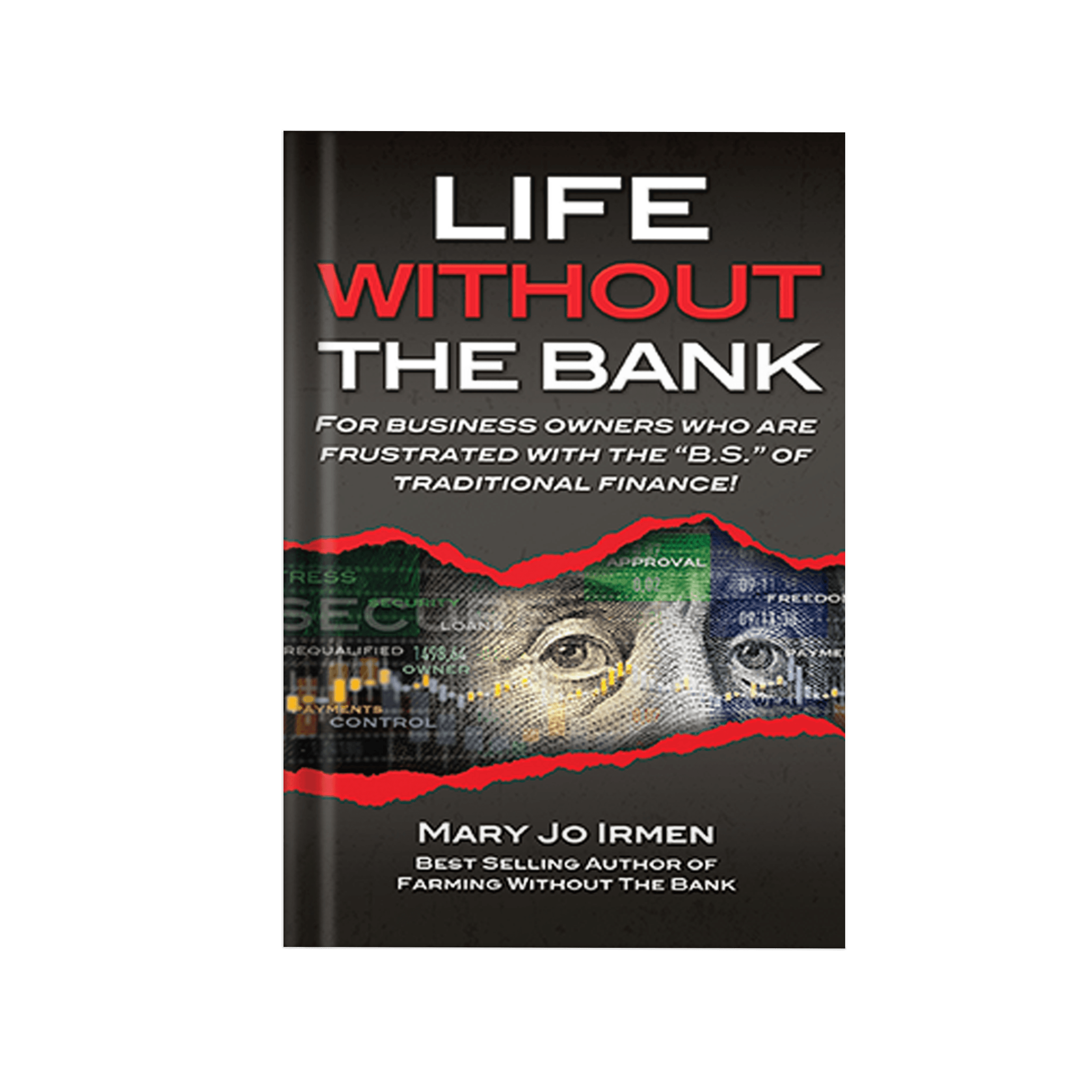
All right, that's all I got. That's all I got. Let me know if you liked it, hated it, whatever. I don't care. Let me know. I would like to hear your comments. You know, if you haven't read the book yet, go get the book, Life Without the Bank. Get Nelson's book, Becoming Your Own Banker. Read them together. Schedule your appointment. I'm happy to help — all of us. John, Tarisa, all of us are happy to help you decide what's important and move on from there. All right, you guys, you have a fantastic rest of your day.
View MoreHello, hello, and welcome back to the podcast. Thank you very much for being here. All right, I'm stepping in today. Lucky you. I have some stuff to talk about.
I want to talk to you about death benefit, because it seems to be a hot topic in the last couple of weeks around here. I've had a death claim, which is always unfortunate and makes me sad, because one of my favorite clients passed away. I have a lot of favorites. This client was an older gentleman, and it's always fun, because the older people, like 75 and older, always have some dad jokes to tell me. They always have words of wisdom. And so I really love those clients, because they just keep me grounded. They're very spiritual. They're just good humans. And so I am going to very much miss him.
But in addition to his death benefit and everything that's going on there, it seems like I've had a lot of conversations about death benefits and how maybe some people don't think that they're important. I actually got into a heated — one-side heated — discussion, and it was not my side. You guys, sub her eyes. My ness is calming down just a hair, and it depends what the situation is.
But we were talking about it within a group that I'm in on the Book of Faces, and we were talking just about death benefit. And I'm just always amazed at how many people think that they don't need death benefit and it's not going to be a big deal, which is so not true. I have delivered enough death claims to know that the death benefit is extremely important.
We want to have cash value, and we talk a lot, obviously all the time, about cash value on this podcast. And Nelson said it: if we solve our need for finance through the policy, we will have more death benefit than the insurance companies will ever give us.
I heard it today. I've been hearing it all week that, oh, I don't need it. A wife will say, oh, I don't need the death benefit. He will be okay without me. I won't be okay without him.
Let me just clarify now. Everybody's marriage is different. Every man is different. But I'm gonna stereotype, so don't come at me and get all mad 'cause I'm stereotyping. In our household, clean underwear just appears in a drawer. Shirts appear on hangers. Scott helps when he can, but if he's outside doing outside things that I don't do — like blowing snow, changing oil, the man things — then I am going to do the laundry. I'm going to make supper. I'm going to put dishes away. I'm going to clean house. I am going to do the things that I would normally do while he's outside.
And so think about this. Let's just be rational. If it takes two people to run a household, and those two people are running that household together — now what happens when that other person is gone?
At the time I'm recording this, Scott is gone. He is out fishing in Canada, living his best life. Tomorrow is garbage day. And I'm like, okay, so I gotta take the garbage out. I gotta feed the cats and put the cats away tonight. I have to do these things outside. I gotta remember to go get the garbage tomorrow and bring it in, because I don't always leave the yard when he's gone. I like to stay home. And I have to go take care of some stuff at the Airbnb that he would probably normally do, or normally help me with. So I have to know that that's gonna take a little more time.
If you have kids, someone's gotta pick 'em up from school. Someone's gotta maybe take 'em to school, or someone should be home when they get home if they're little. Someone's gonna have to go to parent-teacher conferences. If they've got sports, who's going to sports stuff? Mom is typically the one making sure that, you know, if they're in track, they got shoes. If they're in basketball, they got shoes. Do they have a clean uniform? Do they have everything they need? Do they have snacks?
It's a two-household thing. And if you are used to living as a two-person household, when somebody passes away, there is a loss. There is a bunch of things that you may not know to do, you may not know how to do. There becomes a learning curve.
I have a client that is an older gentleman. He's probably 78, close to 80, and his wife passed away years and years ago. I've never known him to be married, and I've known him almost 16 years, so I wanna say she passed away probably close to 20 years ago. And he still tells me he doesn't really know how to pay the bills, right? His kids had to step in, who were adults, and take care of him financially, because she was the one that got the mail. He said in all their years of marriage, he had never got the mail once. He is having to learn how to cook. He's in that age group where it very much is a woman's job. We still help him figure out his finances, 'cause she's the one that took care of those things.
So we can say all day long, we don't need death benefit. Yes, you do. Because when somebody passes — if Scott were to pass away tomorrow, I don't want to try to remember what oil needs to be changed on, what oil weights need to be used in everything. Where is he getting the oil? Where are the filters coming from? How is the tractor being used? Which tank is diesel or gas or whatever? Like, I know those things, but I don't wanna have to be learning it then.
And I don't wanna have to be in a situation where I see online, people are having to sell their houses because their husband passed away. Now they can't afford their mortgage, because the husband didn't have enough life insurance. Or the wife passed away, and now the husband is having to try to figure out how do I keep my job as well as take care of all these children's things.
There are just a lot of things that need to be done where, if we have death benefit, we can say, you know what, there's just a lot of stuff we don't have to worry about right now. It can take a year to two to mourn somebody's passing. It's okay.
How many times does somebody pass away and you hear the stories of this — somebody lost their wife, and immediately the husband is remarried within the year? A lot of people… I just heard it the other day. Somebody said, I think he got remarried very quickly because he needed someone to help. Now, I dunno that that's true. That may be a complete farce. But if that is true, and that is where they're at in their mourning process — could that have been stopped because they would've had enough money to hire a nanny, possibly?
A lot of people will say, well, Mom will come in and help with the kids. Your mom is not meant — she's Grandma. She might help for a little while with the kids, but probably has a job. She can't quit her job to be taking care either.
It is our responsibility to take care of our loved ones, and if we don't do that through life insurance, that's very selfish, in my opinion. And that's coming from somebody that did not have life insurance before I started selling life insurance. Okay? Because I did not know those things, even as the agent that was selling life insurance. I did not see the importance of life insurance until I delivered my first death claim. That first time I delivered a check, and then the second time and the third time and the fourth time, I was like, whoa. Every single time since then, it is more and more impactful.
I don't care if you buy term insurance, but you need to understand that there is a value to you being here. Now, if you are a stay-at-home mom, there is a value that the insurance company says: this is the value of your life. I don't even agree with their assessment of it. I think it's the most ridiculous thing ever, because they're not assessing it as, what happens if the stay-at-home mom passes away? Dad can't go to work to make the same amount of money. There's a value there that you have to place on a stay-at-home mom. But there's a lot of value. If you had to go replace all those jobs, that's a lot of income.
So don't be the person that I've heard so many people talk about this week that say, oh, I don't need anything, they'll be fine. No, they're not gonna be fine. They're not gonna be fine. Nobody's fine after they lose a loved one. I don't even know where we get that thought process to say, oh, they'll be okay. No, they're not. They're not gonna get up the next day and go to work. They're gonna get up the next day believing this isn't true. And when everybody leaves them — 'cause there's gonna be a house full of people — and as soon as everybody leaves, you are going to be sitting there wondering what to do next. And that is when that process starts. But that process is a lot easier when you have enough death benefit to take care of your family.
Having enough death benefit to just pay off expenses is not what I'm talking about. Let's say your mortgage is $300,000 and you have a $300,000 death benefit, and you're like, oh, at least the house will be paid for. How does this person pay for taxes? How do they pay for groceries? How do they pay for the electric bill, the water bill, the garbage bill? All of those things still come.
So a lot of times people think, oh, I only need enough death benefit, and then they can have all their expenses paid off and then they're good. No. In fact, when clients get death benefit, I'm like, we shouldn't be paying anything off right now. You have enough money to be making payments on things, and then we need to understand where this new cash flow is gonna come from, and what the cash flow is gonna look like. Because we've lost somebody in our presence, in our household. What does this look like? What's happening with cash flow?
Don't go get rid of all your cash to be debt-free, and then you have no cash flow. Horrible idea. Don't have somebody pass away, and then some financial advisor comes in like a vulture and says, hey, why don't you invest this money with me? So you take income-tax-free money, you put it in an investment, and you make it all taxable later. Why would you do that? You don't do that. You sit on it for maybe a year or two and you figure out what is the new normal gonna look like.
But we've got cash. I don't care if you put it in a CD. I don't care what you do. But a lot of my clients — even as much as I talk about generational wealth and say we should be buying another life insurance policy, yes, we should — but if you are not in a state that you can understand what's happening, or you are not ready to make those decisions, then you need to just settle. You don't need to always listen to your banker, your financial advisor. You need cash flow. Cash flow is key. That death benefit is going to provide that cash flow.
Paying everything off is not gonna help anything, because now we're stressed about cash flow. It's the same reason why, when people die, there's a pension coming in and they want to leave their loved ones a pension — because that was cash flow. So death benefit can do the same thing. We just need to think about it differently.
It is the one thing in our life that is a necessity. We don't have the option to not die. You are going to die. Nobody's getting out alive yet. We treat life insurance as if it's a luxury. In fact, it's a necessity. The luxury is the nice car. The luxury is the coffee. The luxury is eating out. Those things are luxuries that we can do after we pay for our life insurance.
Life insurance is a necessity. We don't know that we're gonna get in a car accident, but we pay for our car insurance. We pay for our homeowner's insurance. A lot of us even pay for accidental insurance. We pay for health insurance. Those are all what-ifs. We know we're gonna die, and we say that's a luxury, because nobody made us buy it. If you have a loan on your car, you have to. If you have a loan on your house, you have to. You are made to purchase those things for risk mediation. But we're not mediating the risk of us dying, when it's a sure thing.
I was a little squirrely, but I just hear it so often. The family of the client that I lost recently, they needed the death benefit. That brought some peace to them, knowing that that was there so they could pay for some expenses. It is better than nothing.
So think about it. This is what I ask clients to do. Just close your eyes and think about, what does tomorrow look like if your loved one is not there? What does that look like to you? If that doesn't bring some sort of emotion, you're not truly thinking about it. The emotions behind that thought process are icky. They're icky, so nobody wants to go there. They just wanna act like it's never gonna happen. Okay, it's gonna happen. So go there.
Think about what that looks like. Do I know where the bank accounts are? Do I know when things are due? Do I know what the credit card payments are? Do I know the things that are gonna be coming monthly? What would I do? You are probably gonna start to get a very heavy chest and go, oh my God, I don't know this and this and this and this. And some anxiety might kick in.
Now take that anxiety times a hundred, because you don't have money to pay for any of those things. Now take that anxiety plus a lot of money that comes to you in the form of a check, and you can say, you know what, we're good. I can pay these. I could start a new bank account and make sure all these things get paid as they come in, or at least get the credit card paid, because we're good. We're good. We had the death benefit.
The amount of people that I see — and it's not old people, you guys. The amount of people that I see online that are passing away, or hearing about through friends recently, that's crazy. 50, 47, 57. Like, these people that are 30, 40, 50 years old that are passing away in their sleep. What? They didn't expect to go that soon. They thought they had time to buy life insurance.
I'm gonna have life insurance, not just 'cause I sell it, but I don't wanna be a recipient of a GoFundMe account even when I'm dead. I do not want people out there having to pay for my funeral. That was my responsibility to take care of during my life. Nobody wants to be the recipient of a GoFundMe account, unless you just think it's okay for people to just hand over money. Oh, but people are being nice. They're being nice because you didn't get taken care of.
When I die, if there's a GoFundMe account, you better not be donating to it, 'cause these people are gonna be okay. I made sure of that. We'll all be okay. Y'all save your money. Plant a tree or something. But we don't need to be paying for somebody else's funeral, outside of a very unfortunate situation.
But if we are over 18 years old — term insurance is extremely inexpensive at 18. If you have a family and kids, you should have life insurance. No questions asked. Really, there's no excuses. I'm sure there's some, and there would be some good reason. But for the most part, term insurance is so inexpensive that there's a reason and a time for that over whole life. Use it. That's why it's there.
All right, that's all I got. That's all I got. Let me know if you liked it, hated it, whatever. I don't care. Let me know. I would like to hear your comments. You know, if you haven't read the book yet, go get the book, Life Without the Bank. Get Nelson's book, Becoming Your Own Banker. Read them together. Schedule your appointment. I'm happy to help — all of us. John, Tarisa, all of us are happy to help you decide what's important and move on from there. All right, you guys, you have a fantastic rest of your day.



ready to start?
Your financial independence starts with one book.
Only one of three Americans can retire. Part of the fault is the conditioned belief that you must give up the use of your money when you’re young so you can have it later, assuming the stock market doesn’t collapse.