Podcast
EP. 246
Why You Don’t Need $20 Million to Start Your Own Bank (Ep. 246)
Dec 4, 2025 ·
12 min
0:00 / 11:44
EPISODE OVERVIEW
ABOUT THIS EPISODE
Most people assume you need $20 million, a bank charter, a building, employees, and 10 years before a bank ever makes a profit. But Nelson Nash reveals a far simpler way to create your own banking system, one that’s been quietly working for over 200 years.
In this episode, we break down how traditional banking REALLY works, why starting a bank is nearly impossible today, and why participating whole life insurance already has all the infrastructure you need to start your own personal banking system.
If you’ve ever wondered “How does Infinite Banking actually work?” this chapter explains everything.
🔑 Key Takeaways
- Why real banks require $20M+, a charter, and years before profitability
- How whole life insurance mirrors the structure of a bank
- Why capitalizing a policy is like capitalizing a business
- The BIG misconception about borrowing against end of life benefit
- How improper loan repayment can destroy your banking system
- Why new or startup life insurance companies are risky
- How dividends represent “excess energy” inside a mature insurance system
📘 Want to Learn Infinite Banking?
Grab Becoming Your Own Banker and follow along chapter by chapter.
🔗 Get Becoming Your Own Banker
Have questions? Drop them in the comments. We answer every one.
🔗 Links Mentioned
CHAPTER TIMESTAMPS
- 00:00Why Starting a Bank Takes 10+ Years
- 01:25Bank Charters, Capital & Liquidity Requirements
- 03:36How Life Insurance Companies Already Did the Hard Work
- 04:49Deposits, Loans & How Banks Really Operate
- 06:32The Midland, Texas Bank Failure (and the Lesson)
- 08:25Why Whole Life Is the Easier Banking System
- 10:21The Hidden Costs of Starting an Insurance Company
- 11:52Dividends Explained Through the "Energy" Analogy
- 12:41Is Infinite Banking Right for You?
YOUTUBE EPISODE
TRANSCRIPTION
“He also says, ‘You must admit that getting into the business this way is very costly and consuming. It will be a long time before you show a profit, probably as much as 10 years. There is a much easier way to accomplish the creation of your own banking system, and the mechanism has been around for 200 years. It is called participating whole life insurance.’ That’s funny, too, because he says it’s going to be 10 years before they break even. Everything that happens in the business world is happening in the policy, and it’s because you’re starting a business. You have to capitalize that business, but a lot of the hard legwork has already been done.”
Hello, hello, and welcome back to the podcast. Thank you very much for being here. All right. Today, creating a bank like the ones you already know about.
Okay. So, in this chapter, Nelson’s basically saying what it would require to open up a regular bank. So, he says, “Like the grocery business we discussed earlier, you must first study the business.” Very big on studying. “So that you have a firm grip on what it’s all about and feel that you can run such a business. Without this confidence, you are fighting a lost cause. It’s a jungle out there. Next, you must get some capital, money, and it had better be in the order of 20 million or more. This money must sit in some other bank in a very liquid form. That is, it is earning a very low interest rate.” That was step two.
Step two. Step three. Step three. “Then you go to the banking commissioner’s office and apply for a bank charter.” Less than 100 to 1. Get it? So, it’s very hard to do that. And he says, “At this point, you need to use your imagination.” Gosh, it’s so repetitive. “The bottom line is that you are going to spend a lot of time and money in this phase of creating your bank. Years are likely to have passed before you finally win the coveted charter.” Step four, “In the meantime, you have probably gone through the part about a good location and suitable building. This is all… This too is all at considerable expense.”
And so there’s so much in common with the grocery store, but the bank is a business. So they had to go through all the same things as the grocery store. I find it funny how he says the bottom line is that you’re going to spend a lot of time and money in the phase of getting the bank charter. It’s not going to just be, like, willy-nilly. Throw some money at the banking commissioners and away you go. It’s going to take some time to do that. And then five, “You are finally in business as a bank. You must make your bank own… You must make your bank known by lots of advertising and inducing people to make deposits into your bank. Do you notice thus far that you have been paying out money for years and getting this business established? Gee, that would be called capitalizing.”
But no one wants to do that. I know.
Not no one. But so when we get… when we start our policy, we have to pay for death benefit. We have to pay commission. We have to pay the life insurance company to pay the employees. We have to do all of those things. The life insurance company has to advertise so people know who they are. They have to pay unemployment. They have to pay for the building that they’re in. They have to do all of those things just like the bank. But guess what? It’s already done, and it’s been done for 100 plus, 200 years, depending on the insurance company. So they’ve already gone through the hard work. They’ve already started it. They’ve already got actuaries. They’ve already got insureds. They’ve already got this massive pool of money. And all we have to do is say, “Okay, can I please be a part of that,” with a health exam and paying premium? Yeah.
Yeah. Seems pretty simple. And we can get started immediately. We don’t have to take all this time to do it, or $20 million. Yes. Aren’t we lucky? Yeah.
Okay. So, I like this. “A banker cannot make a loan unless he has a deposit. Banks do not lend their money. They lend the money somebody else has left there.”
Mhm.
So if you already have a deposit at your banking institution, they are actively lending that out. And because he goes on to say, when you start up a bank, you have to put in some capital. Then you get some deposits, and then you lend the deposits. “In a proper bank, these three items bear a prudent relation to one another.” So you want a prudent relationship between the capital and the assets, which is to say the loans on the books, and between the loans and the deposits. So the bank’s not going to give out more loans than they have deposits. They need the deposits to offset the loans. There has to be a certain amount of money flowing through that bank. But the bank cannot make a loan unless he has a deposit. Your bank cannot lend you money unless you have put it in.
Just to clarify, we’re talking about cash value, not death benefit. A lot of people think, “Oh, I’m going to pay premium and then I get to borrow against my death benefit.” No, you get to borrow against your cash value. Yes. And so, whatever, that’s why we’re structuring the policy with the paid-up additions riders, so that we have that access to that cash value right away.
Then he goes on to talk about the Bank of Midland, Texas, that they had loans. The stockholders were over… were taking money out of the bank, basically. I’m going to shorten the story a little bit. The stockholders were taking money out of the bank, and they were not paying it back. So the Midland Bank filed bankruptcy. Well, they were what? Stealing the peace. Not paying the loans back. Yeah, you can’t. They thought because they were stockholders, they should get special treatment. No, you shouldn’t get special treatment. You… It’s your bank. Why would you not be paying it back? That doesn’t make any sense at all. Well…
It’s like their own way of robbing their own bank, which is silly.
Not good business. Yep. And he says in here, “Reading between the lines, it was pretty evident that a lot of these non-performing loans were made to the members of the board of directors. They were making loans to themselves to invest in the oil business, where they were going to make a killing, and neglecting to repay the loans. Had they repaid the loans plus interest, the bank would have still been in operation, but greed prevailed and did them in.” So, “If the owner of the family taking groceries out the back door without paying them, he will probably go bankrupt. It happens in the banking business, too. Remember this, because in the banking system, I’m going to tell you about how you can also destroy it by not obeying the basic rules of banking. Loans have to be paid back, and you can kill the best business in the world. It is up to you, but don’t try to blame others when it happens.” He talks about it in the grocery store. He talks about it here. It’s probably pretty important.
You don’t say.
He’s saying this is how this fails. Don’t do it. Exactly. And there’s a lot of people out there doing it wrong and talking about how you don’t have to repay these loans. “Just take a loan. It’s not a big deal.” He also says, “You must admit that getting into the business is a ve… this way is very costly and consuming. It will be a long time before you show a profit, probably as much as 10 years.” This is much easier… “There is a much easier way to accomplish the creation of your own banking system, and the mechanism has been around for 200 years. It is called participating whole life insurance.”
That’s funny, too, because he says it’s going to be 10 years before they break even. Everything that happens in the business world is happening in the policy, and it’s because you haven’t got it already. It’s because you’re starting a business. You have to capitalize that business, but a lot of the hard legwork has already been done. It’s always funny when I run into a client who is like, “Oh, Mary Jo, this… these people came to me and said that they’re starting a life insurance company, and all we have to do is put X amount of dollars in.” And I’m like, “Okay, so they’re going to start this life insurance company, and then they’re going to sell it to a bigger company.” “Yeah, that’s what they said.” I’m like, “Yeah, I know. And they’re probably then going to sell you a universal life policy.”
The last one I saw, I actually did a podcast on this quite a while back, but the last one I saw, they were going to put premium in, but if they died, it was going to take seven years to pay out that death benefit. What? Well, they got to capitalize their system. They don’t have all that money right now to be paying that claim. It takes 10 to 13 to 15 years to break even. So, they need to create this pool of money. They need that capitalized. So, they’re saying, “Okay, you can put this money in and invest in this company, and you’re going to be part of this life insurance company.” Could there be new company started? Yes. Do I want to participate in a new company? No. I’ve seen it happen a couple of times now, where we’re starting a new… a life insurance company, and then we sell out to a big company. So, then you become what? You get this tiny… you get a tiny buyout, if the company was successful, if all worked out.
I don’t want to kill the dream of starting a company and say that it’s impossible, because it’s not impossible. However, knowing what it takes to start an insurance company, knowing the backend, actuaries, you’ve got actuaries, you’ve got financial people, you’ve got the people that answer the phone on a day-to-day basis, you have underwriters. Like, all the people that I talk to, the licensing people, all the people that I talk to within the insurance companies, it’s insane. It’s insane. And your actuaries, your head chief financial people, your vice presidents, your presidents, the amount of money that they have to get paid to do their job is also massive, and they’re super smart people. So to think that you’re going to start that from scratch is crazy to me. Like, I think you’re underestimating how hard that is…
To find those people, because actuaries are not going to go to a startup. They’re probably going to go to an existing company. So who are you going to get for your actuary?
Then he goes on to talk about using energy for heat, and what do you do with the excess energy? You sell it back. “All the ingredients are there in place. All you have to do is understand that it is going on in… what’s going on in the insurance plans and tap into the system.” So what he’s relating that to is we have excess energy, and this excess energy is being sold back. Well, here we have excess income, and we’re sharing that as in the form of a dividend. So, that is what he’s saying in that little tidbit of that chapter. Clearly, the way that it’s laid out, it sounds like it takes a lot of time and energy and resources to create a bank like the ones that…
We know about. So unless you have a bank charter, $20 million, great location, and hired help, doing infinite banking may be a good fit for you. Unless you want to chase that rate of return.
Uh, it’s up to you.
Jeez. I should have my cap. It’s not about a rate of return.
Let me make Mary Jo wear her sweater down here.
Yes. All right. Well, you guys know the routine. Let us know if you have comments, questions, concerns. Grab your book, study along, and have a good rest of your day.
View MoreHello, hello, and welcome back to the podcast. Thank you very much for being here. All right. Today, creating a bank like the ones you already know about.
Okay. So, in this chapter, Nelson’s basically saying what it would require to open up a regular bank. So, he says, “Like the grocery business we discussed earlier, you must first study the business.” Very big on studying. “So that you have a firm grip on what it’s all about and feel that you can run such a business. Without this confidence, you are fighting a lost cause. It’s a jungle out there. Next, you must get some capital, money, and it had better be in the order of 20 million or more. This money must sit in some other bank in a very liquid form. That is, it is earning a very low interest rate.” That was step two.
Step two. Step three. Step three. “Then you go to the banking commissioner’s office and apply for a bank charter.” Less than 100 to 1. Get it? So, it’s very hard to do that. And he says, “At this point, you need to use your imagination.” Gosh, it’s so repetitive. “The bottom line is that you are going to spend a lot of time and money in this phase of creating your bank. Years are likely to have passed before you finally win the coveted charter.” Step four, “In the meantime, you have probably gone through the part about a good location and suitable building. This is all… This too is all at considerable expense.”
And so there’s so much in common with the grocery store, but the bank is a business. So they had to go through all the same things as the grocery store. I find it funny how he says the bottom line is that you’re going to spend a lot of time and money in the phase of getting the bank charter. It’s not going to just be, like, willy-nilly. Throw some money at the banking commissioners and away you go. It’s going to take some time to do that. And then five, “You are finally in business as a bank. You must make your bank own… You must make your bank known by lots of advertising and inducing people to make deposits into your bank. Do you notice thus far that you have been paying out money for years and getting this business established? Gee, that would be called capitalizing.”
But no one wants to do that. I know.
Not no one. But so when we get… when we start our policy, we have to pay for death benefit. We have to pay commission. We have to pay the life insurance company to pay the employees. We have to do all of those things. The life insurance company has to advertise so people know who they are. They have to pay unemployment. They have to pay for the building that they’re in. They have to do all of those things just like the bank. But guess what? It’s already done, and it’s been done for 100 plus, 200 years, depending on the insurance company. So they’ve already gone through the hard work. They’ve already started it. They’ve already got actuaries. They’ve already got insureds. They’ve already got this massive pool of money. And all we have to do is say, “Okay, can I please be a part of that,” with a health exam and paying premium? Yeah.
Yeah. Seems pretty simple. And we can get started immediately. We don’t have to take all this time to do it, or $20 million. Yes. Aren’t we lucky? Yeah.
Okay. So, I like this. “A banker cannot make a loan unless he has a deposit. Banks do not lend their money. They lend the money somebody else has left there.”
Mhm.
So if you already have a deposit at your banking institution, they are actively lending that out. And because he goes on to say, when you start up a bank, you have to put in some capital. Then you get some deposits, and then you lend the deposits. “In a proper bank, these three items bear a prudent relation to one another.” So you want a prudent relationship between the capital and the assets, which is to say the loans on the books, and between the loans and the deposits. So the bank’s not going to give out more loans than they have deposits. They need the deposits to offset the loans. There has to be a certain amount of money flowing through that bank. But the bank cannot make a loan unless he has a deposit. Your bank cannot lend you money unless you have put it in.
Just to clarify, we’re talking about cash value, not death benefit. A lot of people think, “Oh, I’m going to pay premium and then I get to borrow against my death benefit.” No, you get to borrow against your cash value. Yes. And so, whatever, that’s why we’re structuring the policy with the paid-up additions riders, so that we have that access to that cash value right away.
Then he goes on to talk about the Bank of Midland, Texas, that they had loans. The stockholders were over… were taking money out of the bank, basically. I’m going to shorten the story a little bit. The stockholders were taking money out of the bank, and they were not paying it back. So the Midland Bank filed bankruptcy. Well, they were what? Stealing the peace. Not paying the loans back. Yeah, you can’t. They thought because they were stockholders, they should get special treatment. No, you shouldn’t get special treatment. You… It’s your bank. Why would you not be paying it back? That doesn’t make any sense at all. Well…
It’s like their own way of robbing their own bank, which is silly.
Not good business. Yep. And he says in here, “Reading between the lines, it was pretty evident that a lot of these non-performing loans were made to the members of the board of directors. They were making loans to themselves to invest in the oil business, where they were going to make a killing, and neglecting to repay the loans. Had they repaid the loans plus interest, the bank would have still been in operation, but greed prevailed and did them in.” So, “If the owner of the family taking groceries out the back door without paying them, he will probably go bankrupt. It happens in the banking business, too. Remember this, because in the banking system, I’m going to tell you about how you can also destroy it by not obeying the basic rules of banking. Loans have to be paid back, and you can kill the best business in the world. It is up to you, but don’t try to blame others when it happens.” He talks about it in the grocery store. He talks about it here. It’s probably pretty important.
You don’t say.
He’s saying this is how this fails. Don’t do it. Exactly. And there’s a lot of people out there doing it wrong and talking about how you don’t have to repay these loans. “Just take a loan. It’s not a big deal.” He also says, “You must admit that getting into the business is a ve… this way is very costly and consuming. It will be a long time before you show a profit, probably as much as 10 years.” This is much easier… “There is a much easier way to accomplish the creation of your own banking system, and the mechanism has been around for 200 years. It is called participating whole life insurance.”
That’s funny, too, because he says it’s going to be 10 years before they break even. Everything that happens in the business world is happening in the policy, and it’s because you haven’t got it already. It’s because you’re starting a business. You have to capitalize that business, but a lot of the hard legwork has already been done. It’s always funny when I run into a client who is like, “Oh, Mary Jo, this… these people came to me and said that they’re starting a life insurance company, and all we have to do is put X amount of dollars in.” And I’m like, “Okay, so they’re going to start this life insurance company, and then they’re going to sell it to a bigger company.” “Yeah, that’s what they said.” I’m like, “Yeah, I know. And they’re probably then going to sell you a universal life policy.”
The last one I saw, I actually did a podcast on this quite a while back, but the last one I saw, they were going to put premium in, but if they died, it was going to take seven years to pay out that death benefit. What? Well, they got to capitalize their system. They don’t have all that money right now to be paying that claim. It takes 10 to 13 to 15 years to break even. So, they need to create this pool of money. They need that capitalized. So, they’re saying, “Okay, you can put this money in and invest in this company, and you’re going to be part of this life insurance company.” Could there be new company started? Yes. Do I want to participate in a new company? No. I’ve seen it happen a couple of times now, where we’re starting a new… a life insurance company, and then we sell out to a big company. So, then you become what? You get this tiny… you get a tiny buyout, if the company was successful, if all worked out.
I don’t want to kill the dream of starting a company and say that it’s impossible, because it’s not impossible. However, knowing what it takes to start an insurance company, knowing the backend, actuaries, you’ve got actuaries, you’ve got financial people, you’ve got the people that answer the phone on a day-to-day basis, you have underwriters. Like, all the people that I talk to, the licensing people, all the people that I talk to within the insurance companies, it’s insane. It’s insane. And your actuaries, your head chief financial people, your vice presidents, your presidents, the amount of money that they have to get paid to do their job is also massive, and they’re super smart people. So to think that you’re going to start that from scratch is crazy to me. Like, I think you’re underestimating how hard that is…
To find those people, because actuaries are not going to go to a startup. They’re probably going to go to an existing company. So who are you going to get for your actuary?
Then he goes on to talk about using energy for heat, and what do you do with the excess energy? You sell it back. “All the ingredients are there in place. All you have to do is understand that it is going on in… what’s going on in the insurance plans and tap into the system.” So what he’s relating that to is we have excess energy, and this excess energy is being sold back. Well, here we have excess income, and we’re sharing that as in the form of a dividend. So, that is what he’s saying in that little tidbit of that chapter. Clearly, the way that it’s laid out, it sounds like it takes a lot of time and energy and resources to create a bank like the ones that…
We know about. So unless you have a bank charter, $20 million, great location, and hired help, doing infinite banking may be a good fit for you. Unless you want to chase that rate of return.
Uh, it’s up to you.
Jeez. I should have my cap. It’s not about a rate of return.
Let me make Mary Jo wear her sweater down here.
Yes. All right. Well, you guys know the routine. Let us know if you have comments, questions, concerns. Grab your book, study along, and have a good rest of your day.



ready to start?
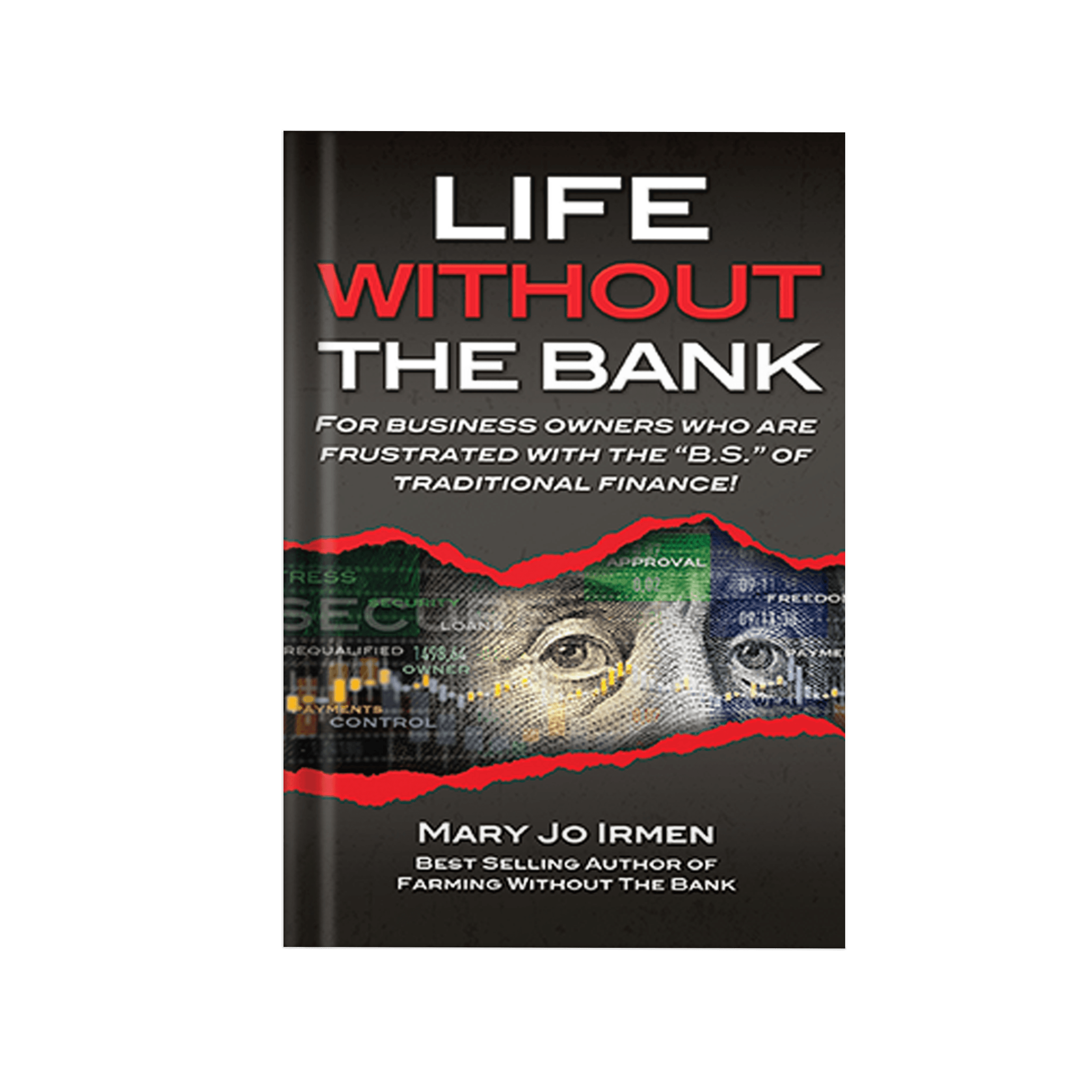
Your financial independence starts with one book.
Only one of three Americans can retire. Part of the fault is the conditioned belief that you must give up the use of your money when you’re young so you can have it later, assuming the stock market doesn’t collapse.