Podcast
EP. 270
Your Spouse Dies — Now What? The Life Insurance Gap Nobody Warns You About (Ep. 270)
May 21, 2026 ·
18 min
0:00 / 17:58
EPISODE OVERVIEW
ABOUT THIS EPISODE
What happens to your family the day you're gone — not financially, but humanly?
In this episode, Mary Jo shares what she learned after delivering her first death claim, and after seeing what widows are saying on social media about the reality of losing a spouse. "Widow brain" is real — the brain fog, the inability to concentrate, the struggle to return to work. FMLA may only give you 3 days to grieve. And that $100,000 life insurance policy? It might not even cover two years of bills.
So, how much life insurance do you need? Whether you can afford whole life or only term right now — get enough to give your family at least two years of cash flow. Two years to grieve. Two years to figure it out. Two years without having to sell the house or go back to work before they're ready.
This episode is a wake-up call for anyone who's been putting off life insurance or lowballing their death benefit.
📘 Books Mentioned
- 📘 Get the books
- 📧 Email Mary Jo: maryjo@withoutthebank.com
- 🌐 withoutthebank.com
- ▶️ Subscribe on YouTube
CHAPTER TIMESTAMPS
- 00:30The "TikTok Algorithm of Widows"
- 01:30FMLA and the 3-Day Grieving Reality
- 03:00"Widow Brain": Why Surviving Spouses Can't Just Go Back to Work
- 04:00How Adequate Life Insurance Lets Widows Quit and Mourn
- 05:00My First Death Claim Changed My Perspective
- 07:00"She Doesn't Need Much Coverage": Why That's Dead Wrong
- 08:30FMLA Limitations and Employer Compassion Gaps
- 10:00How a Parent's Death Affects Children's Grieving
- 11:00Why $100K Isn't Enough: You Need 2 Years of Cash Flow
- 12:00Only 2 Out of 75 Widows Mentioned Life Insurance
- 13:00It's About Priorities, Not Affordability
- 13:30A Friend's Tragic Story: Widowed at 31
- 16:00Why Spouses Need to Be Involved in the Finances
- 17:00Final Call: The Death Benefit Matters as Much as Cash Value
YOUTUBE EPISODE
TRANSCRIPTION
"If you are listening to this and you are saying, 'Hey, you know what? I just can't afford any whole life insurance right now. I don't think this infinite banking thing is gonna work for me,' yada, yada, yada — at least go get some term insurance, and don't cover yourself for a measly $100,000, for God's sake. That's gonna get you nowhere, okay? There needs to be enough death benefit so that somebody can live at least two years with cash flow, being able to pay all the bills, not having to sell the house. It's not just about paying everything off. You're guaranteed to die. So get something. Care about your loved ones enough to do that."
Hello, hello, hello, and welcome back to the podcast. Thank you very much for being here. Today, we're gonna talk about some heavy topics. I have come across the TikTok algorithm of widows, which I hope not to join anytime soon, let's just be clear. But that's where I've landed on the TikTok, and I've gone down the rabbit hole of looking at the comments and just reading what people are saying.
Now, I've talked to you guys a lot about the importance of life insurance and the fact that it needs to cover the grieving period. And a lot of people think, "Oh, it just needs to cover finances, and if we have debt, all we need is that life insurance to cover our debt." That's not a true statement, because when somebody passes away, there is a grieving period.
What I had not thought about ever until I came across this TikTok, or a couple of them, is the fact of going back to work. And so I want to just kind of touch on that, and I wanna read a couple comments on this one lady's post, because she is asking about, "Hey, how come the Family Medical Leave Act, FMLA — how come they are not paying for if you lose a spouse? How come you don't get to take X amount of days off?"
If you have a baby, you get X amount of days off. If you have a medical condition, whatever, you have X amount of days off. But if you lose a spouse, your employer doesn't have to give you those days. I just never thought about it. When my husband worked at his past company — I don't know what the new one is, but when he worked at his past company — I think they got a week for a spouse and a day for a parent.
And the people in these comments on this lady's post are saying, "We got three days off." That's it. That's all we were allowed when our husbands died. And these all happen to be widows, I suppose, because it was a widow that's making this video. But they're all talking about how they got three days off and were supposed to go back to work.
These women are saying in these comments how they're not okay. There's a brain fog associated — it's called widow brain. Never heard of that either. That they just can't concentrate. They can't go to work, they can't concentrate, they barely make it through the day. And it ultimately doesn't matter if it's a month ago or two or three years ago. Yes, that has gotten better for them to go through the day, but they still have this widow brain, right? They still don't wanna go home, and they don't wanna go to work. 'Cause when they go home, their husband's not there. When they go to work, their brain and their concentration isn't there.
I don't think that we think about that enough. I clearly did not, and I'm in the industry of delivering death benefits. But I'm also delivering a death claim with money that allows people to say, "I'm going to quit my job."
The amount of women in these threads talking about the fact that they did quit their job because there was some life insurance, and said, "Thank goodness we had that. Thank goodness it was close to retirement, so I could retire." The others are saying, "I had to go back to work in three days because we needed the money. If we didn't have the money, there's no way to pay for the bills." How are you supposed to mourn without the money?
That's just really my point today — the death benefit is there so we can have our loved ones mourning our passing. If they want to say, "I'm gonna quit my job because they won't let me take six months off or three months off," at least I have the money to pay the bills.
I don't quite understand, now that I'm in the industry — 'cause, hey, I didn't have life insurance always. I was one of those people that are like, "Oh, life insurance is stupid. Who needs it?" I didn't think of this side of it until I delivered my first death claim, let's be honest. I was all about cash value and accumulating wealth and financing everything through our policies and doing all the infinite banking stuff. I was not here thinking about, oh, this death benefit's gonna be amazing. No, I'm thinking this death benefit's gonna be great for generational wealth when you're 80 and 90 and expected to die — not when you're 20 and 30 and 40 and 50.
The amount of stress — I saw another video last night. It was funny. The lady was quite comical, but she's like, "I'm done with this." Like, she was doing a video for her husband. She's like, "I'm done with this. You can come back now. I'm not the good driver in the family. I shouldn't be the one teaching our daughter how to drive. We had to change a tire on a vehicle." She's like, "I'm tired..." This was a good one. She said, "I'm tired of calling all my friends' husbands to come over and help."
And not just tired of asking for help, I'm sure, but tired of being helped because of pity, because people feel bad. She said, "I'm tired of being the man and doing the man things." I have thought about, oh, I'm gonna have to do all the man things if something happens to Scott. Like, these are all things I think about, you guys. I'm gonna have to do those man things, but I'm also gonna need a lot of help.
But I never thought about how much help, and how many of those phone calls that need to be made to ask for help, and then you gotta wait for help, and then you feel bad 'cause you had to ask for help, and they left their family. And now you're not even the same person, and you've got all this widow brain that you can't remember stuff. You don't know what's happening. And now that I know it's called widow brain, it makes sense. When I deliver a death claim, somebody's not okay for a year or two because they're just taking time to process.
This all can be stopped. This all can be made so much easier with some death benefit, so that the mourning process can happen. 'Cause I just don't think that a lot of people truly understand.
If I have to hear one more man say, "Oh, we don't need that much death benefit on her, she's not the main breadwinner of the family" — in order for your butt to be out there working, and for you to go do what you need to do, and for your underwear to show up clean in your drawer, and for your food to show up on the table, and for your kids' activities to be planned, and your kids to be dressed, their clothes to show up, and them to be bathed and in bed on time — you probably need your wife. I'm not saying that you're not helping at home, I'm just saying you probably need some help to do that.
So when you don't have a wife at home taking care of these kids, now that's all on you. We should probably relate that. All these single parents out there are talking about how hard it is to be single parents, and that's what happens when somebody dies. They're a full-time single parent. They're not a co-parenting situation where, oh, you know, I'm a single parent a week at a time, or I'm a single parent until the weekends, and then I'm off. That, to me, single parent is: we don't have an option of a father. Father is completely gone, dead or abandoned. Mom is completely gone, dead or abandoned. We are a hundred percent the only parent all the time. Try that on for size.
Having some death benefit and making sure that your spouse can quit — not pay off the house, not pay off the vehicles, but has enough death benefit to have cash flow to make payments on those things while they are in the mourning period.
I never even considered FMLA being used for this situation, and in order for it to be used for this situation, they have to get diagnosed with depression and anxiety, and they can't intermittently use it. Like, "Oh, I'm having a good couple of days, and now I've had a setback." They can't do that. Employers apparently have zero hearts and are saying, "Hey, you better get back to work or else."
I mean, I get you got a business to run. I got a business to run. But if my assistants had their husbands pass away, I would hope that I would have a little bit more compassion than just being selfish. If I had to hire somebody to step in in the meantime until they're okay, I'll figure it out. But when you're leaving somebody, you're not just leaving that person, you're leaving their children as well.
And with all the amount of young people dying today, it's crazy. It's crazy to go through these comments and see how many young people have passed away with kids under eighteen years old. Those kids also need a time to mourn, and how are they supposed to mourn correctly when Mom can't hardly keep it together herself?
I just wish people understood how hard losing somebody is, so that they understood the importance of — hey, even if I have term insurance, that is going to be more important than having nothing.
The amount of people under 70 years old dying, that's crazy to me. And maybe it's just hitting my algorithm as well, but I see it locally. I see people locally that are saying, "Oh, hey, you know what? So-and-so passed away," or, "We're having a benefit for so-and-so," and I'm like, "What do you mean you're having a benefit for somebody?" They're like 40 years old.
If you are listening to this and you are saying, "Hey, you know what? I just can't afford any whole life insurance right now. I don't think this infinite banking thing is gonna work for me," yada, yada, yada — at least go get some term insurance, and don't cover yourself for a measly $100,000, for God's sake. That's gonna get you nowhere, okay? There needs to be enough death benefit so that somebody can live at least two years with cash flow, being able to pay all the bills, not having to sell the house. It's not just about paying everything off. You're guaranteed to die. So get something. Care about your loved ones enough to do that.
These TikToks just — they make me so sad, and it turns my stomach. Because out of all these comments, and there were, let me look, 250 comments. I didn't read all 250 comments. I've probably went through 75 of them last night. And out of those 75, two people talked about life insurance. Two.
I know based on a podcast that I did the other day that less than one policy per adult is written in this country. Now that I'm in the business, I don't understand why, when people are presented with life insurance, I don't understand how they can deny it when it is presented to them correctly.
Maybe I should address it more. And now that you've listened to this podcast — if you've listened to this podcast and you don't have some sort of life insurance in the next six months, six to 12 months, why? There's no reason for that. Unless you're uninsurable, there's no reason for that. You figure it out. Just like you're going to figure out how to get Starbucks, you're going to figure out how to pay for life insurance. It's a matter of what's important.
If you guys don't know what's important, I'm just going to ask you to go to the TikTok and type in widows, loss, grieving, mourning. Fill your algorithm with it and see what you're going to leave behind when you die, so that you know what's going to make it better.
Money's not going to fix everything. It's not going to fix everything, but it's sure going to make it easier so that your loved ones don't have to make some really hard decisions and go back to work and maybe find a job that they didn't have before.
I have a really good friend that lost her husband at 31. She was a nurse. She absolutely loved working in the hospital. It was like her absolute favorite thing to do. When her husband died, she had to take a job behind a desk — she was still able to use her nursing license for it, but she had to take a job behind a desk because she needed to be home with the kids.
Because her husband went on this trip where he passed away, because it was dangerous. He went on this trip without getting more life insurance. I talked to them about life insurance. Her mother-in-law was adamant that I was scamming them. When he died, did the mother-in-law step up to help the daughter-in-law? Nope, not at all. My friend was on her own.
The neighbors would say, "Oh, we're gonna help you. If you need help with anything, we're gonna help you. Don't move. We want you to stay a neighbor." And every time she would ask for help, they wouldn't be able to help. So she got sick of that after a couple of years and said, "I'm moving. I'm moving to a different location that's smaller, so I can take care of it."
It took her two years to just kinda get her bearings back in somewhat of an order. When you see that and you experience that with a friend, that changes your mind forever. He thought he was invincible. He wasn't going to need anything. And now she's 31 with a nine-month-old and a two-year-old, tiny little kids, and having to raise them herself, do it herself, and then deal with in-laws.
It's not always a rosy situation. So if the money could make it a little bit easier — in her case, it could've made it just a little bit easier. But she had to take a job that she did not like, because she liked being with patients. Now, years later, she's still working at that company because she still needs to provide, but she has a part-time job where she can stick people with needles, and that's what she's excited about, 'cause that's the part that she loved about it. And now that's a little bit of a part-time job, so she can be still in the field. But it 100% flipped her entire career upside down. She could not call on people when she got called into a clinic or into the hospital to have to go work. People didn't want the kids at night, shift work, whatever.
Think about it. Think about it. If your spouse died tomorrow, what would that look like for you? And especially if you're a man, if your spouse died, that looks very, very different for you. It looks different for everybody.
Women that don't know — I see this too, women that don't know how to pay the bills. They don't know where anything was. They don't know how to fix anything. They didn't pay attention to anything. They were just taken care of. Do we want to be taken care of? We need to participate. Doesn't mean we can't allow them to take care of us, but we need to participate. We need to know where things are. We need to know what bills needed to be paid. We need to know all those things.
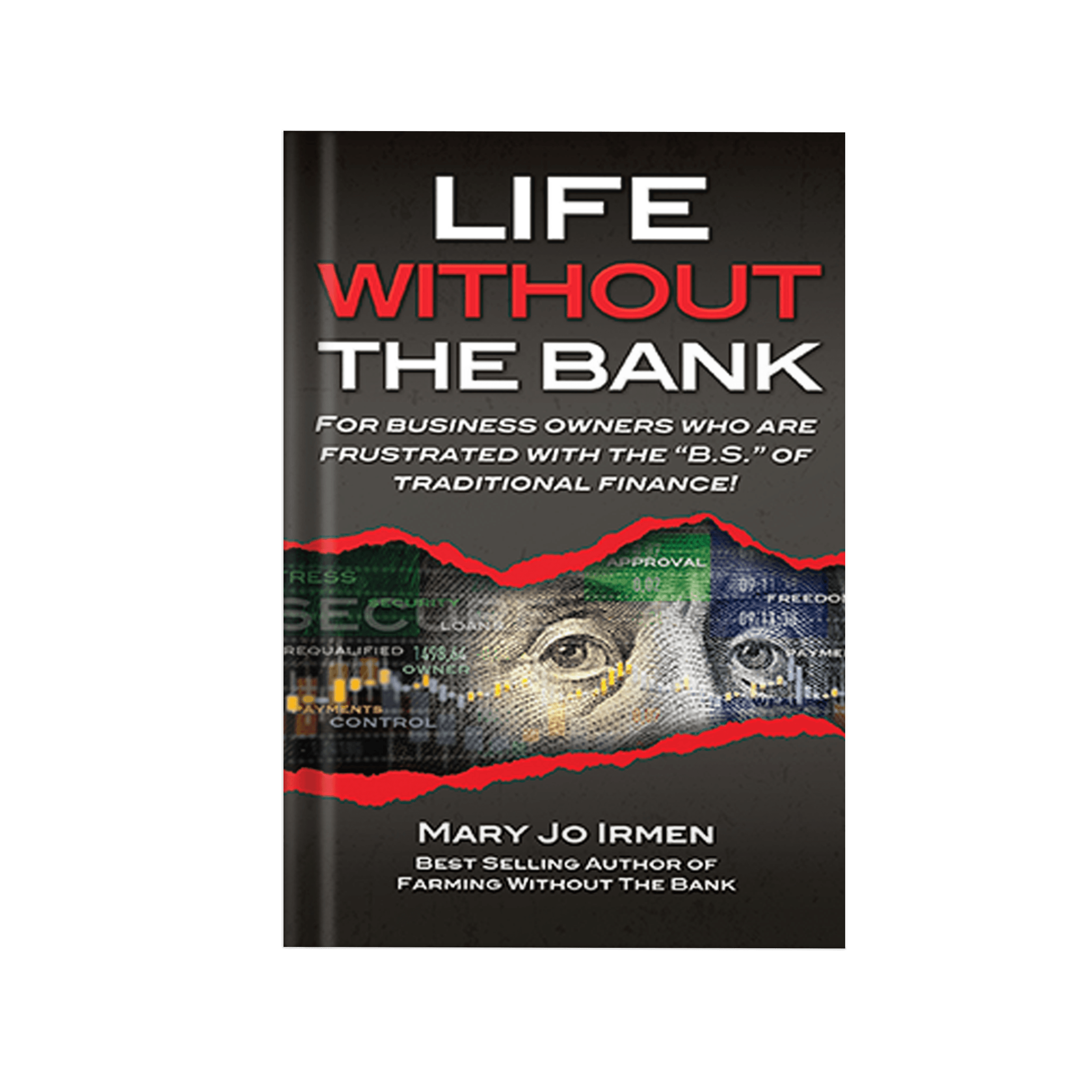
I didn't need to read any of the comments because I remembered most of them. Anyway, you guys, think about it. If you've read the book and you've not made your appointment yet, just make your appointment, even if it's just for death benefit. Let's figure out at what point you can get started, because this is ultimately super important. The death benefit is just as important as the cash value.
So email me comments, questions, concerns: maryjo@withoutthebank.com. Grab your books, read them, schedule your appointment, and we'll see you in the next podcast. Have a good day.
View MoreHello, hello, hello, and welcome back to the podcast. Thank you very much for being here. Today, we're gonna talk about some heavy topics. I have come across the TikTok algorithm of widows, which I hope not to join anytime soon, let's just be clear. But that's where I've landed on the TikTok, and I've gone down the rabbit hole of looking at the comments and just reading what people are saying.
Now, I've talked to you guys a lot about the importance of life insurance and the fact that it needs to cover the grieving period. And a lot of people think, "Oh, it just needs to cover finances, and if we have debt, all we need is that life insurance to cover our debt." That's not a true statement, because when somebody passes away, there is a grieving period.
What I had not thought about ever until I came across this TikTok, or a couple of them, is the fact of going back to work. And so I want to just kind of touch on that, and I wanna read a couple comments on this one lady's post, because she is asking about, "Hey, how come the Family Medical Leave Act, FMLA — how come they are not paying for if you lose a spouse? How come you don't get to take X amount of days off?"
If you have a baby, you get X amount of days off. If you have a medical condition, whatever, you have X amount of days off. But if you lose a spouse, your employer doesn't have to give you those days. I just never thought about it. When my husband worked at his past company — I don't know what the new one is, but when he worked at his past company — I think they got a week for a spouse and a day for a parent.
And the people in these comments on this lady's post are saying, "We got three days off." That's it. That's all we were allowed when our husbands died. And these all happen to be widows, I suppose, because it was a widow that's making this video. But they're all talking about how they got three days off and were supposed to go back to work.
These women are saying in these comments how they're not okay. There's a brain fog associated — it's called widow brain. Never heard of that either. That they just can't concentrate. They can't go to work, they can't concentrate, they barely make it through the day. And it ultimately doesn't matter if it's a month ago or two or three years ago. Yes, that has gotten better for them to go through the day, but they still have this widow brain, right? They still don't wanna go home, and they don't wanna go to work. 'Cause when they go home, their husband's not there. When they go to work, their brain and their concentration isn't there.
I don't think that we think about that enough. I clearly did not, and I'm in the industry of delivering death benefits. But I'm also delivering a death claim with money that allows people to say, "I'm going to quit my job."
The amount of women in these threads talking about the fact that they did quit their job because there was some life insurance, and said, "Thank goodness we had that. Thank goodness it was close to retirement, so I could retire." The others are saying, "I had to go back to work in three days because we needed the money. If we didn't have the money, there's no way to pay for the bills." How are you supposed to mourn without the money?
That's just really my point today — the death benefit is there so we can have our loved ones mourning our passing. If they want to say, "I'm gonna quit my job because they won't let me take six months off or three months off," at least I have the money to pay the bills.
I don't quite understand, now that I'm in the industry — 'cause, hey, I didn't have life insurance always. I was one of those people that are like, "Oh, life insurance is stupid. Who needs it?" I didn't think of this side of it until I delivered my first death claim, let's be honest. I was all about cash value and accumulating wealth and financing everything through our policies and doing all the infinite banking stuff. I was not here thinking about, oh, this death benefit's gonna be amazing. No, I'm thinking this death benefit's gonna be great for generational wealth when you're 80 and 90 and expected to die — not when you're 20 and 30 and 40 and 50.
The amount of stress — I saw another video last night. It was funny. The lady was quite comical, but she's like, "I'm done with this." Like, she was doing a video for her husband. She's like, "I'm done with this. You can come back now. I'm not the good driver in the family. I shouldn't be the one teaching our daughter how to drive. We had to change a tire on a vehicle." She's like, "I'm tired..." This was a good one. She said, "I'm tired of calling all my friends' husbands to come over and help."
And not just tired of asking for help, I'm sure, but tired of being helped because of pity, because people feel bad. She said, "I'm tired of being the man and doing the man things." I have thought about, oh, I'm gonna have to do all the man things if something happens to Scott. Like, these are all things I think about, you guys. I'm gonna have to do those man things, but I'm also gonna need a lot of help.
But I never thought about how much help, and how many of those phone calls that need to be made to ask for help, and then you gotta wait for help, and then you feel bad 'cause you had to ask for help, and they left their family. And now you're not even the same person, and you've got all this widow brain that you can't remember stuff. You don't know what's happening. And now that I know it's called widow brain, it makes sense. When I deliver a death claim, somebody's not okay for a year or two because they're just taking time to process.
This all can be stopped. This all can be made so much easier with some death benefit, so that the mourning process can happen. 'Cause I just don't think that a lot of people truly understand.
If I have to hear one more man say, "Oh, we don't need that much death benefit on her, she's not the main breadwinner of the family" — in order for your butt to be out there working, and for you to go do what you need to do, and for your underwear to show up clean in your drawer, and for your food to show up on the table, and for your kids' activities to be planned, and your kids to be dressed, their clothes to show up, and them to be bathed and in bed on time — you probably need your wife. I'm not saying that you're not helping at home, I'm just saying you probably need some help to do that.
So when you don't have a wife at home taking care of these kids, now that's all on you. We should probably relate that. All these single parents out there are talking about how hard it is to be single parents, and that's what happens when somebody dies. They're a full-time single parent. They're not a co-parenting situation where, oh, you know, I'm a single parent a week at a time, or I'm a single parent until the weekends, and then I'm off. That, to me, single parent is: we don't have an option of a father. Father is completely gone, dead or abandoned. Mom is completely gone, dead or abandoned. We are a hundred percent the only parent all the time. Try that on for size.
Having some death benefit and making sure that your spouse can quit — not pay off the house, not pay off the vehicles, but has enough death benefit to have cash flow to make payments on those things while they are in the mourning period.
I never even considered FMLA being used for this situation, and in order for it to be used for this situation, they have to get diagnosed with depression and anxiety, and they can't intermittently use it. Like, "Oh, I'm having a good couple of days, and now I've had a setback." They can't do that. Employers apparently have zero hearts and are saying, "Hey, you better get back to work or else."
I mean, I get you got a business to run. I got a business to run. But if my assistants had their husbands pass away, I would hope that I would have a little bit more compassion than just being selfish. If I had to hire somebody to step in in the meantime until they're okay, I'll figure it out. But when you're leaving somebody, you're not just leaving that person, you're leaving their children as well.
And with all the amount of young people dying today, it's crazy. It's crazy to go through these comments and see how many young people have passed away with kids under eighteen years old. Those kids also need a time to mourn, and how are they supposed to mourn correctly when Mom can't hardly keep it together herself?
I just wish people understood how hard losing somebody is, so that they understood the importance of — hey, even if I have term insurance, that is going to be more important than having nothing.
The amount of people under 70 years old dying, that's crazy to me. And maybe it's just hitting my algorithm as well, but I see it locally. I see people locally that are saying, "Oh, hey, you know what? So-and-so passed away," or, "We're having a benefit for so-and-so," and I'm like, "What do you mean you're having a benefit for somebody?" They're like 40 years old.
If you are listening to this and you are saying, "Hey, you know what? I just can't afford any whole life insurance right now. I don't think this infinite banking thing is gonna work for me," yada, yada, yada — at least go get some term insurance, and don't cover yourself for a measly $100,000, for God's sake. That's gonna get you nowhere, okay? There needs to be enough death benefit so that somebody can live at least two years with cash flow, being able to pay all the bills, not having to sell the house. It's not just about paying everything off. You're guaranteed to die. So get something. Care about your loved ones enough to do that.
These TikToks just — they make me so sad, and it turns my stomach. Because out of all these comments, and there were, let me look, 250 comments. I didn't read all 250 comments. I've probably went through 75 of them last night. And out of those 75, two people talked about life insurance. Two.
I know based on a podcast that I did the other day that less than one policy per adult is written in this country. Now that I'm in the business, I don't understand why, when people are presented with life insurance, I don't understand how they can deny it when it is presented to them correctly.
Maybe I should address it more. And now that you've listened to this podcast — if you've listened to this podcast and you don't have some sort of life insurance in the next six months, six to 12 months, why? There's no reason for that. Unless you're uninsurable, there's no reason for that. You figure it out. Just like you're going to figure out how to get Starbucks, you're going to figure out how to pay for life insurance. It's a matter of what's important.
If you guys don't know what's important, I'm just going to ask you to go to the TikTok and type in widows, loss, grieving, mourning. Fill your algorithm with it and see what you're going to leave behind when you die, so that you know what's going to make it better.
Money's not going to fix everything. It's not going to fix everything, but it's sure going to make it easier so that your loved ones don't have to make some really hard decisions and go back to work and maybe find a job that they didn't have before.
I have a really good friend that lost her husband at 31. She was a nurse. She absolutely loved working in the hospital. It was like her absolute favorite thing to do. When her husband died, she had to take a job behind a desk — she was still able to use her nursing license for it, but she had to take a job behind a desk because she needed to be home with the kids.
Because her husband went on this trip where he passed away, because it was dangerous. He went on this trip without getting more life insurance. I talked to them about life insurance. Her mother-in-law was adamant that I was scamming them. When he died, did the mother-in-law step up to help the daughter-in-law? Nope, not at all. My friend was on her own.
The neighbors would say, "Oh, we're gonna help you. If you need help with anything, we're gonna help you. Don't move. We want you to stay a neighbor." And every time she would ask for help, they wouldn't be able to help. So she got sick of that after a couple of years and said, "I'm moving. I'm moving to a different location that's smaller, so I can take care of it."
It took her two years to just kinda get her bearings back in somewhat of an order. When you see that and you experience that with a friend, that changes your mind forever. He thought he was invincible. He wasn't going to need anything. And now she's 31 with a nine-month-old and a two-year-old, tiny little kids, and having to raise them herself, do it herself, and then deal with in-laws.
It's not always a rosy situation. So if the money could make it a little bit easier — in her case, it could've made it just a little bit easier. But she had to take a job that she did not like, because she liked being with patients. Now, years later, she's still working at that company because she still needs to provide, but she has a part-time job where she can stick people with needles, and that's what she's excited about, 'cause that's the part that she loved about it. And now that's a little bit of a part-time job, so she can be still in the field. But it 100% flipped her entire career upside down. She could not call on people when she got called into a clinic or into the hospital to have to go work. People didn't want the kids at night, shift work, whatever.
Think about it. Think about it. If your spouse died tomorrow, what would that look like for you? And especially if you're a man, if your spouse died, that looks very, very different for you. It looks different for everybody.
Women that don't know — I see this too, women that don't know how to pay the bills. They don't know where anything was. They don't know how to fix anything. They didn't pay attention to anything. They were just taken care of. Do we want to be taken care of? We need to participate. Doesn't mean we can't allow them to take care of us, but we need to participate. We need to know where things are. We need to know what bills needed to be paid. We need to know all those things.
I didn't need to read any of the comments because I remembered most of them. Anyway, you guys, think about it. If you've read the book and you've not made your appointment yet, just make your appointment, even if it's just for death benefit. Let's figure out at what point you can get started, because this is ultimately super important. The death benefit is just as important as the cash value.
So email me comments, questions, concerns: maryjo@withoutthebank.com. Grab your books, read them, schedule your appointment, and we'll see you in the next podcast. Have a good day.



ready to start?
Your financial independence starts with one book.
Only one of three Americans can retire. Part of the fault is the conditioned belief that you must give up the use of your money when you’re young so you can have it later, assuming the stock market doesn’t collapse.