GET THE BOOK
Most people never question the 401(k).
They get a job. The employer offers a plan. Someone tells them to contribute. Maybe there is a match. Maybe they pick a few funds. Then they assume they are doing the responsible thing.
Maybe they are.
But responsible does not mean complete. It does not mean the 401(k) should be your only plan. It does not mean the rules work in your favor. It does not mean your money is as accessible, flexible, or controlled as you think it is.
That is why more people are starting to look for 401(k) alternatives.
Not because every 401(k) is bad. Not because retirement planning is pointless. But because locking money away without understanding the rules creates problems later.
The real question is not whether you should have a 401(k).
The better question is: do you understand what you are giving up in exchange for what you are getting?
Why People Start Looking for 401(k) Alternatives
A 401(k) is often treated like the default retirement plan. For most employees it is the first financial tool they are handed.
But default does not mean best.
People start looking for alternatives when they realize there are trade-offs nobody explained upfront.
- The money is not always easy to access.
- Withdrawals may be taxable.
- Early access can come with penalties.
- Investment performance is not guaranteed.
- Future tax rates are unknown.
- The rules can change.
- The account is built around retirement age, not real-life cash flow needs.
That does not mean a 401(k) has no value. It means you need to understand the full picture before making it your main financial strategy.
A 401(k) can help you save for the future. But it may not give you the control, access, or flexibility you need along the way.
Is a 401(k) Worth It?
It can be, especially when there is an employer match and you actually understand how the plan works.
But it should not be accepted blindly.
Most people contribute to a 401(k) because they were told to, not because they fully understand the rules. They do not know how the account is taxed, when they can access the money, what happens if they need funds early, or how future withdrawals may affect their retirement income.
A 401(k) may be useful as one part of a plan. The danger is treating it as the whole plan.
If all your future wealth is trapped inside accounts you cannot easily use until a government-set age, you may look prepared on paper while lacking control in real life.
That is the issue Without the Bank keeps coming back to.
- Who controls your money?
- Who controls the timing?
- Who controls the rules?
- Who controls access?
- Who benefits when you need to borrow?
A 401(k) may help you accumulate money for retirement. It does not help you build a personal banking system, create liquidity, or control how your money moves before retirement.
The Biggest Problems With 401(k) Plans
Most people focus on the contribution side. They ask how much they should put in.
But they do not ask how they get the money out. What happens if they need it before retirement? How it will be taxed later. What happens if the market is down when they need income. What rules they are agreeing to.
That is where the disadvantages become clearer.
A 401(k) is not the same as having liquid capital. It is not the same as having money you can use when life changes. It is not the same as having your own financing system.
It is a retirement account with rules. That distinction matters.
The 401(k) Tax Problem
One of the biggest misunderstandings around traditional 401(k) plans is the phrase “tax-deferred.”
Tax-deferred does not mean tax-free.
It means taxes are delayed until later. That can be helpful in some situations, but it also creates uncertainty. You do not know what tax rates will be in the future. You do not know what your income picture will look like in retirement. You do not know how withdrawals will affect your overall tax situation.
The common pitch is simple: contribute now, lower taxable income today, pay taxes later.
But later still comes.
If your retirement money is heavily concentrated in tax-deferred accounts, you may have less control over how and when taxes show up. This is why the 401(k) tax conversation matters. The issue is not just whether you get a deduction today. The issue is what happens when it is time to use the money.
Understand the tradeoff before assuming the 401(k) is automatically the best place for every dollar.
The 401(k) Access Problem
A 401(k) is designed for retirement, not for life’s unexpected needs before retirement.
If you need money early, you may run into taxes, penalties, plan restrictions, and limited options. That becomes a real problem when your money is technically yours but practically difficult to reach.
This is one of the biggest reasons people search for 401(k) alternatives.
- What if you need money before retirement?
- What if you want to start a business?
- What if you have a major expense?
- What if you need liquidity?
- What if you do not want all your money locked away?
The issue is not just the penalty. It is the lack of flexibility.
Money that cannot be accessed without consequence is not as useful as people assume.
Required Minimum Distributions and Future Control
At a certain point, retirement account rules may require withdrawals from certain tax-deferred accounts. That matters because forced withdrawals can affect taxes, income planning, and overall retirement control.
The planning concern is straightforward.
- What if you do not want to withdraw yet?
- What if the withdrawal creates taxable income you did not want?
- What if your retirement plan depends on flexibility but the account rules reduce that flexibility?
Retirement planning should not only be about accumulation. It should also be about distribution.
How money comes out matters just as much as how money goes in.
Alternatives to 401(k) Plans
Looking for alternatives does not mean ignoring retirement. It means asking whether there are better ways to build wealth, create income, maintain liquidity, and keep more control.
Some people consider taxable investment accounts, Roth-style accounts, real estate, business ownership, cash reserves, annuities, or life insurance strategies.
Each option has tradeoffs.
Some offer more flexibility but less tax advantage. Some offer tax advantages but less access. Some offer growth potential but more market risk. Some offer guarantees but require long-term commitment.
The point is not to say one tool solves everything.
The point is to stop assuming one account should carry the entire burden of your future.
A better financial strategy usually has more than one bucket. It considers liquidity, control, taxes, access, risk, guarantees, and income.
Saving for Retirement Without a 401(k)
Some people do not have access to a 401(k). Others have access but do not want to rely on it as their only tool.
Saving for retirement without a 401(k) starts by asking what you actually need your money to do.
- Do you need long-term growth?
- Do you need liquidity?
- Do you need tax diversification?
- Do you need access before retirement?
- Do you need protection from market volatility?
- Do you need predictable income?
- Do you need capital for business or family needs?
The answer may not be one product. It may be a strategy.
A 401(k) is built mostly around future retirement accumulation. But your financial life does not only happen at retirement age. You still need access to money for opportunities, emergencies, purchases, debt, business, family, and changing circumstances.
That is why liquidity matters.
If all your money is locked away for later, you may end up borrowing from banks today while your own capital sits out of reach.
That is the exact cycle Without the Bank was built to challenge.
Whole Life Insurance and Infinite Banking as an Alternative Strategy
Whole life insurance and Infinite Banking are often discussed as alternatives or complements to traditional retirement planning.
They are not the same as a 401(k). They were never meant to be.
A 401(k) is a retirement investment account. A properly designed whole life insurance policy is a life insurance contract that can build cash value and provide access to policy loans. Infinite Banking is the strategy of using that policy as part of a personal financing system.
The value of whole life insurance in this conversation is not just the death benefit. It is the combination of cash value, access, guarantees, policy loans, and control when the policy is structured correctly.
For someone following the Without the Bank approach, the question is not only how much you will have at retirement.
- The question is also: can you access capital along the way?
- Can you use your money without losing control?
- Can you finance purchases through your own system?
- Can you build liquidity and long-term value at the same time?
This is where Infinite Banking becomes part of the retirement alternatives conversation.
It is not automatically right for everyone. It requires education, proper policy design, long-term funding, and discipline. But it can offer something most retirement accounts do not: accessible capital and a personal banking strategy.
Infinite Banking vs. 401(k)
These two tools are built for different purposes.
A 401(k) accumulates retirement assets inside an employer-sponsored plan. Infinite Banking creates a pool of capital inside a properly designed whole life policy and accesses that capital through policy loans.
A 401(k) may offer investment exposure and possible employer contributions. But access is limited, withdrawals may be taxed, and the account is tied to retirement rules you did not write.
Infinite Banking focuses on liquidity, control, and financing behavior. It is not about chasing market returns. It is about building a system that lets you use and recapture money over time.
The question is not always which one is better.
The better question is: which tool gives you the kind of control you actually need?
For some people the answer may include both. The key is understanding the purpose of each before committing large amounts of money.
Why Retirement at 65 May Be a Flawed Assumption
A lot of traditional retirement planning assumes you work until a certain age, stop, and then start using the money you saved.
But life does not always follow that timeline.
- Some people want to build businesses.
- Some want to work less earlier.
- Some want to help family.
- Some face emergencies before retirement.
- Some do not want all their money locked away until later.
That is why the standard retirement model deserves scrutiny.
You are not just planning for an age. You are planning for a life.
If your financial strategy only works after a certain birthday, it may not support the way you actually want to live before then.
A better plan gives you options along the way, not just a balance you hope will be enough later.
Questions to Ask Before Choosing a Retirement Strategy
- When can I access the money?
- How will it be taxed?
- What penalties apply if I need it early?
- Who controls the rules?
- Is the money liquid?
- What happens if my income changes?
- What happens if the market drops when I need income?
- Am I relying too heavily on one account type?
- Does this strategy support my actual life and business needs?
- Do I understand how money comes out, not just how it goes in?
- Am I building control or giving it away?
These questions matter because retirement planning is not just about saving. It is about control, access, timing, and use.
The Bottom Line
A 401(k) may have a place in your financial life. But it should not be accepted blindly.
Before locking money away, understand the trade-offs. Understand the taxes. Understand the access limits. Understand required distributions. Understand what happens when life does not follow the perfect retirement timeline.
The problem is not that people save for retirement.
The problem is that most people save inside systems they do not fully understand.
That is why 401(k) alternatives matter. They give you a reason to ask whether there are better ways to build wealth, maintain liquidity, and keep more control.
Whole life insurance and Infinite Banking are not magic replacements. But when structured and used correctly, they can create something most people are missing: accessible capital, long-term discipline, and a system that puts more control back in your hands.
Do not choose a strategy just because it is normal.
Learn the rules. Ask better questions. Think about access, taxes, liquidity, control, and how money will actually move through your life.
If you are tired of handing every major financial decision to banks, lenders, and retirement rules you did not write, start with education.
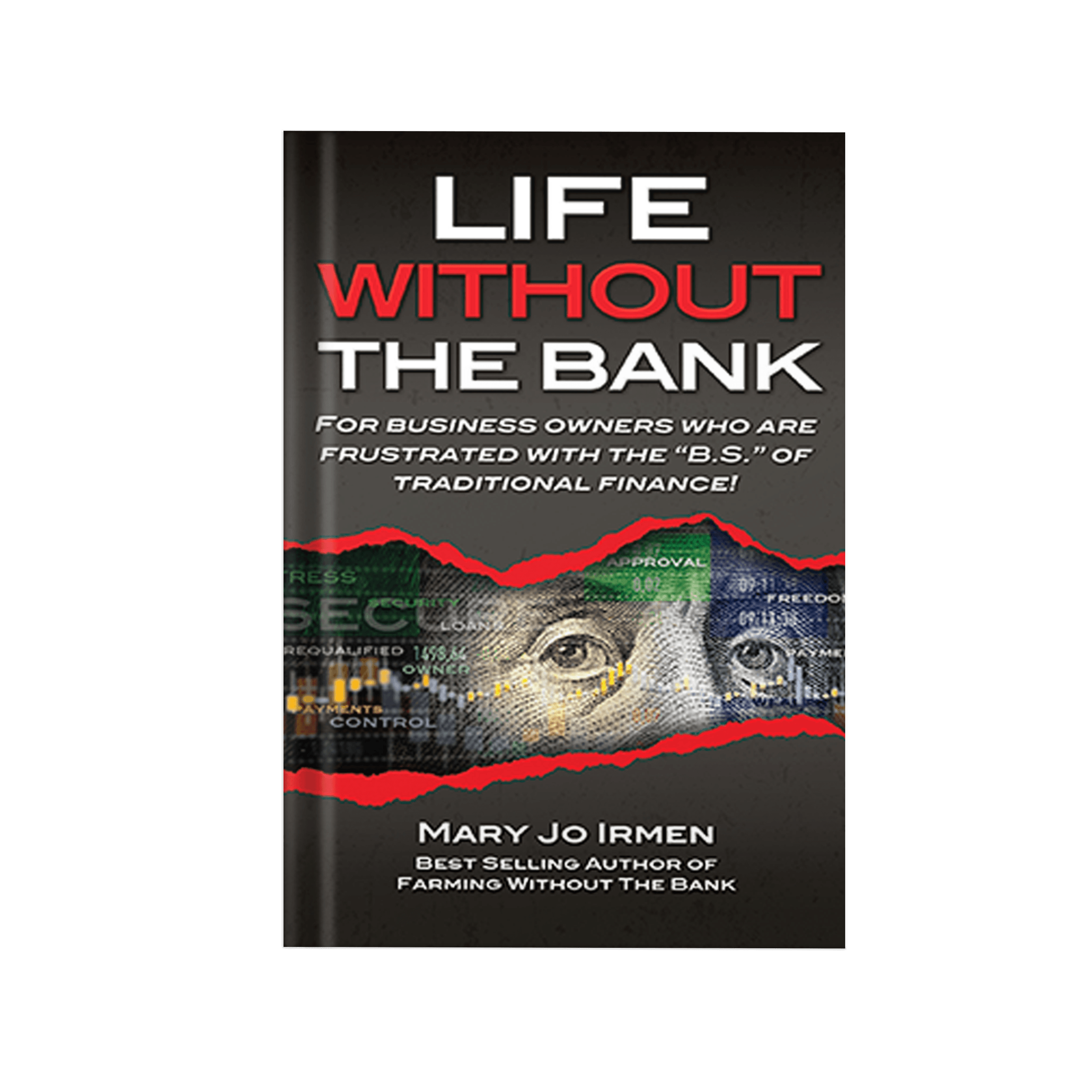
Read the book.
Frequently Asked Questions
What are the best 401(k) alternatives?
The best alternatives depend on your goals, cash flow, tax situation, risk tolerance, and need for liquidity. Options may include taxable investment accounts, Roth-style accounts, real estate, business assets, cash reserves, annuities, whole life insurance, or Infinite Banking strategies. Each has trade-offs.
What are the disadvantages of a 401(k)?
Common disadvantages include limited access before retirement, possible taxes on withdrawals, potential early withdrawal penalties, market risk, plan fees, required distributions later in life, and less control over how and when money can be used.
Is a 401(k) worth it?
It can be, especially if there is an employer match. But it should not be treated as your only financial strategy. Understand the rules, tax treatment, access limits, and tradeoffs before relying on it heavily.
How are 401(k) withdrawals taxed?
Traditional 401(k) withdrawals are generally taxed when money is taken out, but the exact impact depends on the rules at the time, your income, and your overall tax situation. Work with a qualified tax professional before making withdrawal decisions.
What is the 401(k) withdrawal penalty?
A penalty may apply when money is taken out before the allowed age or outside permitted exceptions. Rules can change and depend on your specific situation, so confirm with a qualified professional before withdrawing funds.
What are required minimum distributions?
Mandatory withdrawals that may apply to certain retirement accounts later in life. They can affect taxes and retirement income planning and should be factored into any long-term strategy.
How can I save for retirement without a 401(k)?
Build a broader strategy that may include personal investments, business assets, real estate, cash reserves, Roth-style accounts, whole life insurance, or other tools. Balance growth, access, tax planning, liquidity, and control.
Is whole life insurance a good alternative to a 401(k)?
It can be part of an alternative strategy when properly designed, funded, and understood. It is not the same as a 401(k), but it can provide cash value, policy loan access, guarantees, and long-term liquidity.
What is the difference between Infinite Banking and a 401(k)?
A 401(k) is a retirement account used for long-term investing. Infinite Banking is a strategy that uses a properly designed whole life insurance policy to build cash value and access capital through policy loans. A 401(k) focuses on retirement accumulation. Infinite Banking focuses on control, liquidity, and financing behavior.