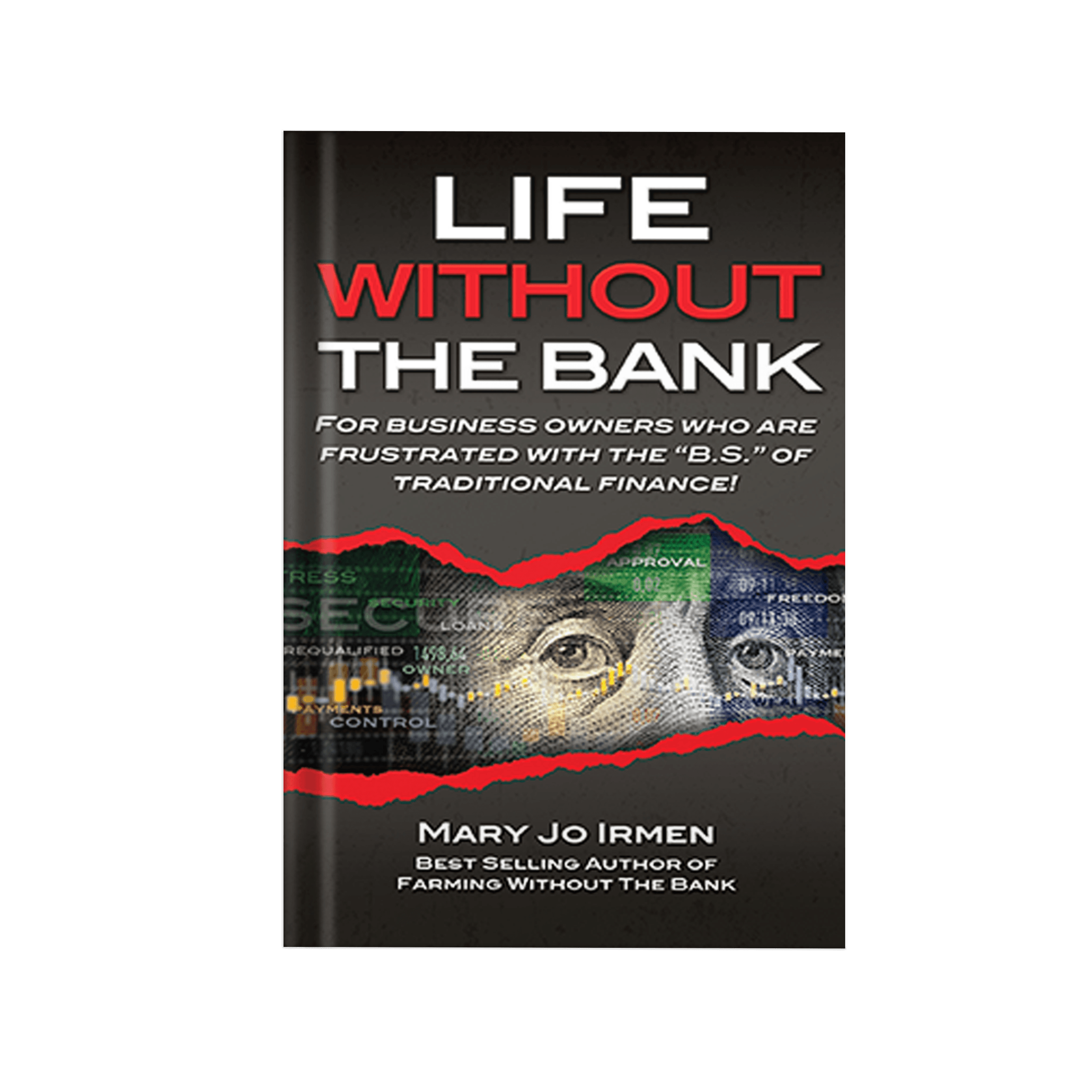
GET THE BOOK
Most people think there are only two ways to buy something big.
Pay cash. Or finance it.
That is usually where the debate starts. One side says paying cash is always smarter because you avoid debt and interest. The other side says financing can make sense if the rate is low and you keep your cash available.
Both answers miss the bigger question.
The real question is not whether you should pay cash or finance a car. The real question is what happens to your money after the purchase.
Because wealth is not built by avoiding interest. Wealth is built by understanding how money moves, who controls it, and whether your capital keeps working after you spend it.
That is where the Without the Bank conversation begins.
Paying Cash vs. Financing Is the Wrong First Question
When people ask whether to pay cash or finance, they usually focus on the surface-level math.
- How much is the car?
- What is the interest rate?
- What is the monthly payment?
- How much cash do I have?
Those questions matter. But they are not the whole picture.
The bigger question is about control.
- If you pay cash, do you still have liquidity?
- If you finance, who controls the terms?
- If you drain your savings, what happens when the next opportunity comes up?
- If you borrow from a bank, how much control do you hand over?
Most people compare cash and financing like those are the only two options. But the problem is not cash versus debt. The problem is that most people do not have a financial system of their own.
They either drain their cash or borrow from someone else.
Without the Bank challenges that entire setup.
Why People Think Paying Cash Is Always Better
Paying cash feels responsible.
No loan. No monthly payment. No bank approval. No interest. No financing paperwork.
For a lot of people, paying cash feels like freedom. And in some cases, it may be the right move. If you have plenty of liquidity, no better use for the money, and no need to preserve capital, paying cash can be simple and clean.
The problem is when people assume paying cash is always the wealth-building decision.
Avoiding debt is not the same thing as building wealth.
You can avoid a car loan and still weaken your financial position if paying cash wipes out your liquidity. You can avoid interest and still lose access to capital. You can feel responsible in the moment while leaving yourself exposed afterward.
They ask whether they avoided interest. They do not ask what they gave up by using that cash.
The Problem With Draining Cash
Cash gives you options.
It gives you the ability to handle emergencies, take advantage of opportunities, make business decisions, negotiate, invest, or simply avoid being desperate when life changes.
Once you spend that cash, it is gone from your control.
That is the hidden problem with paying cash. You may avoid a loan, but you also remove capital from your system.
If you use a large amount of cash to buy a car, that money is no longer available for emergency expenses, business opportunities, debt restructuring, equipment needs, family needs, investments, cash flow gaps, or future purchases.
This is why paying cash can cost more than people think. The cost is not only the sticker price. The cost is the lost use of that money.
That is opportunity cost.
What Is the Opportunity Cost of Paying Cash?
Opportunity cost is what you give up when you choose one option over another.
If you spend cash on a car, the opportunity cost is whatever that cash could have done somewhere else.
- Could it have stayed available for an emergency?
- Could it have been used for a business opportunity?
- Could it have reduced stress during a slow income month?
- Could it have been used inside a system that keeps capital moving?
- Could it have prevented you from needing to borrow later?
This is where the conversation gets more complicated.
Paying cash may save interest but reduce liquidity. Financing may cost interest but preserve cash. Neither answer is automatically right.
The better question is which option leaves you with more control after the purchase.
That is what actually matters.
When Financing Can Make Sense
Financing is not automatically bad.
That may sound strange if you were taught all debt is the enemy. But the issue is not always debt itself. The issue is the terms, the purpose, the behavior, and who controls the financing.
Financing can make sense when the interest rate is reasonable, the payment fits your cash flow, you keep liquidity available, the purchase supports your life or business, you understand the full cost, and you have a repayment strategy.
But financing becomes a problem when people use it to buy things they cannot afford, stretch payments too long, ignore total cost, or depend completely on outside lenders.
The bank’s financing system is built for the bank.
That does not mean every loan is bad. It means you should understand who benefits from the terms.
When you finance through a bank, the bank controls the rules. The bank sets the payment. The bank charges the interest. The bank determines what happens if you miss payments.
You may keep your cash, but you accept someone else’s control.
Paying Cash for a Car vs. Financing
When comparing cash versus financing, most people only look at the purchase price and interest cost.
A better comparison looks at four things.
- Liquidity. Will paying cash leave you with enough money available afterward?
- Control. Who controls the repayment terms, timing, and access to capital?
- Opportunity cost. What else could your cash have done if you did not spend it all at once?
- Long-term strategy. Does this purchase fit into a bigger financial system, or is it just a one-time transaction?
Paying cash may be simple, but it can reduce your options. Financing may preserve cash, but it can put you under the bank’s terms.
That is why the best answer may not be either one in the traditional sense. There may be a third option: building your own banking system before the purchase.
Should I Pay Cash or Finance a Car?
The honest answer is that it depends.
Do not pay cash just because someone told you debt is always bad. Do not finance just because someone told you to keep your cash invested. Look at your whole financial position.
- Will paying cash drain your savings?
- Do you have other opportunities for this money?
- Is the financing rate reasonable?
- Can you comfortably make the payment?
- Do you have enough reserves?
- Will this purchase create stress or flexibility?
- Are you making this decision from strategy or fear?
If paying cash leaves you financially exposed, it may not be the best move. If financing creates a payment you cannot handle, it may not be the best move either.
The goal is not to worship cash or avoid every loan. The goal is to control your capital.
Why Paying Cash Does Not Automatically Build Wealth
Paying cash can make you feel wealthy because you avoid asking permission.
But spending cash is not the same as building wealth.
Wealth grows when money keeps working. Wealth grows when capital is controlled, reused, and directed intentionally. Wealth grows when you understand the movement of money, not just the balance in one account.
If you spend fifty thousand dollars cash on a car, you may avoid a loan. But that money is no longer available to do anything else. It is sitting in a depreciating asset.
That means the money is not only spent. It is now tied to something that loses value over time.
This is why Without the Bank challenges the automatic pay-cash advice. Not because paying cash is always wrong. But because it can still remove wealth-building potential if you do not understand what that cash could have been doing.
The Third Option: Build Your Own Banking System
Most people only know two systems.
The bank’s system. Or no system at all.
They either borrow from the bank or spend their own cash.
Infinite Banking introduces a different way to think.
Instead of waiting until you need a car and then deciding between cash and financing, you build a pool of capital ahead of time. That pool is typically built inside a properly designed dividend-paying whole life insurance policy.
Over time, the policy builds cash value. You can access that cash value through policy loans and use it for purchases, including vehicles.
The important part is not just the loan. The important part is the system.
You are creating a place where capital can accumulate, remain accessible, and be used intentionally.
That changes the question entirely.
Instead of asking whether to drain cash or borrow from the bank, you can ask how to use your own banking system to make the purchase without giving up unnecessary control.
Borrowing Against Life Insurance as a Financing Strategy
With a properly structured whole life policy, you can borrow against the policy’s cash value. The insurance company lends you money using the cash value as collateral.
This is different from withdrawing your money directly.
The policy continues to exist. The cash value continues to function according to the policy design. You have access to capital for a purchase while your system remains in place.
That does not mean policy loans are free money.
They are still loans. They have interest. They need to be managed. They require discipline. The policy has to be designed correctly, funded properly, and understood clearly.
But a policy loan may give you more control than traditional financing.
You are not asking the bank for approval. You are not draining your entire cash reserve. You are using a system you built.
That is the point.
Policy Loan vs. Bank Loan
With a bank loan, the bank controls the approval process, repayment terms, interest rate, payment schedule, and consequences if you do not perform.
With a policy loan, you are borrowing against your life insurance cash value. There is still interest and the loan still needs to be managed, but repayment is generally more flexible than a traditional bank loan.
The biggest difference is control.
A bank loan depends on the bank’s rules. A policy loan depends on the policy contract.
That difference matters when cash flow changes.
If you are using Infinite Banking correctly, you still repay the loan. You still treat your system with discipline. You do not borrow carelessly just because repayment terms are flexible.
The goal is not to escape responsibility. The goal is to redirect responsibility back into a system you control.
Why Repaying Yourself Matters
A lot of people misunderstand Infinite Banking because they think the goal is just to borrow from a policy.
That is not the goal.
The goal is to create a banking system and treat it like one.
If you borrow against your policy to buy a car, you repay the loan with discipline. Otherwise you are just draining your own system in a different way.
The habit matters.
If you would have paid a bank eight hundred dollars a month, why would you not pay your own system with the same discipline?
That repayment is how your pool of capital gets rebuilt. It is how you create future buying power. It is how you stop treating every purchase like a one-time event and start thinking in terms of long-term control.
The car is not the real issue. The movement of money is the issue.
What Actually Builds Wealth?
Not simply paying cash. Not blindly financing. Not chasing the lowest payment. Not avoiding every form of interest.
Wealth is built by controlling capital.
It is built by keeping money moving through systems you own and understand. It is built by preserving liquidity, using leverage carefully, repaying with discipline, and making sure your money has a job before and after the purchase.
The wealthy do not only ask whether they can afford something.
They ask what the best use of their capital is.
Because the way you buy something matters. The way you replace the money matters. The way you control future access matters.
Questions to Ask Before Paying Cash or Financing
- Will paying cash drain my liquidity?
- What else could this cash be doing?
- Do I have enough emergency reserves?
- What is the true cost of financing?
- What interest rate am I accepting?
- Who controls the repayment terms?
- Am I buying more than I should?
- Do I have a system for replacing the money I spend?
- Can I repay myself with discipline?
- Am I making this decision based on strategy or fear?
- Will this purchase make me financially stronger or weaker?
These questions force you to look beyond the transaction.
The goal is not just to buy the car. The goal is to make sure the purchase does not weaken your financial position.
The Bottom Line
Paying cash vs. financing is not the real debate.
The real debate is whether you control your money or keep giving that control away.
Paying cash can feel responsible, but it may drain liquidity and create opportunity cost. Financing can preserve cash, but it may put you under someone else’s terms. Neither option automatically builds wealth.
The real opportunity is learning how money moves and building a system that gives you more control.
That is where Infinite Banking and properly designed whole life insurance come into the conversation. They can create a third option: a pool of capital you control, access through policy loans, and repay with discipline.
This is not magic. It is not free money. It is not a reason to overspend.
It is a different way to think.
Before you pay cash or finance your next vehicle, ask whether the decision strengthens your system or weakens it.
Wealth is not built by simply avoiding debt.
It is built by controlling capital, preserving liquidity, and learning how to think without the bank.
Read the book.
Frequently Asked Questions
Is it better to pay cash or finance a car?
It depends on your liquidity, financing terms, cash flow, opportunity cost, and overall financial strategy. Paying cash may avoid interest but can drain capital. Financing may preserve cash but can put you under the lender’s terms.
What are the disadvantages of paying cash for a car?
The biggest disadvantages are lost liquidity and opportunity cost. Once you spend the cash, it is no longer available for emergencies, business opportunities, investments, or other needs.
Is financing a car always bad?
No. Financing is not automatically bad. It depends on the terms, interest rate, payment, purpose, and whether the purchase fits your cash flow. The danger is financing without a strategy.
Does paying cash for a car build wealth?
Not automatically. Paying cash can help avoid debt but does not necessarily build wealth if it removes capital from your control and limits future opportunities.
What is the opportunity cost of paying cash?
The opportunity cost is what your cash could have done if you had not spent it all at once. That could include staying liquid, funding a business opportunity, handling emergencies, or supporting a personal banking strategy.
Can Infinite Banking be used to buy a car?
Yes, when a properly designed whole life policy has available cash value. The policy owner can access capital through policy loans and repay the system over time.
What is a policy loan?
A loan from the insurance company using your life insurance policy’s cash value as collateral. It gives access to capital without directly withdrawing the cash value.
What is the difference between a policy loan and a bank loan?
A bank loan is controlled by the bank’s approval process, repayment terms, and lending rules. A policy loan is based on your life insurance contract and generally gives the policy owner more repayment flexibility, though it still has interest and must be managed.
Can borrowing against life insurance help avoid draining cash?
Yes, when used correctly. It allows access to capital through a policy loan instead of spending down all available cash, but the policy must be properly designed and the loan managed responsibly.